Designing Energy Facilities Around the Hazards They Must Face
Energy infrastructure operates in environments exposed to high winds, heavy rain, flooding, snow, atmospheric ice, temperature extremes, lightning, wildfire, corrosion, and other hazards. The combination and severity of those threats vary by location, and trends are not identical across every type of weather event.
What remains constant is the importance of energy-system reliability. Generation, transmission, distribution, pipeline, storage, and control facilities support services communities and industries rely on every day. When a facility is damaged or inaccessible, the consequences can extend beyond the building to equipment, operations, customers, and interconnected systems.
Weather-resistant steel buildings for energy infrastructure can protect selected equipment, controls, materials, and personnel when the complete facility is engineered for its site-specific hazards. Steel provides strength, ductility, adaptable framing, and compatibility with protective building-envelope systems, but resilience depends on more than the framing material alone.
Red Direct’s energy-sector steel-building capabilities support facilities ranging from equipment and process buildings to specialized midstream infrastructure.
This guide explores the environmental challenges facing energy facilities, how steel construction can contribute to weather resilience, and why site planning, structural engineering, enclosure design, equipment protection, maintenance, and operational planning must work together.
The Weather Challenge for Energy Infrastructure
Energy infrastructure may need to operate continuously, restart quickly, or preserve critical equipment during and after a weather event. The required performance objective should be defined by the owner and design team instead of assuming every facility must remain fully operational through every possible hazard.
Red Direct’s guide to steel pipeline support buildings demonstrates how weather exposure, remote locations, specialized equipment, and continuous operations influence energy-facility design.
High Winds and Tornadoes
Hurricanes, severe thunderstorms, straight-line winds, and tornadoes can impose uplift, lateral pressure, internal pressure, component loads, and windborne-debris impacts. Design wind and tornado criteria depend on the adopted building code, referenced standards, risk category, geographic location, building dimensions, enclosure classification, and project-specific requirements.
Tornado loads are not interchangeable with conventional wind loads. A code-compliant building is also not guaranteed to survive the strongest possible tornado. Where life safety requires a storm shelter or safe room, that space should be designed under the applicable shelter criteria as a distinct project requirement.
Extreme Temperatures
Cold and heat can affect batteries, electronics, lubricants, controls, piping, ventilation, fuel systems, personnel, and maintenance access. Equipment operating limits and winterization or heat-mitigation requirements must be established for the actual site.
Red Direct’s discussion of steel buildings in cold-weather conditions covers snow loads, insulation, thermal breaks, weather sealing, and winter maintenance considerations.
Rain, Snow, Ice, and Flooding
Rain, roof snow, snow drift, rain-on-snow, atmospheric ice, groundwater, surface runoff, and flooding create different load and water-management conditions. Engineers must evaluate the hazards relevant to the location instead of treating all precipitation as one design event.
Flood risk affects more than the enclosure. Site access, utilities, emergency systems, fuel supplies, communications, drainage, and off-site infrastructure may determine whether a facility can operate or be restored after an event.
Lightning and Electrical Transients
Lightning can affect exposed structures, power systems, communications, controls, and sensitive electronics. A coordinated protection strategy may include grounding, bonding, surge protection, shielding, separation, and a lightning-protection system where required by the risk assessment, owner, insurer, or applicable standard.
Wildfire and Fire Exposure
Steel is noncombustible, but unprotected structural steel loses strength as its temperature rises. Wildfire resilience requires a complete evaluation of vegetation, defensible space, exterior materials, openings, ember intrusion, equipment exposure, water supply, emergency access, and fire-protection requirements.
Additional context appears in Red Direct’s overview of fire-resistant and weather-resistant steel buildings.
Corrosive Environments
Coastal salt, industrial contaminants, chemicals, standing water, condensation, and dissimilar-metal contact can accelerate corrosion. Appropriate materials, coatings, drainage, detailing, inspection, and maintenance must be selected for the actual exposure.
Operational Continuity
A resilient building can reduce certain vulnerabilities, but it cannot guarantee service continuity by itself. Operations also depend on incoming utilities, fuel, communications, staffing, transportation, spare parts, downstream and upstream assets, emergency procedures, and the condition of the wider energy system.
Understanding Weather-Resistant Design Requirements
Weather resistance begins by identifying hazards, performance objectives, applicable codes, equipment limitations, and acceptable recovery time. These decisions guide the structure, envelope, site, utilities, and operational systems.
Structural Design for Wind, Snow, Ice, Rain, Flood, and Seismic Loads
In the United States, adopted building codes commonly reference ASCE 7 for environmental loads and load combinations. The applicable edition depends on the jurisdiction and project. ASCE 7-22 addresses hazards including wind, tornado, snow, rain, atmospheric ice, flood, seismic effects, and other loads.
Structural design may include:
- Site-specific design criteria based on adopted maps, hazard data, and geotechnical information
- A risk category appropriate to the building’s use and consequences of failure
- A continuous load path connecting the roof, walls, frames, connections, anchors, and foundations
- Main wind-force-resisting and lateral-force-resisting systems engineered for the required loads
- Components and cladding designed for local pressures, edge zones, corners, openings, and attachment conditions
- Snow-drift, unbalanced-snow, rain, ponding, and atmospheric-ice evaluations where applicable
- Tornado design where required by the adopted standard and project criteria
- Equipment, piping, platforms, and nonstructural components anchored for applicable forces
Red Direct’s engineering services coordinate structural design with civil, foundation, electrical, plumbing, and HVAC requirements.
Water Management and Flood Protection
Keeping ordinary rainfall out of a building is different from protecting a facility from flooding. Roofs, walls, penetrations, doors, louvers, and joints manage weather exposure, while flood resilience begins with site selection and verified flood-hazard information.
Potential strategies include:
- Locating critical facilities outside identified flood-hazard areas where feasible
- Establishing finished-floor and critical-equipment elevations from the required design flood criteria
- Designing for hydrostatic, hydrodynamic, wave, erosion, scour, and debris effects where applicable
- Elevating electrical equipment, controls, communications, generators, fuel systems, and other vulnerable components
- Using flood-damage-resistant materials below the required elevation
- Protecting or relocating utility entrances and exterior equipment
- Providing site grading, swales, storm drains, detention, or other engineered drainage
- Maintaining safe access or developing a realistic post-event access plan
Flood barriers, dry floodproofing, sumps, and pumps may be appropriate in some conditions, but they are not universal solutions. Their use depends on flood depth, duration, velocity, debris, wave action, warning time, power availability, code restrictions, and maintenance.
Red Direct provides additional guidance on site development and grading and stormwater management for industrial sites.
Temperature Control and Thermal Management
Thermal design should be based on the climate, equipment-operating limits, internal heat gains, occupancy, ventilation needs, power availability, and required performance during abnormal conditions.
Possible measures include:
- Continuous insulation and thermal-bridge control appropriate to the enclosure
- Air sealing and vapor control coordinated with climate and building use
- Heating, cooling, ventilation, and freeze protection sized from verified design conditions
- Solar-gain management and reflective roofing where appropriate
- Heat tracing or localized conditioning for vulnerable systems
- Temperature and humidity monitoring
- Backup power or redundant conditioning when justified by the consequences of failure
Roof selection affects drainage, uplift resistance, insulation, solar gain, snow behavior, penetrations, and maintenance. Red Direct’s guide to roofing options for steel buildings explores these whole-system considerations.
Equipment Protection and Operational Redundancy
Critical equipment should be evaluated by function, vulnerability, replacement time, and consequence of failure. Not every component requires full redundancy, and duplicating equipment does not help if both units share the same unprotected power source, location, cooling system, or communications path.
Potential measures include:
- Weather-rated or enclosed equipment selected for the exposure
- Separation of redundant assets where common-cause failure is a concern
- Protected power, communications, fuel, and control paths
- Replacement clearances, lifting points, access doors, and laydown space
- Condition monitoring and alarms for developing problems
- Documented emergency, shutdown, restart, and recovery procedures
- Strategic spare parts and temporary-equipment connections
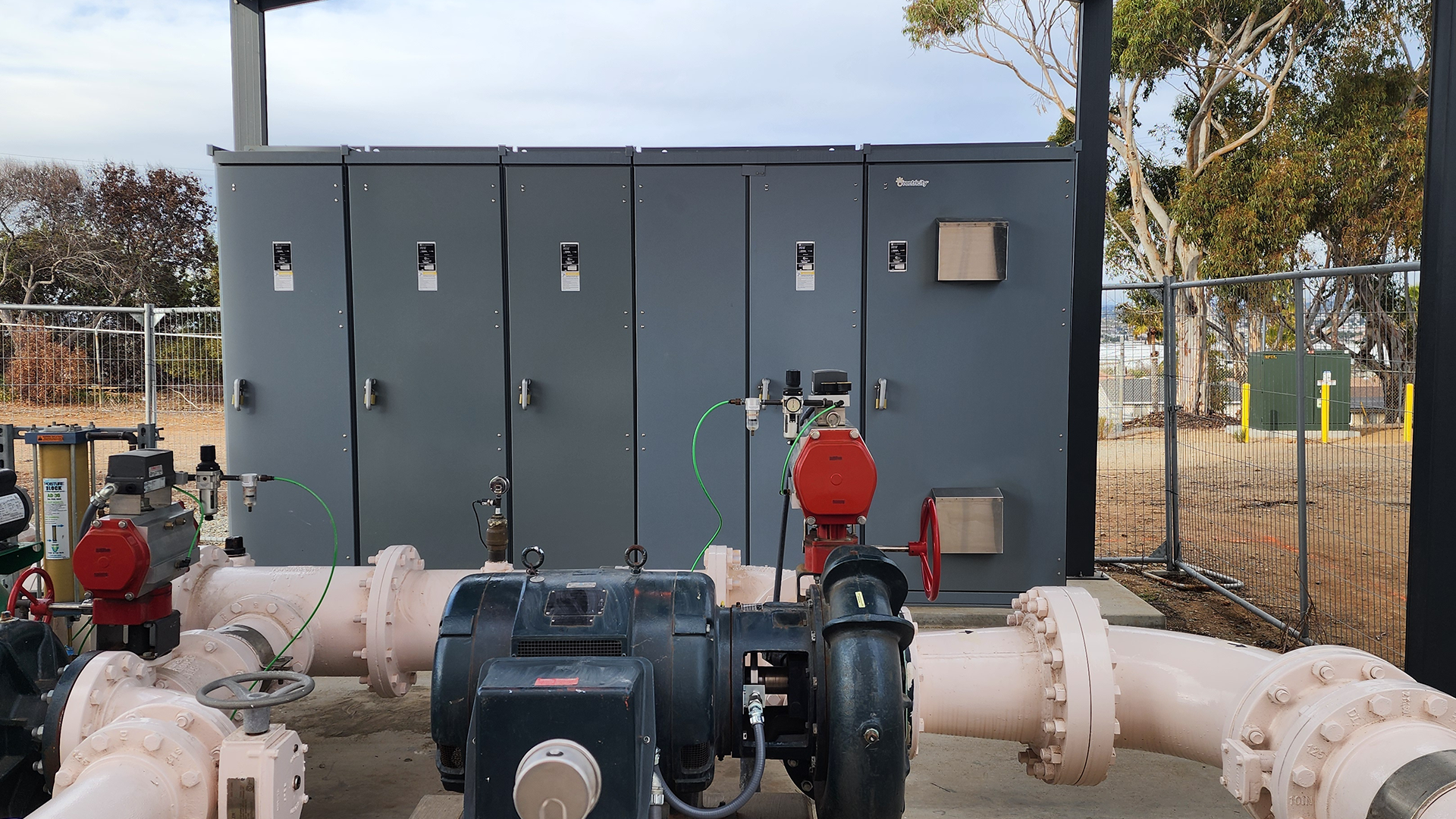
Custom steel-building features can include specialized openings, equipment supports, insulation, environmental systems, electrical infrastructure, and expansion provisions.
Corrosion Protection and Material Durability
Corrosion protection should be selected using an exposure assessment, material compatibility review, coating specification, surface-preparation requirements, inspection plan, and maintenance strategy.
Possible measures include:
- Coating systems matched to the environment and expected service conditions
- Galvanized, stainless, weathering, or other appropriate materials where justified
- Drainage details that prevent standing water and moisture traps
- Isolation of dissimilar metals where galvanic corrosion is possible
- Access for inspection, cleaning, touch-up, and recoating
- Cathodic protection for qualifying buried or immersed metal systems
No coating provides indefinite protection. Service life depends on preparation, application, exposure, damage, inspection, and maintenance. Red Direct’s guide to steel-building maintenance covers roofs, finishes, seals, drainage, and moisture control.
Advantages of Steel for Weather-Resistant Energy Buildings
Steel provides several characteristics useful in resilient construction, but performance depends on the engineered structural system, connections, foundations, enclosure, fire protection, corrosion control, workmanship, inspection, and maintenance.
Strength and Efficient Load Paths
Steel’s strength-to-weight ratio supports efficient framing for substantial wind, snow, equipment, and seismic demands. The advantage is realized only when every connection and foundation element completes the required load path.
Ductility
Properly designed steel systems can deform in a controlled manner and redistribute forces under certain extreme loading conditions. Ductility is a system-level design property, not an automatic guarantee created by specifying steel.
Connection Options
Bolted and welded connections allow engineers to develop frames, bracing, equipment supports, platforms, and other assemblies around project requirements. Connection design, fabrication, erection, and inspection are critical to performance.
Adaptable Building Systems
Steel framing can accommodate equipment access, removable wall sections, future additions, overhead systems, and changing interior layouts. Red Direct’s pre-engineered metal building systems can be configured around dimensions, loads, insulation, openings, utilities, and equipment requirements established during design.
Repair and Recovery Potential
Some damaged steel components can be repaired, reinforced, or replaced. Any post-event work requires inspection and direction from qualified professionals; visible damage may not reveal every affected connection, member, anchor, foundation, or enclosure component.
Material and Coating Innovation
Modern coatings, panel systems, insulation, sealants, monitoring equipment, and fabrication methods continue to expand available design options. Red Direct discusses these developments in its article on steel-construction innovation.
Design Strategies for Weather-Resistant Energy Facilities
Wind and Tornado Strategy
Wind resilience requires more than a heavy frame. The design must coordinate the building geometry, exposure, openings, roof and wall pressures, doors, louvers, rooftop equipment, cladding, fasteners, frames, anchors, and foundations.
Strategies may include:
- Simple building geometry where it supports the operational program
- Controlled openings and doors rated for the required pressures
- Engineered braced frames, moment frames, or other lateral systems
- Roof and wall assemblies with tested or engineered attachment patterns
- Anchorage for exterior equipment, ducts, cable trays, tanks, and utilities
- Windborne-debris protection where required
- Storm shelters or safe rooms when required by code or the owner’s risk assessment
Flood and Drainage Strategy
Flood resilience should prioritize informed siting, elevation, access, utility protection, and engineered site drainage. The design team should use current flood information and account for applicable freeboard and critical-facility requirements rather than relying solely on historical experience.
Temperature-Resilience Strategy
Facilities should be designed around verified outdoor design conditions and the limits of the equipment inside. Resilience planning may require passive protection, backup power, heat tracing, redundant heating or cooling, fuel assurance, freeze-resistant drainage, and recovery procedures.
Wildfire Strategy
In wildfire-prone areas, the facility plan may address combustible vegetation, stored materials, ember-resistant openings, exterior assemblies, roof edges, vents, access roads, water supplies, emergency response, and nearby equipment. Noncombustible steel framing can contribute to the strategy but cannot eliminate wildfire exposure.
Corrosion Strategy
A corrosion-management plan should identify exposure zones, coating systems, inspection intervals, repair methods, and areas where water or contaminants could collect. Details that allow drying and maintenance are often as important as the initial material selection.
Inspection and Maintenance Strategy
Weather resistance changes over time as seals age, coatings are damaged, drains clog, fasteners loosen, and equipment is modified. Owners should establish routine inspections and post-event assessments appropriate to the facility and hazard.
Red Direct’s warranty and safety information provides additional context on workmanship, materials, panels, finishes, and jobsite practices.
Types of Weather-Resistant Energy Facilities
Power Generation Facilities
Generation sites may include turbine buildings, boiler structures, balance-of-plant buildings, electrical rooms, control rooms, maintenance facilities, and equipment enclosures. Hazard requirements vary substantially among natural-gas, renewable, nuclear, hydroelectric, and other generation technologies.
Substations and Electrical Facilities
Substations include exposed and enclosed equipment with specialized electrical clearances, grounding, fire separation, access, and security requirements. Buildings may protect controls, relays, batteries, communications, switchgear, or other systems, while exterior equipment must be designed for its environmental loads.
Pipeline and Compressor Facilities
Pipeline buildings may shelter compression, control, measurement, regulation, processing, storage, or maintenance functions. Weather-resilient design must be coordinated with vibration, ventilation, hazardous-location requirements, piping movement, emergency shutdown, and equipment removal.
Relevant Red Direct resources include:
- Steel buildings for natural-gas compressor stations
- Steel storage facilities for natural-gas infrastructure
- Steel processing plants supporting midstream gas
- Natural-gas processing plant buildings
Transmission and Distribution Support Infrastructure
Transmission and distribution systems include towers, poles, lines, control buildings, switching facilities, storage buildings, maintenance bases, and communication sites. Each asset requires its own engineering criteria; a steel building cannot substitute for the design of exposed electrical or transmission structures.
Red Direct’s midstream steel-building overview describes several facility types that support distributed energy networks.
Operational and Financial Benefits
Weather-resilient design can reduce risk and improve recovery capability, but specific operational or financial outcomes are not guaranteed.
Potential Operational Benefits
- Reduced exposure of sensitive equipment to weather
- Improved accessibility for inspection and maintenance
- Lower likelihood of certain preventable water, wind, temperature, or corrosion failures
- Faster assessment and repair when replaceable components and access routes are planned
- Better alignment between facility systems and emergency procedures
- Greater adaptability for equipment changes and future hardening
Potential Financial Benefits
- Reduced frequency or severity of some weather-related repairs
- Longer service life for protected equipment and enclosure components
- Reduced disruption when facilities can continue operating or recover more quickly
- More predictable maintenance through planned inspection and renewal
- Possible insurance or financing benefits when recognized by the specific provider
Insurance premiums, liability, outage costs, and service continuity depend on the project, event, policy, contract, operator, and broader system. Resilient construction should not be presented as a guarantee of lower premiums or uninterrupted revenue.
Codes, Reliability Standards, and Climate Adaptation
Building Codes and Structural Standards
The authority having jurisdiction determines the adopted building code and referenced standards. In many U.S. jurisdictions, the International Building Code references ASCE 7 for structural loads. Flood-resistant design may also involve ASCE 24 and other applicable federal, state, or local requirements.
Red Direct offers permitting support and a broader guide to steel-building permitting and regulations.
NERC Reliability Standards
The North American Electric Reliability Corporation develops reliability standards for the Bulk Power System. These standards are organized across areas such as transmission planning, facilities design and maintenance, emergency preparedness, protection and control, operations, and critical-infrastructure protection.
NERC requirements apply according to their defined scope, registered function, jurisdiction, and implementation schedule. They are not a universal building code for every power plant, utility building, pipeline facility, or energy project. As one current example, TPL-008-1 establishes transmission-system planning performance requirements for extreme heat and cold events and became effective on April 1, 2026.
Industry and Owner Standards
Energy projects may also be governed by utility standards, pipeline requirements, equipment-manufacturer criteria, insurer requirements, fire and electrical codes, federal or state regulations, and owner-specific resilience objectives.
Climate Adaptation and Future Conditions
Historical weather records remain important, but long-lived infrastructure may also require evaluation of changing precipitation, heat, flood, wildfire, coastal, or other hazards. The design team should use recognized data, adopted criteria, and project-specific analysis rather than a generalized assumption that every hazard is increasing everywhere.
Selecting a Partner for Weather-Resistant Facility Development
Developing a resilient energy facility requires coordination across hazard assessment, civil engineering, structural design, foundations, architecture, building science, electrical and mechanical systems, equipment integration, operations, permitting, fabrication, and construction.
Important qualifications include:
- Experience with energy or industrial infrastructure
- Licensed engineering capabilities appropriate to the project
- Knowledge of site-specific wind, snow, ice, rain, flood, seismic, temperature, wildfire, and corrosion conditions
- Building-envelope and moisture-management expertise
- Experience coordinating critical equipment, utilities, access, and replacement paths
- Permitting and code-coordination capabilities
- Quality-control, inspection, and construction-management procedures
- References from projects with comparable technical demands
Red Direct’s project-development process connects consultation and site evaluation with design, fabrication, approvals, and construction. Its approach to steel-building project management helps coordinate decisions before they affect fabrication or fieldwork.
Owners can also review Red Direct’s complete engineering, permitting, fabrication, construction-management, and construction services and examples from its steel-building project portfolio.
Build Resilience into the Complete Facility
Weather resilience is not created by one material or isolated feature. It results from understanding the site, defining performance objectives, applying the correct design criteria, protecting equipment, controlling water, maintaining the enclosure, and preparing for inspection and recovery.
Weather-resistant steel buildings for energy infrastructure can provide strong, adaptable enclosures for critical systems. Their success depends on project-specific engineering and coordination across the site, structure, envelope, utilities, equipment, operations, and maintenance program.