From Material Science to Smarter Project Delivery
Steel construction continues to evolve through advances in materials, fabrication, digital coordination, prefabrication, automation, and environmental reporting. These developments do not replace sound engineering or experienced construction teams. Instead, they give those teams better ways to coordinate information, manufacture components, manage risk, and tailor buildings to their intended use.
Some steel construction innovations are already common in modern practice, including computer-controlled fabrication, three-dimensional coordination, pre-engineered building systems, and digital quality records. Others—such as artificial intelligence, digital twins, metal additive manufacturing, and highly autonomous equipment—are still developing and are not appropriate for every project.
The real value of innovation is not novelty. It is measurable improvement in design coordination, constructability, material use, building performance, worker protection, documentation, and long-term adaptability. Red Direct’s overview of innovation in modern metal buildings shows how several of these ideas are already influencing practical building decisions.
The Continuing Evolution of Steel Construction
Structural steel construction has moved from hand-drafted details and labor-intensive fabrication toward connected digital workflows. Modern projects may link engineering models, shop drawings, purchasing information, fabrication data, delivery sequencing, field documentation, and facility records. The degree of integration varies, but the direction is clear: better information management is becoming as important as the machinery used to cut and assemble the steel.
Major drivers of this evolution include:
- Material development: New and refined grades can provide combinations of strength, toughness, weldability, and corrosion performance for specific applications.
- Manufacturing technology: CNC cutting, drilling, punching, sawing, and automated material handling can improve repeatability when equipment, programming, and quality controls are properly managed.
- Digital design: Building information modeling, structural analysis, and collaborative platforms help teams coordinate decisions before fabrication and construction.
- Prefabrication: Manufacturing components away from the site can reduce field processing and support efficient assembly.
- Automation: Robotics and automated equipment can take on selected repetitive, hazardous, or precision-dependent tasks.
- Sustainability: Project teams are paying closer attention to material efficiency, environmental product declarations, operational energy, reuse, and end-of-life recovery.
- Quality systems: Documented procedures, qualified personnel, inspection, testing, and traceability help turn advanced technology into reliable work.
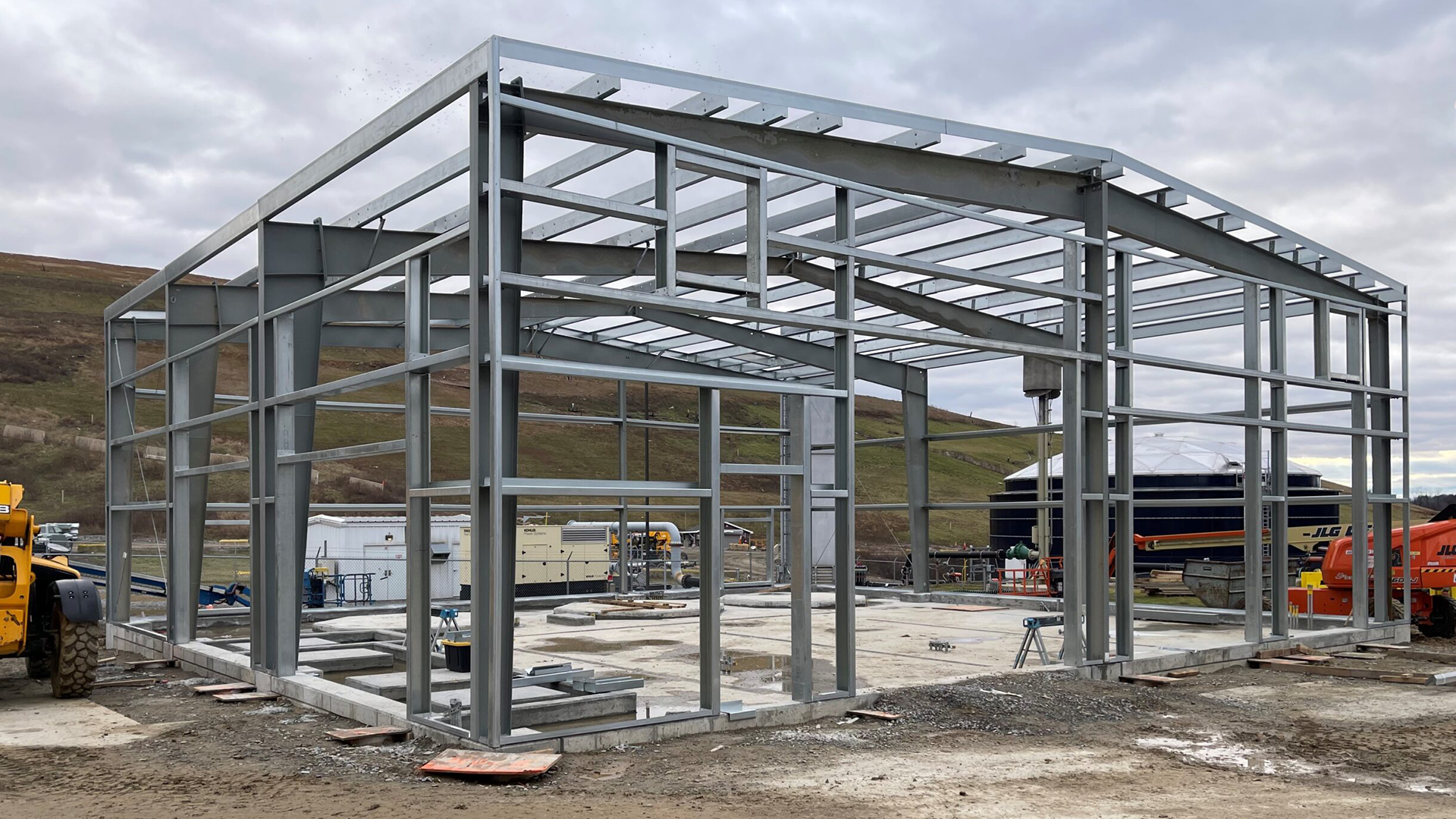
Pre-engineered systems bring many of these elements together. A properly coordinated pre-engineered metal building uses project-specific design criteria and manufactured components to create a complete structural system rather than a collection of unrelated parts.
Material Innovations in Steel Construction
Higher-Strength and Application-Specific Steels
Higher-strength steels can allow engineers to reduce member weight or solve demanding load and geometry conditions in appropriate applications. That does not mean a stronger grade automatically produces a lighter or less expensive building. Serviceability, stability, connection design, fire protection, fatigue, availability, fabrication, transportation, and erection may govern the final selection.
Material specifications must also account for toughness and weldability. Welding procedures, preheat, consumables, heat input, inspection, and welder qualifications must be matched to the material and connection. Early structural engineering coordination helps the team evaluate the entire system instead of selecting steel by yield strength alone.
Potential advantages of carefully selected higher-strength steel include:
- Reduced member weight where strength controls the design
- Greater capacity within dimensional or clearance constraints
- Improved performance for specialized equipment or long-span applications
- Opportunities to optimize transportation, foundations, or erection planning
Corrosion-Resistant Materials and Protection Systems
Weathering steel, stainless steel, galvanized components, metallizing, and high-performance coating systems can all contribute to corrosion management. Their suitability depends on exposure, detailing, drainage, maintenance access, appearance, and lifecycle goals.
Weathering steel is not maintenance-free or appropriate everywhere. It relies on environmental conditions that allow a protective patina to develop and can perform poorly where surfaces remain wet or are exposed to high chloride concentrations. Stainless steel also varies by grade and exposure. Effective corrosion control begins with material selection and continues through detailing, fabrication, installation, inspection, and maintenance.
Building owners can review broader steel-building performance considerations when comparing structural systems and protective strategies.
Recycled Content, Reuse, and Lower-Carbon Steel
Steel can be recovered and recycled repeatedly, and structural sections often contain recycled material. However, recycled content alone does not establish the complete environmental impact of a product. Production route, energy source, plant efficiency, transportation, alloying, fabrication, service life, reuse potential, and end-of-life assumptions all matter.
Environmental product declarations can help teams compare product-level global warming potential when the documents use appropriate product category rules, boundaries, and verified data. Efficient structural design, responsible procurement, component reuse, and designing for future adaptation can complement recycling as part of a broader lifecycle strategy.
For projects pursuing third-party sustainability goals, Red Direct’s guide to steel buildings and LEED certification explains why certification depends on the performance of the complete project rather than one material.
Manufacturing Innovations
Computer Numerical Control Fabrication
CNC equipment converts approved digital information into controlled cutting, drilling, punching, coping, and marking operations. It can improve repeatability and reduce manual layout, but precision still depends on correct models, programming, calibration, tooling, material identification, and inspection.
Common benefits include:
- Repeatable dimensions across similar components
- Efficient production of connection holes, cuts, and markings
- Reduced manual layout for compatible operations
- Digital records that can support traceability and quality control
Effective steel fabrication still requires qualified people to verify material, interpret requirements, maintain equipment, inspect completed work, and resolve discrepancies.
Robotic and Mechanized Welding
Robotic and mechanized welding can improve consistency and reduce direct exposure to heat, fumes, and repetitive motion for suitable production work. These systems are most effective when joint geometry, fit-up, part positioning, welding procedures, and production volume support automation.
A robot does not guarantee a sound weld. The work must still follow qualified procedures and applicable codes, with controls for consumables, parameters, distortion, inspection, and repair. Complex one-off conditions and field changes may continue to require skilled manual welding.
Automated Coating and Surface Preparation
Automated blasting and coating lines can support consistent surface preparation and application under controlled conditions. They may improve transfer efficiency and reduce worker exposure for suitable operations. Final performance still depends on surface cleanliness, profile, environmental conditions, coating compatibility, film thickness, cure, handling, and inspection.
Corrosion protection should be coordinated with maintenance expectations from the beginning. Red Direct’s guidance on maintaining and extending the life of a steel building explains why ongoing inspection remains important even when advanced finishes are used.
Digital Quality Records and Traceability
Fabricators can use barcodes, scanners, machine data, digital travelers, photographs, inspection records, and material documentation to track components through production. These tools can improve visibility and make it easier to confirm status, but they must be supported by clear procedures and accurate data entry.
Quality systems may document:
- Material identification and certificates
- Approved drawings and revision status
- Welding procedures and personnel qualifications
- Inspection and nondestructive examination results
- Coating preparation, application, and verification
- Nonconformance resolution and final release
Design and Engineering Innovations
Building Information Modeling
BIM provides a shared digital environment for geometry and project information. When teams define responsibilities, model uses, levels of development, exchange formats, and review procedures, BIM can support coordination among structural, architectural, mechanical, electrical, plumbing, fire-protection, and specialty systems.
Potential uses include:
- Three-dimensional design review and stakeholder communication
- Clash detection before affected work is installed
- Quantity takeoffs linked to a controlled model
- Fabrication detailing and connection coordination
- Four-dimensional sequencing when model elements are linked to schedule data
- Record information for facility operations when turnover requirements are planned early
BIM does not automatically eliminate conflicts. Teams must manage model accuracy, version control, coordination meetings, and the distinction between design intent and fabrication responsibility. Red Direct’s project development process illustrates why early coordination matters across both the building and site.
Finite Element Analysis and Advanced Structural Modeling
Finite element analysis can help engineers study stress, deformation, stability, vibration, heat transfer, and other behaviors that may be difficult to represent with simplified methods. It is especially useful for complex geometry, local details, equipment interaction, and unusual loading.
Analysis quality depends on assumptions, boundary conditions, element selection, material models, load combinations, and independent verification. Detailed graphics do not make a model correct. Licensed engineers remain responsible for selecting appropriate methods, interpreting results, and checking the design against applicable codes and expected behavior.
Specialized systems such as overhead cranes in industrial steel buildings demonstrate why structural modeling must be coordinated with equipment forces, clearances, runway alignment, foundations, and operations.
Artificial Intelligence and Machine Learning
AI and machine learning are being explored for option generation, document review, estimating, scheduling, image analysis, progress tracking, equipment monitoring, and pattern detection. These tools may help teams evaluate large datasets or identify issues for further review.
Current systems also have limitations. Outputs may be incomplete, inaccurate, biased, difficult to explain, or based on information that is not appropriate for the project. Confidentiality, cybersecurity, intellectual property, recordkeeping, and professional responsibility require careful governance. AI should support qualified decision-makers—not replace engineering judgment, code review, field verification, or safety planning.
Connected Design-to-Fabrication Workflows
CAD/CAM and model-based fabrication can transfer approved geometry and production data to compatible equipment. This reduces repeated manual entry, but it does not create “zero-error” production. A mistake in the model, connection detail, revision process, or machine setup can be reproduced accurately across many parts.
Reliable workflows include formal approvals, revision control, machine simulation where appropriate, first-piece verification, inspection, and feedback between the shop and design team.
Prefabrication and Modular Construction
Prefabricated Structural Components
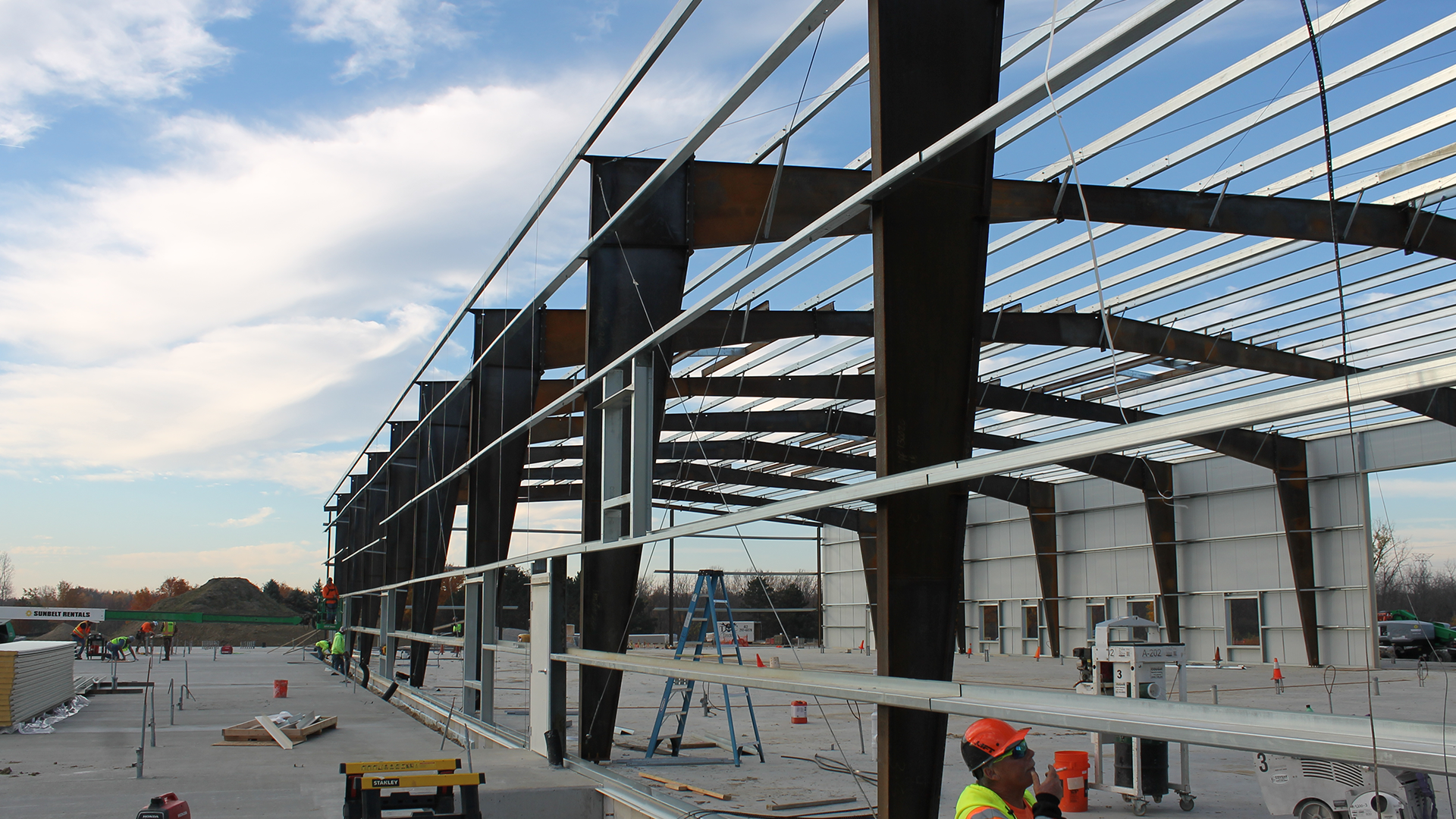
Structural steel is inherently suited to off-site fabrication. Primary framing, secondary members, stairs, platforms, wall panels, roof panels, and other assemblies can be prepared before delivery. This can reduce field cutting and welding while supporting repeatable work under controlled shop conditions.
Prefabrication may also allow some site and manufacturing activities to overlap, but schedule improvement depends on timely design decisions, approvals, procurement, transportation, site readiness, foundations, crane access, and erection sequencing. Those dependencies make steel-building project management essential to realizing the potential benefit.
Panelized and Modular Approaches
Panelized construction uses manufactured wall, roof, floor, or service assemblies. Volumetric modular construction uses three-dimensional units that may include structure, enclosure, finishes, and building systems. Both approaches can shift labor away from the project site, but neither is automatically faster, less expensive, or higher quality.
Modules must be designed for transportation, lifting, temporary conditions, connections, water management, fire and acoustic separation, utilities, tolerances, and code compliance. The module supplier, design professionals, site contractor, installers, and inspectors must understand how their scopes connect.
Red Direct’s discussion of modular steel additions for industrial facilities explores where an off-site approach may support expansion and operational continuity.
Designing for Assembly and Future Change
Standardized connections, repeatable bays, accessible fasteners, coordinated lifting points, and clear installation sequences can simplify assembly. Designing for future expansion or disassembly may also preserve more options for the owner. Any later change must still be evaluated by qualified design professionals.
Owners can coordinate framed openings, mezzanines, insulation, daylighting, cranes, canopies, and expansion provisions through custom steel-building features rather than treating them as late additions.
Automation, Robotics, and Field Technology
Automated and Semi-Autonomous Equipment
Machine control, automated layout, remote operation, collision-avoidance features, and semi-autonomous earthmoving or material-handling systems are increasingly available. Fully autonomous construction remains limited and generally depends on controlled environments, clearly defined tasks, reliable positioning, trained supervision, and site-specific safety planning.
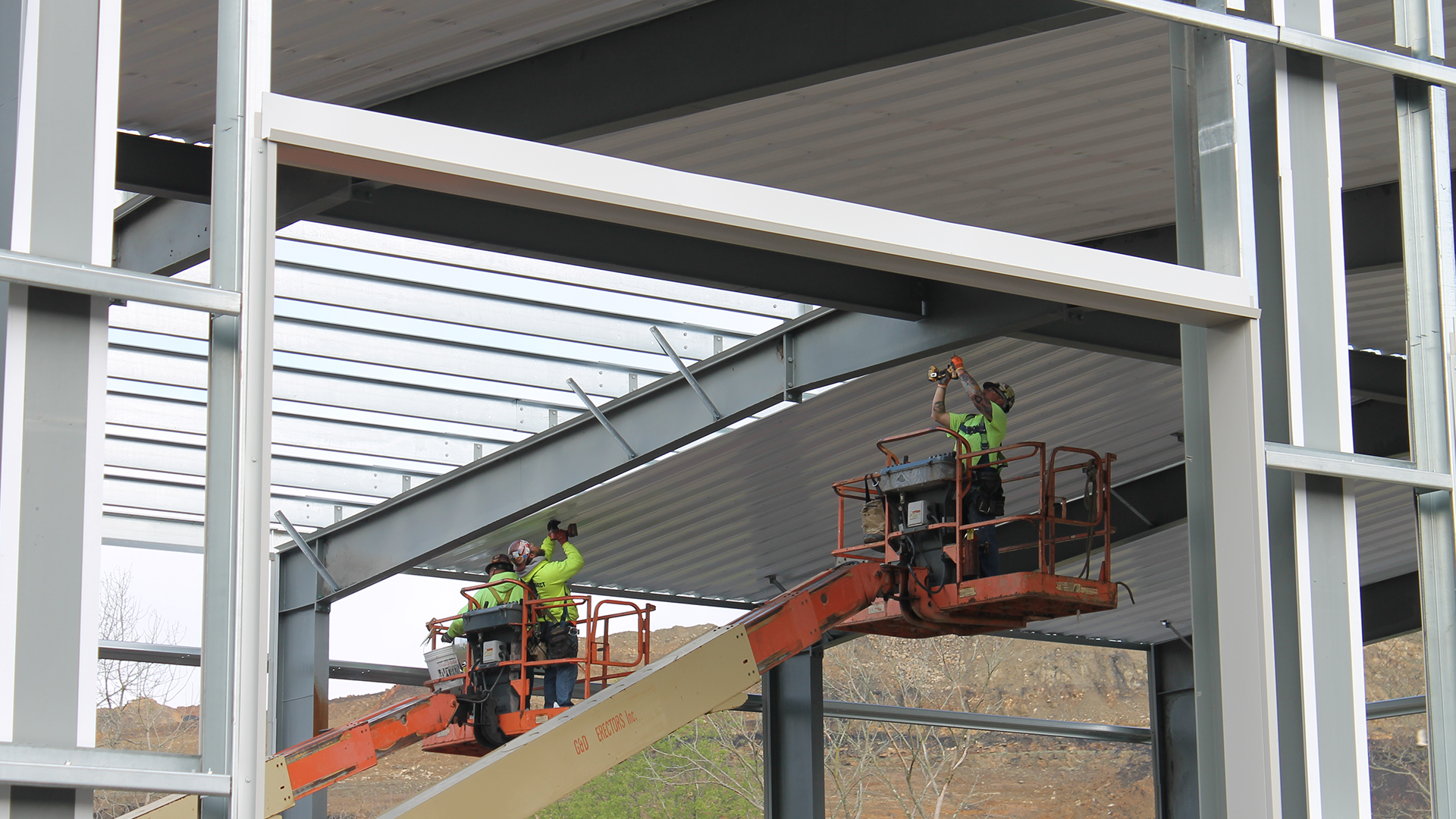
Technology can change how workers interact with equipment, but it does not remove the need for exclusion zones, inspections, communication, maintenance, competent supervision, and compliance with applicable safety requirements. Red Direct’s safety approach reflects the importance of pairing tools and procedures with responsible field execution.
Robotic Installation and Layout
Robots and total-station-guided systems can assist with layout, drilling, fastening, scanning, and selected installation tasks. These technologies may improve repeatability or reduce exposure to difficult positions. Their usefulness depends on site conditions, task repetition, access, tolerances, setup time, and integration with the surrounding work.
Drones, Reality Capture, and Remote Observation
Drones, laser scanners, photogrammetry, and 360-degree imagery can document progress, compare existing conditions with models, and provide views of roofs or other difficult-to-access areas. Drone operations must follow aviation, site, privacy, and safety requirements. Images and point clouds also need qualified interpretation.
These tools do not replace required inspections or the judgment of licensed professionals. They provide additional information that can support construction management and field coordination.
Sustainability Innovations
Material Efficiency and Circular Strategies
Efficient design seeks to meet structural and serviceability requirements without unnecessary material. Reuse and adaptation can sometimes preserve more of the value already invested in a building than recycling alone. Demountable connections, accessible components, standardized materials, and good documentation may support future recovery, although feasibility depends on the building and market.
Steel’s recyclability is an advantage, but responsible environmental claims should be based on project-specific quantities and current product data. A complete assessment considers manufacturing, transport, construction, operation, maintenance, replacement, reuse, and end of life.
Lower-Carbon Manufacturing and Procurement
Steel producers are pursuing lower-emission pathways through scrap-based electric arc furnaces, increased renewable electricity, process efficiency, alternative ironmaking, carbon capture research, and improved material yield. Emissions vary significantly by production route and facility, so generalized claims should not substitute for current environmental product declarations or supplier information.
Project teams can define procurement requirements, request product-specific documentation, compare technically equivalent options, and avoid over-ordering. Red Direct’s sustainable roofing guidance applies the same lifecycle thinking to another major building system.
Operational Building Performance
The environmental performance of a completed steel building depends heavily on its envelope, mechanical systems, lighting, controls, commissioning, occupancy, and maintenance. Insulation continuity, air sealing, roof reflectance, daylighting, efficient HVAC, and renewable-energy readiness may all contribute when they are appropriate for the climate and use.
Structural steel alone does not make a building energy efficient. These systems must be coordinated during design and installed correctly. Red Direct’s integrated services connect site, structural, building, and construction decisions that influence whole-project performance.
Emerging Technologies to Watch
Several technologies could influence future steel projects, but their readiness varies:
- Metal additive manufacturing: Useful for selected complex components and tooling, while qualification, scale, speed, cost, repeatability, and standards continue to develop.
- Digital twins: Connected digital representations can combine models with sensor or operational data when the owner has a defined use case and data-management plan.
- Smart structures: Sensors may monitor vibration, temperature, strain, moisture, equipment status, or environmental conditions, but data must lead to an actionable maintenance or operational decision.
- AI-assisted workflows: Future tools may improve option evaluation and information retrieval, with human validation and governance remaining essential.
- Automated jobsites: More machines may perform constrained tasks with less direct control, but mixed crews, changing conditions, and safety requirements make broad autonomy a long-term development.
- Digital material records: Product data and traceability platforms may support procurement, compliance, maintenance, reuse, and recovery when the records remain accurate and accessible.
Innovation should be evaluated according to the problem it solves, the evidence supporting it, and the responsibilities it creates. A new tool is valuable only when it improves the project without introducing unmanaged risk.
Turning Innovation Into Construction Excellence
Modern tools deliver results only when they are part of a disciplined project. Owners should look for a steel-building partner that can connect innovation with practical execution.
Important qualifications include:
- Knowledge of current structural materials, specifications, and protection systems
- Engineering experience appropriate to the building’s loads, use, and location
- Digital coordination and revision-control practices
- Fabrication capabilities supported by inspection and traceable quality procedures
- Experience planning transportation, site access, lifting, and erection
- Clear coordination among the owner, designers, manufacturer, contractors, and authorities
- Environmental claims supported by current, comparable data
- A record of completed work and references relevant to the proposed project
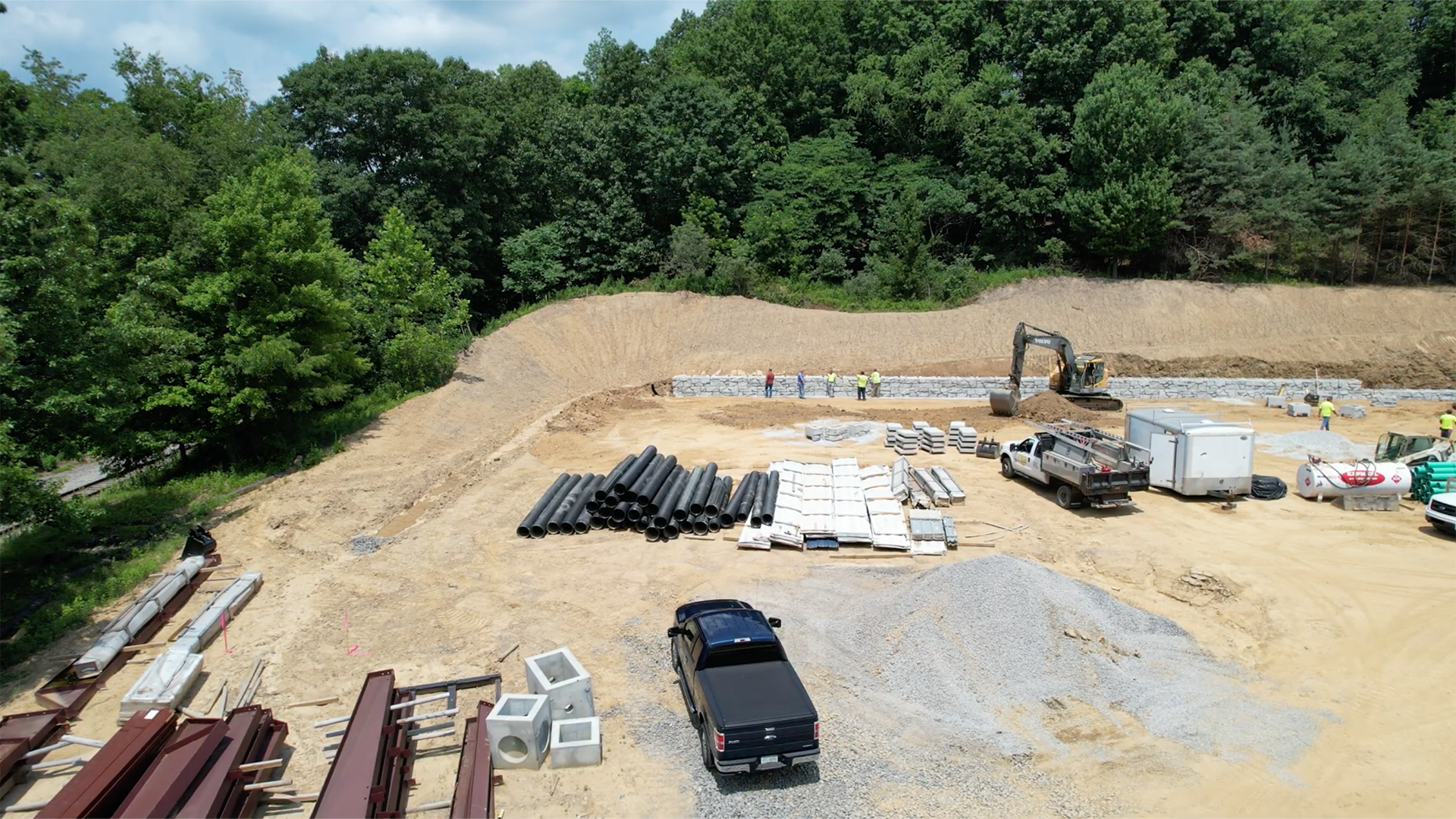
The site remains a major part of the solution. Geotechnical conditions, access, utilities, drainage, staging, foundations, and permitting can determine whether an innovative building system succeeds. Early site-development planning for steel buildings helps connect the manufactured structure with the conditions it will encounter in the field.
Red Direct supports industrial, commercial, agricultural, and energy-sector steel buildings through coordinated design, fabrication, management, and construction services.
Building Better Through Informed Innovation
The most meaningful steel construction innovations connect better information with better decisions. Higher-performing materials, digital models, precise fabrication, prefabricated assemblies, field technology, and environmental data can all contribute to a stronger project when they are selected for a clear purpose and supported by qualified professionals.
Innovation does not remove the fundamentals. Buildings still need accurate design criteria, coordinated documents, code compliance, suitable materials, controlled fabrication, safe erection, effective weather protection, and planned maintenance. Technology helps teams execute those fundamentals with greater visibility and control.