Building Sustainability Into the Full Infrastructure Lifecycle
Environmental performance in energy infrastructure is determined by a chain of decisions. Material production matters, but so do structural efficiency, transportation, site development, construction waste, building operations, maintenance, adaptability, and what happens when a facility is renovated or retired. A responsible strategy evaluates those stages together rather than labeling one material universally sustainable.
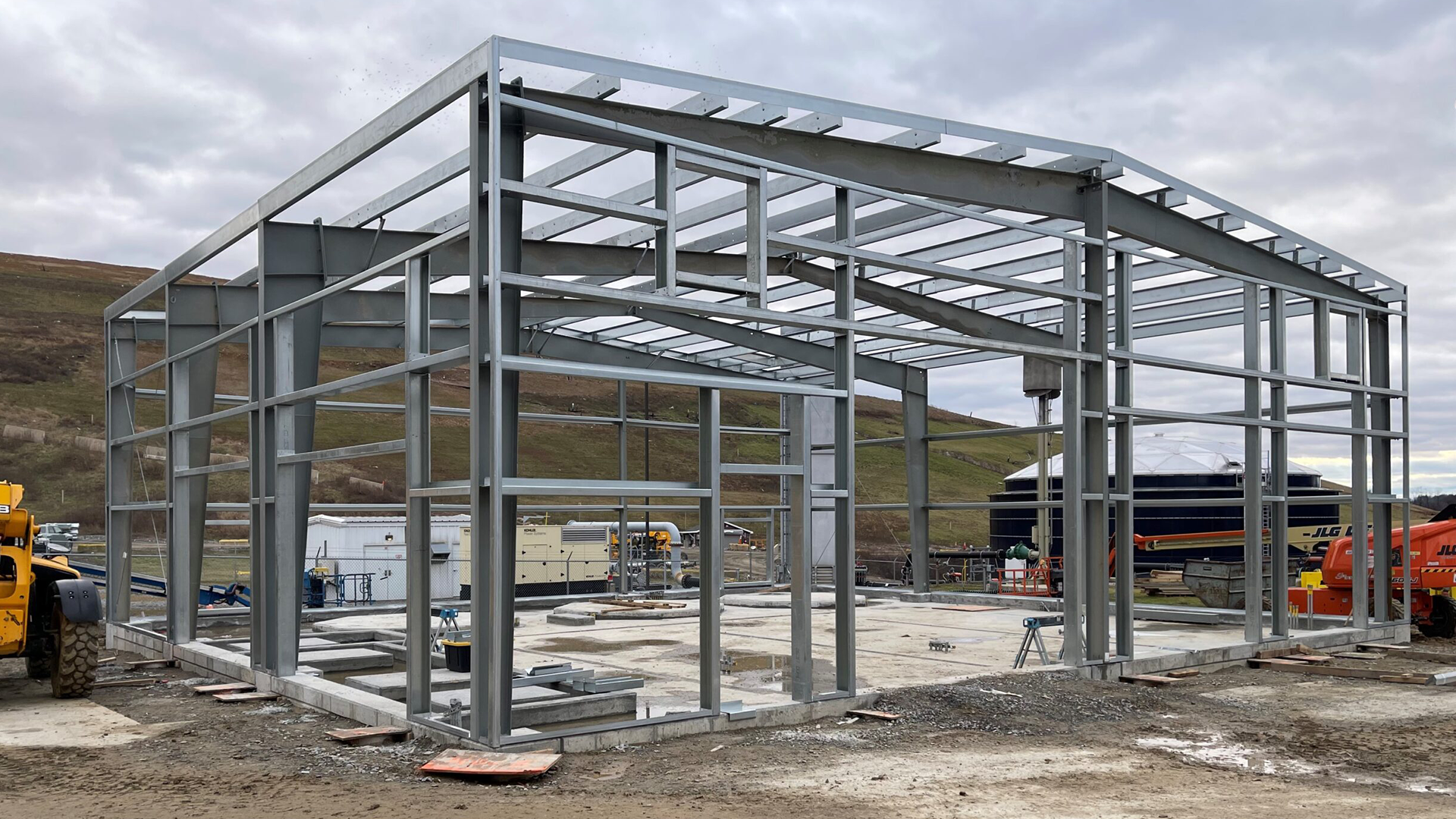
Steel can support lower-impact energy facilities because it can be engineered efficiently, fabricated with precision, adapted to changing operations, reused in some applications, and recovered for recycling at the end of service. Those potential benefits are especially relevant to buildings that protect compressors, controls, electrical equipment, processing systems, storage operations, and other critical assets. Red Direct’s experience with steel buildings for energy infrastructure connects material decisions with the operational demands those facilities must meet.
Steel is not impact-free, however. Primary steelmaking is energy- and emissions-intensive, and environmental performance varies by production route, mill, electricity source, product, transportation distance, fabrication, coatings, and project design. Credible sustainability decisions require current data and a defined comparison—not broad assumptions. This guide explains the environmental benefits steel can offer, the limitations owners should understand, and the practical steps that turn material potential into measurable project performance.
Why Lifecycle Thinking Matters in Energy Construction
Energy infrastructure can remain in service for decades while technologies, operating requirements, environmental expectations, and regulations change around it. The building may need to accommodate new equipment, revised process layouts, additional electrical capacity, different ventilation needs, or future expansion. A facility that cannot adapt may be renovated extensively or replaced before its structure reaches the end of its useful life.
Lifecycle thinking asks project teams to consider environmental effects across several stages:
- Product stage: Raw-material extraction or collection, transportation to manufacturing, and production of construction materials.
- Construction stage: Transportation to the project, site activity, installation, energy use, and construction waste.
- Use stage: Building energy, water, maintenance, repair, replacement, and operational changes over time.
- End-of-life stage: Deconstruction or demolition, transportation, processing, disposal, recycling, or reuse.
- Potential benefits beyond the assessed system: Future reuse, recovery, or recycling that may occur after the building’s service life.
The exact boundaries depend on the assessment method. A product-level environmental product declaration may cover only selected stages, while a whole-building lifecycle assessment compares complete assemblies and systems over a defined study period. Red Direct’s discussion of steel construction innovations explores how environmental documentation, digital coordination, material optimization, and fabrication technology are influencing these decisions.
Understanding Steel’s Environmental Opportunities
Recovery, Recycling, and Potential Reuse
Steel is widely recovered because scrap has value and established recycling markets exist. It can be melted and made into new steel products repeatedly, although collection, sorting, processing, alloy control, yield loss, energy use, and market conditions still affect the actual recycling pathway. “Recyclable” should therefore not be treated as proof that every component will be recovered or that recycling has no environmental burden.
Reuse may preserve more of a component’s existing value than melting it for recycling. Beams, columns, joists, panels, or other elements can sometimes be removed and used again when their condition, dimensions, material properties, connections, documentation, code requirements, and economics permit. Designing accessible connections and maintaining accurate material records can preserve this option. The broader benefits of steel building systems include the ability to coordinate framing around future change, but reuse must still be evaluated for the individual structure.
Recycled Content and Production Route
Many steel products contain recycled material, but the percentage varies. More importantly, recycled content by itself is not a complete carbon metric. Electric-arc-furnace production commonly uses a high proportion of scrap, while integrated production relies more heavily on iron ore and other inputs. Electricity mix, fuel source, plant efficiency, metallic inputs, alloy requirements, yield, and downstream processing all influence global-warming potential.
Project teams seeking lower-embodied-carbon products should request current environmental product declarations and compare technically equivalent products using consistent product category rules, declared units, lifecycle boundaries, datasets, and reporting periods. Facility-specific EPDs can be especially useful after likely suppliers are known. Industry-average EPDs may be appropriate earlier, before procurement decisions have been made.
Material-Efficient Structural Design
Steel’s strength can allow engineers to satisfy demanding loads with efficient framing. Higher-strength grades, optimized bay spacing, coordinated bracing, appropriate member selection, and accurate load criteria may reduce structural weight in suitable applications. A higher-strength material does not automatically create a lighter building: serviceability, stability, fatigue, fire protection, connection design, availability, fabrication, transportation, and erection may control the final solution.
Material efficiency begins with accurate requirements. Conservative assumptions layered across multiple disciplines can produce unnecessary material, while late equipment changes may require reinforcement or replacement. Early civil, structural, electrical, and mechanical engineering coordination allows the team to align equipment loads, clearances, foundations, utilities, and future provisions before fabrication.
Environmental Performance Across the Building Lifecycle
Manufacturing and Product Selection
Steel manufacturing creates substantial environmental impacts through energy use, process emissions, raw materials, transportation, and supporting operations. Industry improvements can reduce impacts, but generalized historical trends do not establish the footprint of a specific product delivered to a specific project.
A responsible procurement strategy may include:
- Requesting product-specific or facility-specific EPDs when available
- Establishing global-warming-potential reporting or performance requirements
- Reviewing production route and energy-source information
- Comparing technically equivalent products on a consistent basis
- Coordinating availability before specifying uncommon grades or dimensions
- Avoiding unnecessary over-ordering while maintaining practical fabrication allowances
Pre-engineered metal buildings can combine project-specific structural design with manufactured components. This can support controlled material use and coordinated delivery when design criteria are established early. Red Direct’s pre-engineered metal building capabilities show how the shell, openings, insulation, accessories, and structural requirements can be developed as an integrated system.
Fabrication and Construction
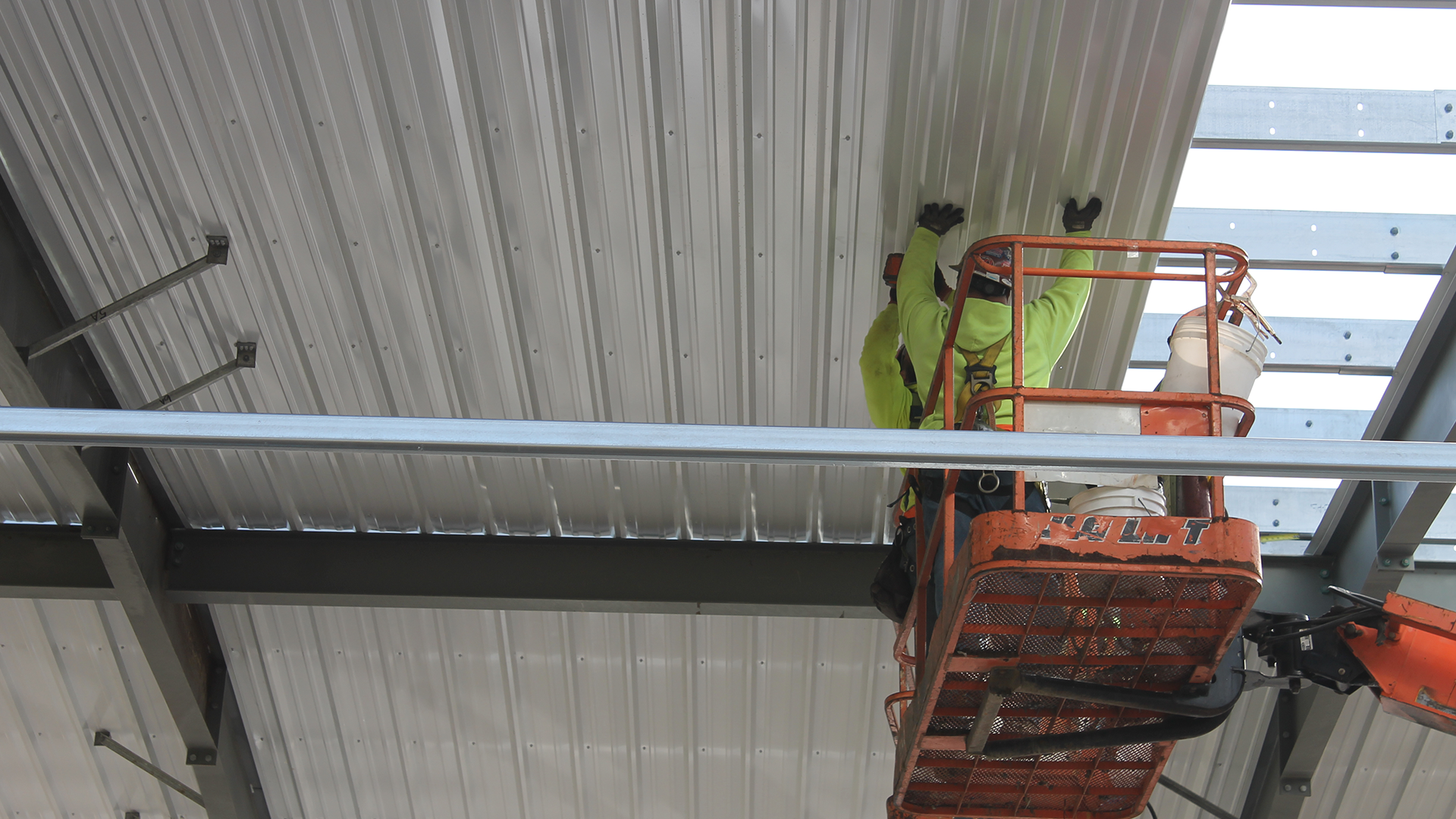
Shop fabrication can reduce field cutting and support consistent production, but it is not waste-free. Cutting layouts, standard lengths, nesting, connection design, scrap segregation, quality control, and accurate revision management all affect material use. Recyclable shop scrap still represents material and energy that were processed without becoming part of the finished building.
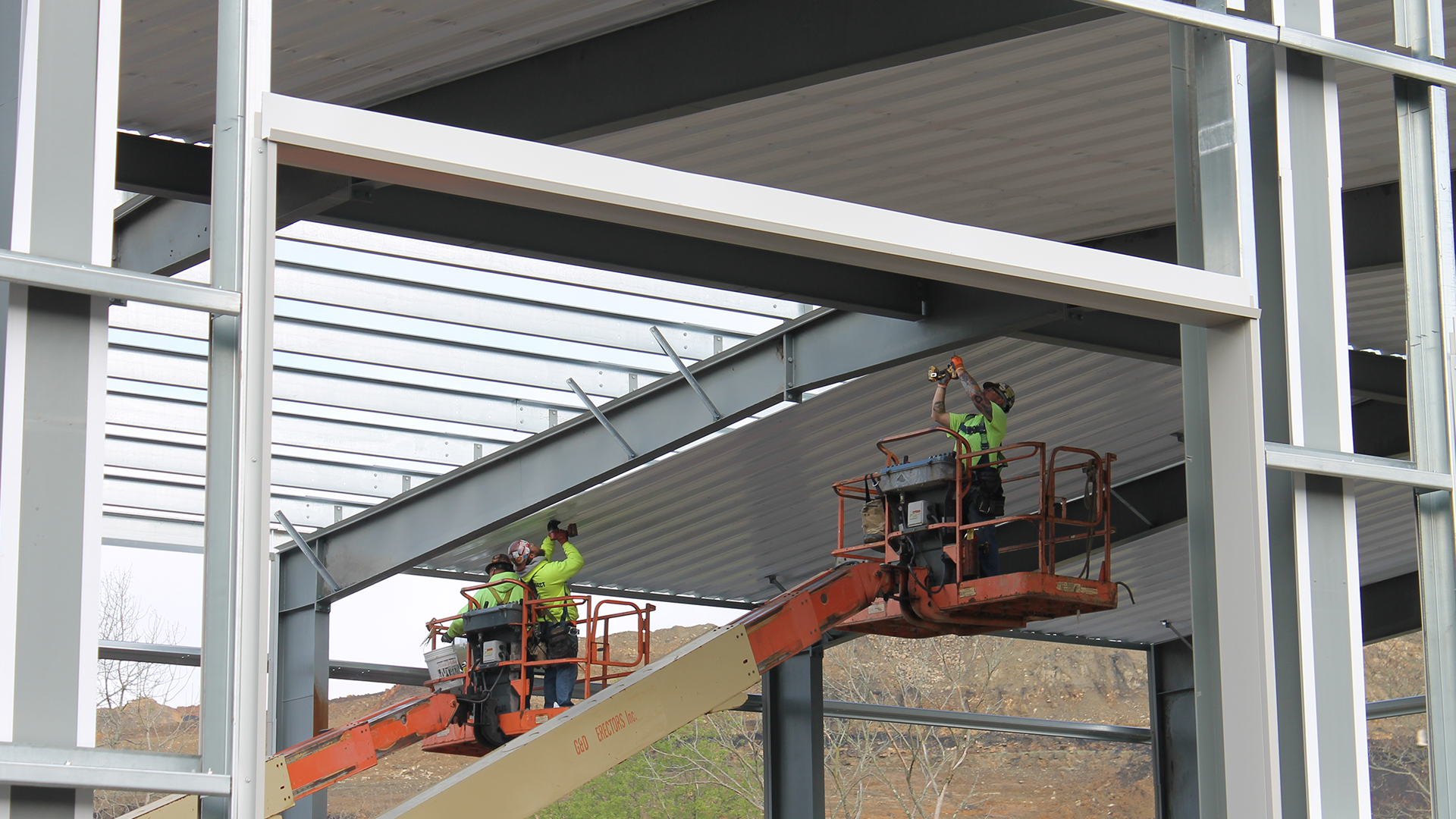
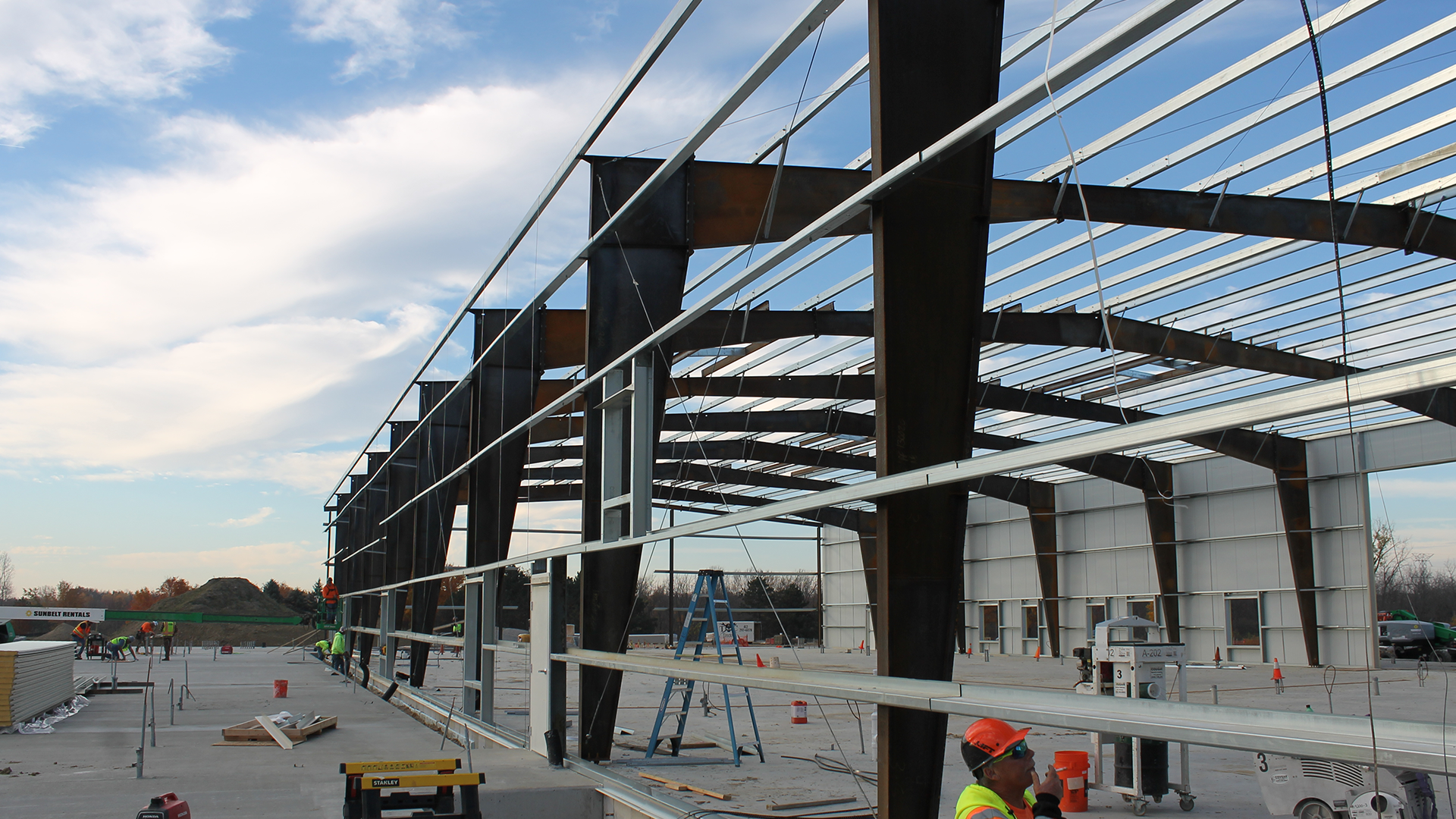
On site, prefabricated components may reduce some wet work and field processing. They can also allow manufacturing and site preparation to overlap. Schedule and environmental benefits depend on completed design decisions, approvals, procurement, transportation, foundation accuracy, crane access, weather, and the erection plan. Red Direct’s in-house steel fabrication services help connect approved project information with controlled component production.
Transportation should not be dismissed as automatically secondary. Its relative contribution depends on product mass, source location, shipment distance, vehicle type, loading efficiency, site access, and the assessment boundary. Efficient detailing and delivery planning can reduce partial loads, avoid emergency shipments, and limit damage that would require replacement.
Operation and Maintenance
For many occupied or conditioned buildings, operational energy can be a major part of whole-life environmental performance. The steel frame itself does not determine heating, cooling, lighting, ventilation, or process-energy use. Those outcomes depend on the complete envelope, thermal bridges, air sealing, roof and wall assemblies, mechanical systems, controls, commissioning, operating schedules, equipment, climate, and maintenance.
Steel buildings can accommodate high-performance insulation, efficient lighting, daylighting, rooftop solar, heat recovery, and other systems when they are appropriate for the use. Red Direct’s guide to sustainable roofing options for steel buildings examines reflectance, insulation, renewable-energy readiness, water management, and roof longevity as coordinated design questions.
Durability also depends on exposure and care. Industrial chemicals, moisture, chlorides, temperature cycling, damaged coatings, trapped water, and incompatible materials can accelerate corrosion. Drainage, protective systems, detailing, access for inspection, and timely repairs are essential. A planned steel-building maintenance program helps preserve performance and prevents “low maintenance” from being mistaken for “no maintenance.”
Adaptation and Expansion
A building that can accommodate new uses may avoid some of the impacts associated with demolition and replacement. Steel framing can support open interiors, removable wall areas, future framed openings, mezzanines, equipment platforms, crane provisions, and planned additions. These options must be engineered into the original design where they affect loads, bracing, foundations, utilities, or enclosure performance.
Flexibility is most valuable when it responds to credible future scenarios. Oversizing every member or system can add unnecessary upfront impact. A better approach is to document reserve capacity, identify expansion zones, provide accessible utility routes, and choose modular arrangements where future needs can be reasonably anticipated. Red Direct’s overview of custom steel-building options explains how these provisions can be coordinated during design.
End of Service
At the end of a facility’s initial use, the preferred sequence is often to retain, adapt, repair, relocate, or reuse before recycling or disposal. Whether those pathways are practical depends on structural condition, contamination, coatings, connection type, disassembly access, documentation, transportation, market demand, and the requirements of the next application.
Lifecycle models may account for future recycling or reuse outside the primary system boundary, but those benefits rely on assumptions about events decades in the future. They should be reported transparently rather than used to erase current production impacts. Designing for deconstruction and maintaining accurate records can make future recovery more feasible.
Why Energy Infrastructure Requires Project-Specific Sustainability
Energy facilities are not generic warehouses. They may contain heavy rotating equipment, electrical systems, hazardous materials, control rooms, pressure equipment, ventilation systems, process piping, or equipment that must remain accessible during operation. The building’s environmental strategy cannot compromise safety, reliability, code compliance, or equipment performance.
Equipment Protection and Operational Continuity
A durable enclosure may protect equipment from precipitation, windborne debris, temperature extremes, or unauthorized access. That protection can support equipment life and maintenance, but the result depends on the equipment, environmental controls, enclosure design, and operating practices. Steel framing can provide the clearances and structural support needed around large industrial systems.
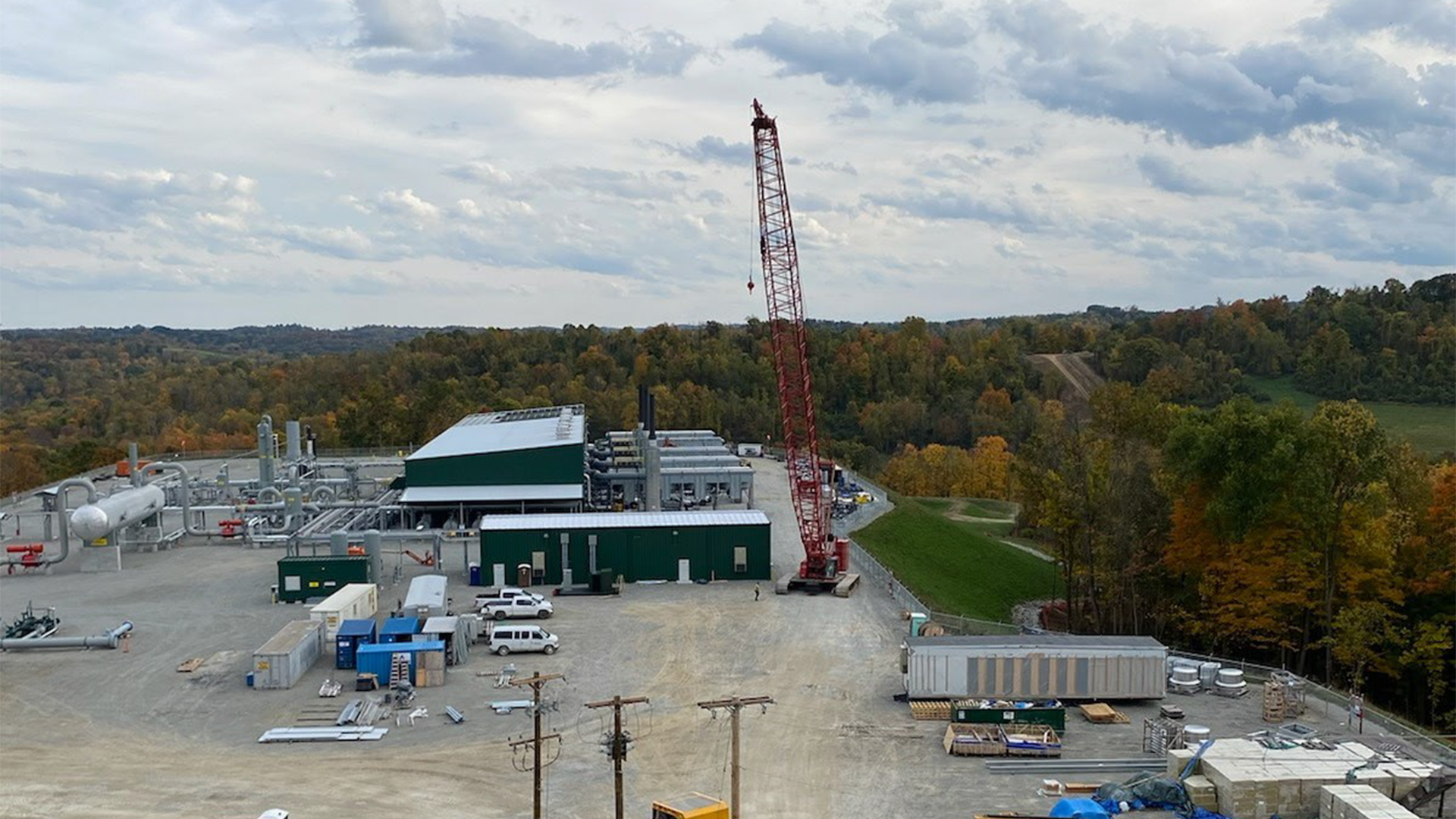
Examples across midstream gas processing facilities demonstrate why structures must be coordinated with equipment loads, vibration, access, thermal movement, piping, ventilation, and safety systems. Environmental performance is strongest when it supports these operating requirements rather than competing with them.
Changing Energy Technologies
Energy systems continue to change. Facilities may need to accommodate upgraded controls, electrified equipment, emissions-control systems, energy storage, additional monitoring, or new process configurations. Adaptable framing and well-planned utility pathways can preserve options, although any modification must be evaluated by qualified professionals.
Red Direct’s overview of steel buildings for midstream infrastructure illustrates the range of compressor, processing, metering, storage, and maintenance applications that may benefit from flexible industrial space.
Storage, Staging, and Material Management
Environmental responsibility extends beyond the enclosed building. Organized storage can protect materials from damage, make leaks easier to identify, separate wastes, and reduce unnecessary handling. Site-specific containment, drainage, and spill-response provisions may also be required. Red Direct’s guide to steel storage yards for midstream infrastructure explains how buildings, canopies, equipment zones, vehicle routes, and environmental controls function as one operating system.
Site Development Is Part of the Environmental Footprint
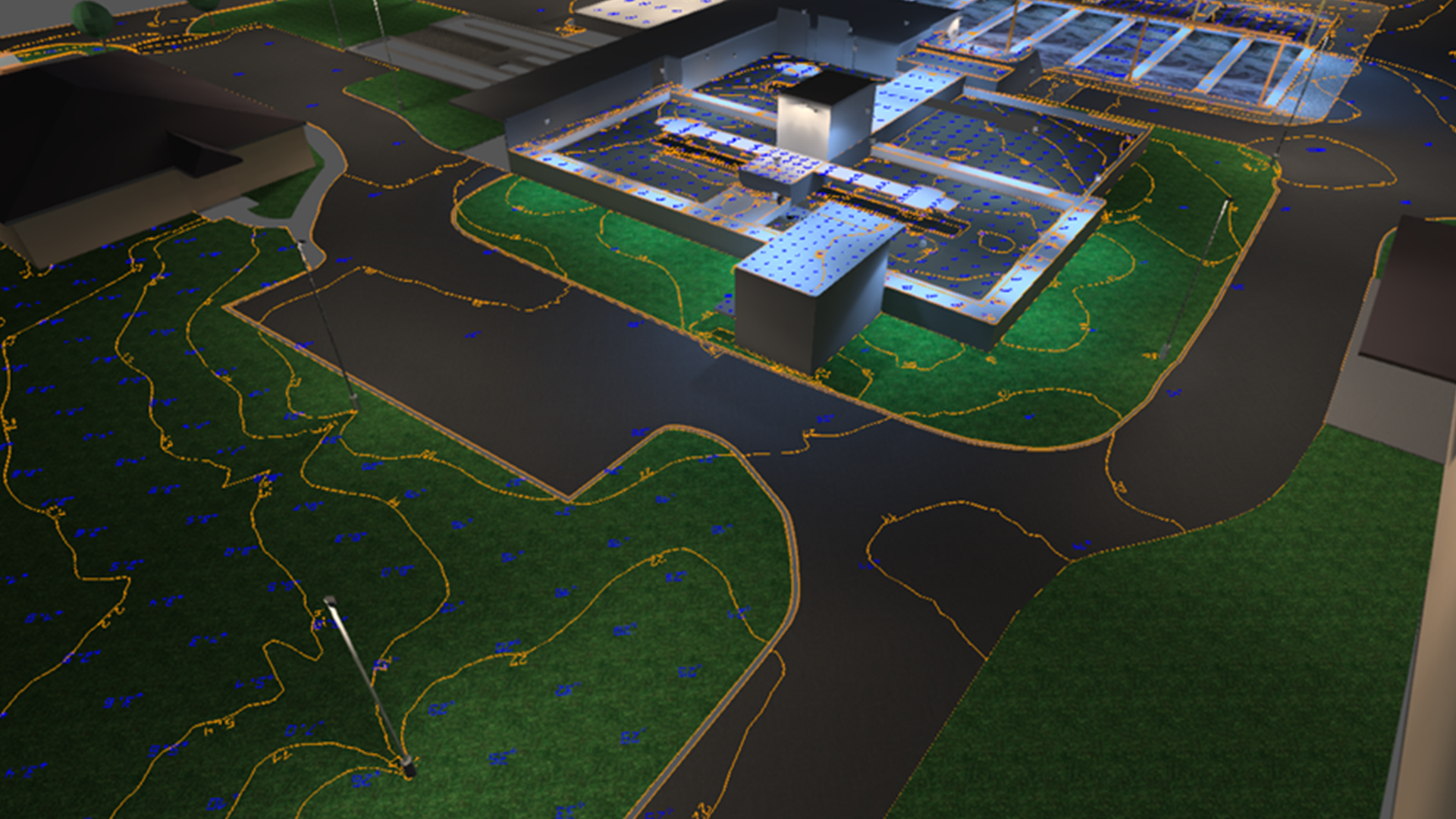
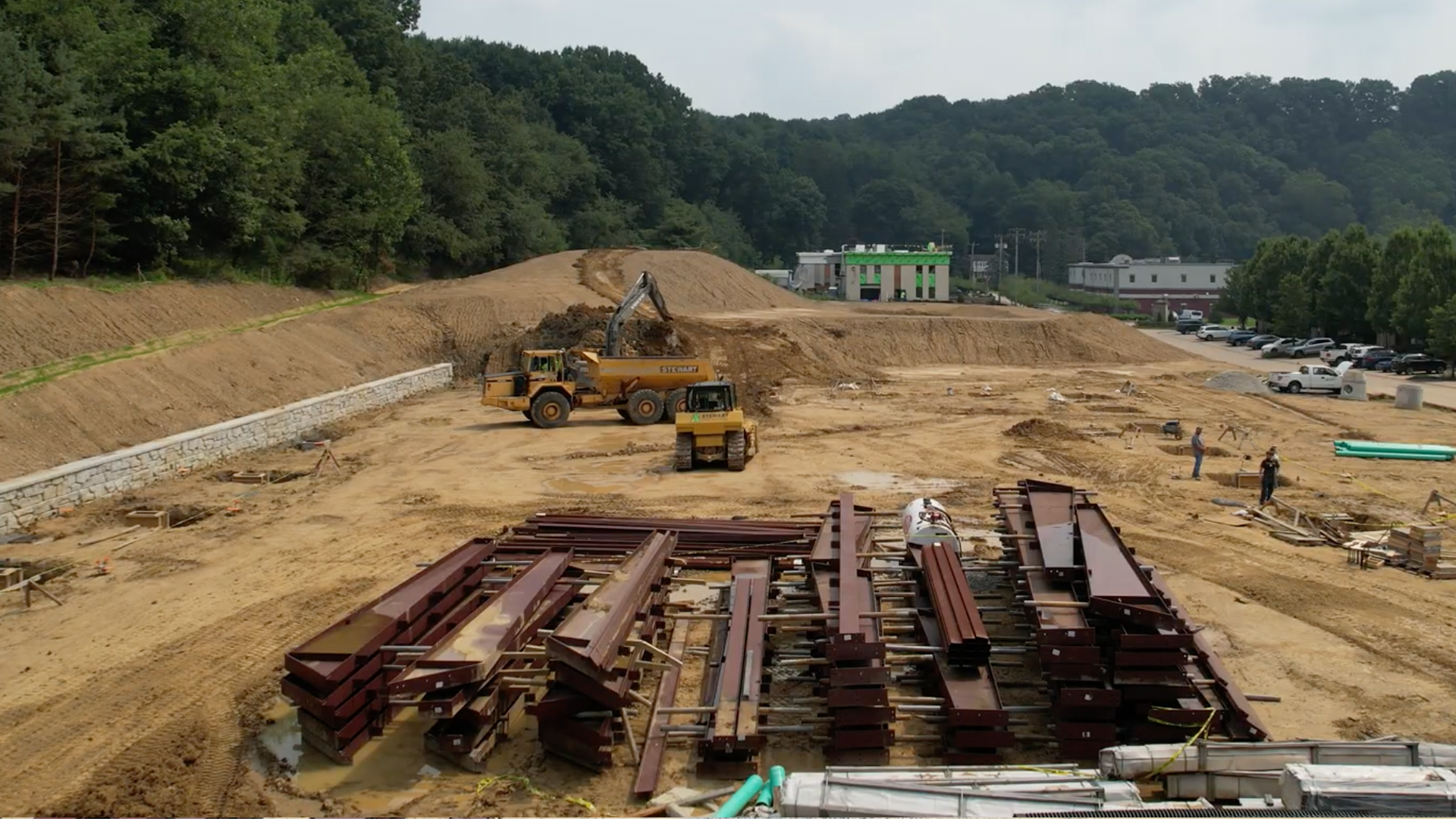
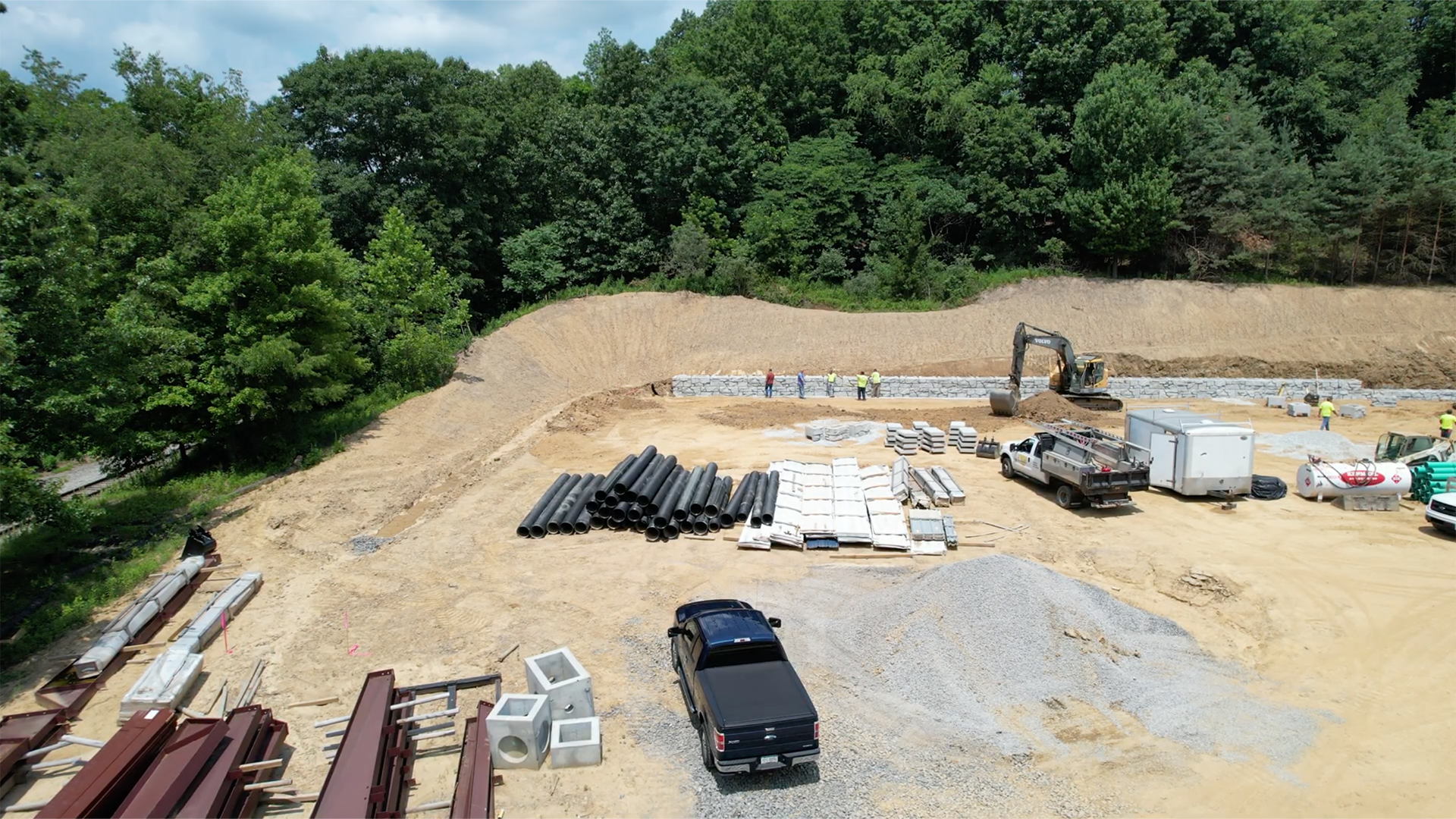
A material-efficient building can still create avoidable impacts if the site is poorly selected or developed. Grading, earthwork, access roads, foundations, utility extensions, habitat disturbance, erosion, stormwater, construction traffic, and long-term drainage all affect environmental performance.
Early site-development planning for steel buildings helps teams evaluate soils, topography, groundwater, access, utilities, zoning, and drainage before the building footprint is finalized. This can reduce redesign and connect the manufactured structure with actual field conditions.
Stormwater requirements depend on site area, soil, slope, impervious coverage, receiving waters, pollutants, and jurisdiction. Detention, retention, infiltration, treatment, erosion control, and operational best-management practices should be selected through project-specific analysis. Red Direct’s guidance on industrial stormwater management explains why runoff control must be integrated into planning rather than added after design.
Comparing Steel, Concrete, Wood, and Other Systems Responsibly
No structural material is environmentally superior in every application. Comparisons based only on one ton, one cubic yard, or one square foot can be misleading because materials perform different functions and may require different quantities, spans, fire protection, foundations, maintenance, and replacement cycles.
A meaningful comparison should evaluate functionally equivalent building designs over the same study period. The assessment may consider:
- Required structural performance, loads, spans, and serviceability
- Material quantities and verified product data
- Foundations, fire protection, coatings, and enclosure assemblies
- Transportation and construction methods
- Energy and water use during operation
- Maintenance, repair, and replacement assumptions
- Adaptability, disassembly, reuse, recycling, and disposal scenarios
- Local availability, climate, hazards, and expected service conditions
Wood can provide renewable sourcing and biogenic-carbon considerations when forests and products are managed responsibly. Concrete can offer thermal mass, local availability, fire resistance, and efficient compression performance, while cement production can carry substantial emissions. Steel provides high strength, established recovery markets, and adaptability, but production impacts vary. The best choice may also combine materials where each performs efficiently.
Owners comparing options for demanding operations can review Red Direct’s experience with industrial steel buildings and then request project-specific structural, operational, and environmental analysis.
Using EPDs and Whole-Building Lifecycle Assessment
An environmental product declaration reports quantified environmental information based on a lifecycle assessment and applicable product category rules. It functions as a disclosure document, not an automatic declaration that a product is environmentally preferable. EPDs can report global-warming potential and other impact categories across the lifecycle modules included in their scope.
Before comparing EPDs, teams should confirm that the documents use compatible declared units, PCRs, lifecycle stages, data periods, geographic assumptions, and calculation methods. Product-specific values should not be compared casually with industry averages or documents created under different rules.
A whole-building lifecycle assessment places product data into the context of the complete design. It can compare alternative structures or design options while accounting for the quantities needed to provide equivalent performance. Results still depend on model boundaries, service life, replacement schedules, operational assumptions, and end-of-life scenarios, so those choices should be documented.
LEED and Other Sustainability Frameworks
Steel can contribute to strategies used by projects pursuing LEED or other green-building objectives, but no structural material guarantees certification. Rating systems evaluate the building and site across multiple categories, and their requirements evolve. Teams should identify the selected version, rating system, prerequisites, credit language, documentation, and responsible parties early.
Modern material strategies may address lifecycle impact reduction, EPDs, responsible sourcing, material ingredients, reuse, waste prevention, and verified product performance. A simple recycled-content claim does not replace the broader evaluation. Red Direct’s guide to steel buildings and LEED certification explains how structure, energy, water, site, materials, indoor environmental quality, commissioning, and documentation work together.
Other programs—including Green Globes, Envision for infrastructure, the Living Building Challenge, Passive House standards for applicable building types, and owner-specific carbon requirements—use different scopes and criteria. The project team should confirm which framework fits the facility rather than presenting the programs as interchangeable.
Practical Strategies for a Lower-Impact Steel Facility
Owners can translate sustainability goals into design and procurement requirements through measurable actions:
- Define project boundaries, performance goals, and reporting methods at the beginning.
- Use accurate equipment, structural, and future-load criteria to avoid unnecessary material.
- Request current EPDs and evaluate global-warming potential using consistent data.
- Consider regional availability and transportation alongside product-stage impacts.
- Coordinate efficient spans, bay spacing, member sizes, connections, and foundations.
- Design durable drainage, corrosion protection, inspection access, and maintenance plans.
- Optimize the enclosure, HVAC, lighting, controls, and commissioning for actual operations.
- Plan credible expansion zones, utility routes, and adaptable interior space.
- Reduce fabrication and construction waste before relying on recycling.
- Document materials and connections to support future repair, adaptation, recovery, or reuse.
These decisions require coordination across the site and building. Red Direct’s integrated engineering and construction services connect planning, civil design, structural systems, permitting, fabrication, and field execution.
Selecting a Partner for Sustainable Energy Infrastructure
A credible partner should be able to distinguish measurable environmental performance from marketing language. Owners can ask prospective teams how they address:
- Lifecycle boundaries, EPD selection, and whole-building assessment
- Material optimization without compromising safety or serviceability
- Energy-facility equipment, loads, clearances, ventilation, and maintenance access
- Envelope continuity, condensation control, and operational energy
- Site development, stormwater, utilities, and environmental permitting
- Corrosion protection, inspection, maintenance, and future adaptation
- Fabrication quality, construction waste, logistics, and material documentation
Red Direct’s project-development process begins with the owner’s scope and site before proceeding through design, fabrication, approvals, and construction. Its permitting support, construction management, and construction capabilities help keep environmental objectives connected to the decisions made in the field.
Building Environmental Value Through Better Decisions
The environmental benefits of steel in energy infrastructure do not come from one claim. They come from efficient design, informed sourcing, transparent product data, controlled fabrication, durable detailing, responsible site development, efficient operation, planned maintenance, adaptability, and realistic end-of-life pathways.
Steel can provide an effective foundation for those strategies. Its strength, recoverability, established recycling pathways, and capacity for future modification can support long-term environmental value when the entire facility is planned as a system. Owners can explore Red Direct’s completed steel-building projects to see how the company supports different operational environments.