Organizing the Space Behind Continuous Midstream Operations
Midstream infrastructure keeps natural gas, crude oil, natural gas liquids (NGLs), and other products moving between production, processing, transmission, storage, and distribution. That movement depends on more than pipelines alone. It also relies on carefully planned sites where operators can receive materials, stage equipment, maintain critical assets, and—when the process requires it—transfer or store products.
Steel storage yards for midstream infrastructure can support those activities with durable equipment buildings, covered material bays, maintenance shops, canopies, control enclosures, and other purpose-built structures. However, an equipment yard, a loading area, and a product-storage terminal are not interchangeable. Each has different hazards, workflows, structural demands, and regulatory requirements. Effective planning begins by defining what the site must store, how people and vehicles will move through it, and which systems must remain accessible during normal operation and emergencies.
For operators developing broader energy infrastructure, the objective is a coordinated facility—not simply more square footage. The right layout can support organized material handling, faster access to essential equipment, safer circulation, and dependable field operations.
The Midstream Operational Imperative
Midstream systems often operate around the clock, while production volumes, maintenance schedules, weather, and downstream demand continue to change. Storage and staging capacity can help a facility respond to those conditions, but the function and amount of capacity must be established through project-specific operational analysis.
Well-planned pipeline support facilities may contribute to operational continuity in several ways:
- Material availability: Organized storage keeps pipe, valves, fittings, tools, spare parts, and consumables identifiable and accessible when crews need them.
- Maintenance support: Covered work areas and properly equipped maintenance buildings can support inspection, repair, and component replacement without exposing every task to the weather.
- Operational flexibility: Staging zones can help crews prepare materials and equipment for planned work, outages, or emergency response.
- Product handling: Where product storage or transfer is part of the site, properly engineered tanks, piping, loading systems, controls, and safeguards can help manage the required flow.
- Site safety: Defined traffic routes, protected pedestrian paths, fire lanes, access control, and emergency-response space can reduce conflicts and improve readiness.
- Environmental protection: Grading, drainage, spill-control measures, and stormwater systems can help manage site-specific environmental risks.
The result is an operating environment in which storage supports the work instead of creating congestion. Related steel storage facilities for natural gas infrastructure show how protected buildings can complement the larger network of process and pipeline assets.
Understanding Midstream Storage Yard Requirements
Before design begins, the project team should separate the site into functional systems. A product-storage area may be governed by commodity properties, tank design, process safety, fire protection, and environmental rules. An equipment yard is driven more heavily by inventory control, material preservation, lifting and handling, traffic, security, and access. Loading and unloading areas introduce another set of transfer-related requirements.
Product-Storage Tank Systems
Product-storage tanks are separately engineered systems; they are not simply components of a general-purpose steel building. Tank type, pressure, temperature, material compatibility, foundation design, spacing, piping, instrumentation, overfill protection, fire protection, and containment must be selected for the actual product and operating conditions.
Natural gas itself is commonly managed through pipelines, underground storage, line pack, or LNG systems rather than ordinary atmospheric tank farms. NGLs may require pressure vessels, refrigerated storage, or underground caverns, while crude oil is commonly held in atmospheric or low-pressure aboveground tanks. A disciplined planning and development process helps identify these distinctions early enough to coordinate the site, support buildings, utilities, and access.
Project-specific tank-system considerations may include:
- Product properties, operating pressure, temperature, and required capacity
- Tank or vessel design standard and material compatibility
- Foundation performance, settlement criteria, and geotechnical conditions
- Corrosion control, coatings, cathodic protection where applicable, inspection, and maintenance
- Level measurement, alarms, shutdown functions, leak detection, and overfill protection
- Piping, pumps, transfer equipment, isolation, and safe maintenance access
- Secondary containment where required by the stored material and applicable regulations
Equipment Storage and Maintenance Yards
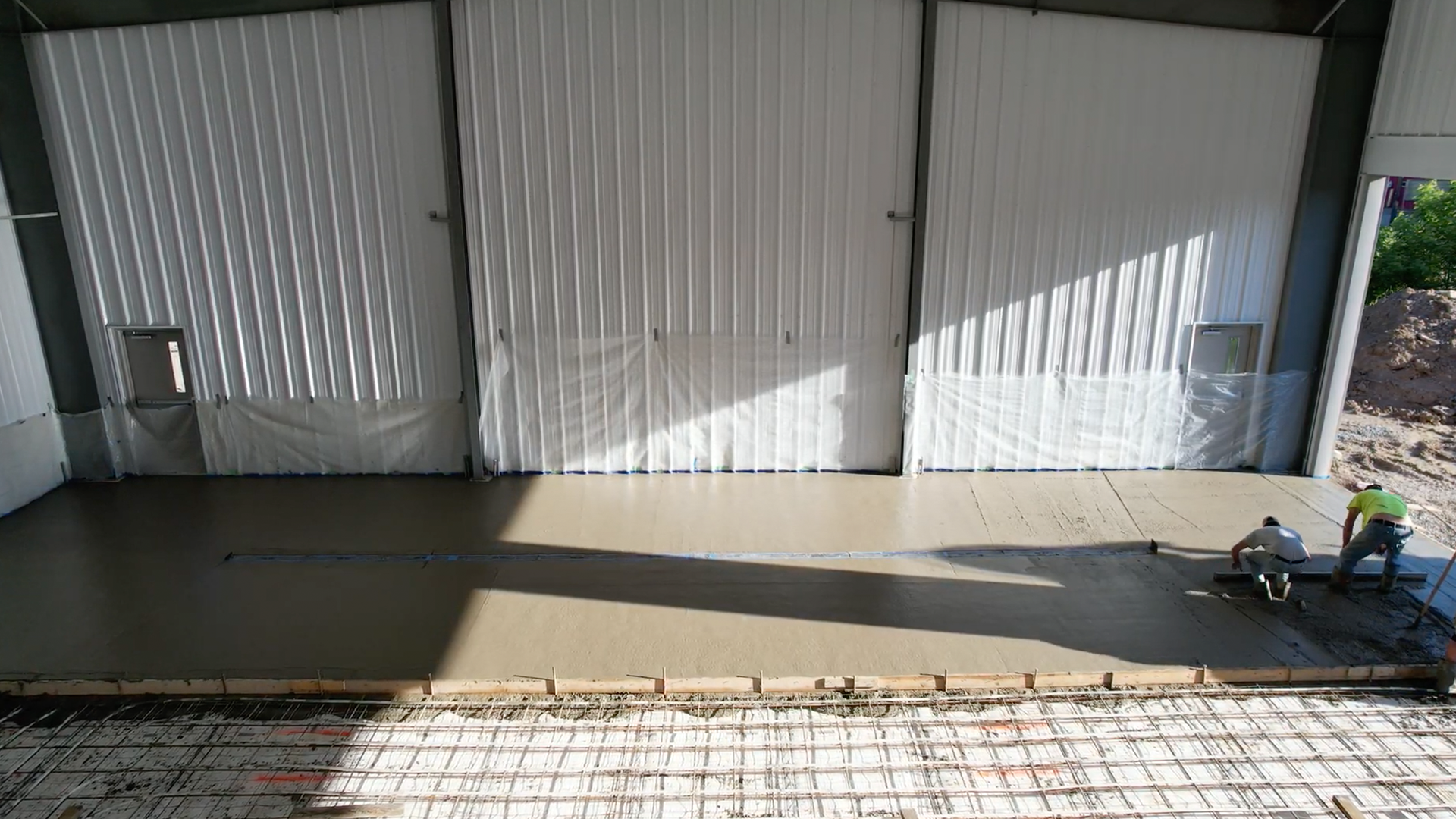
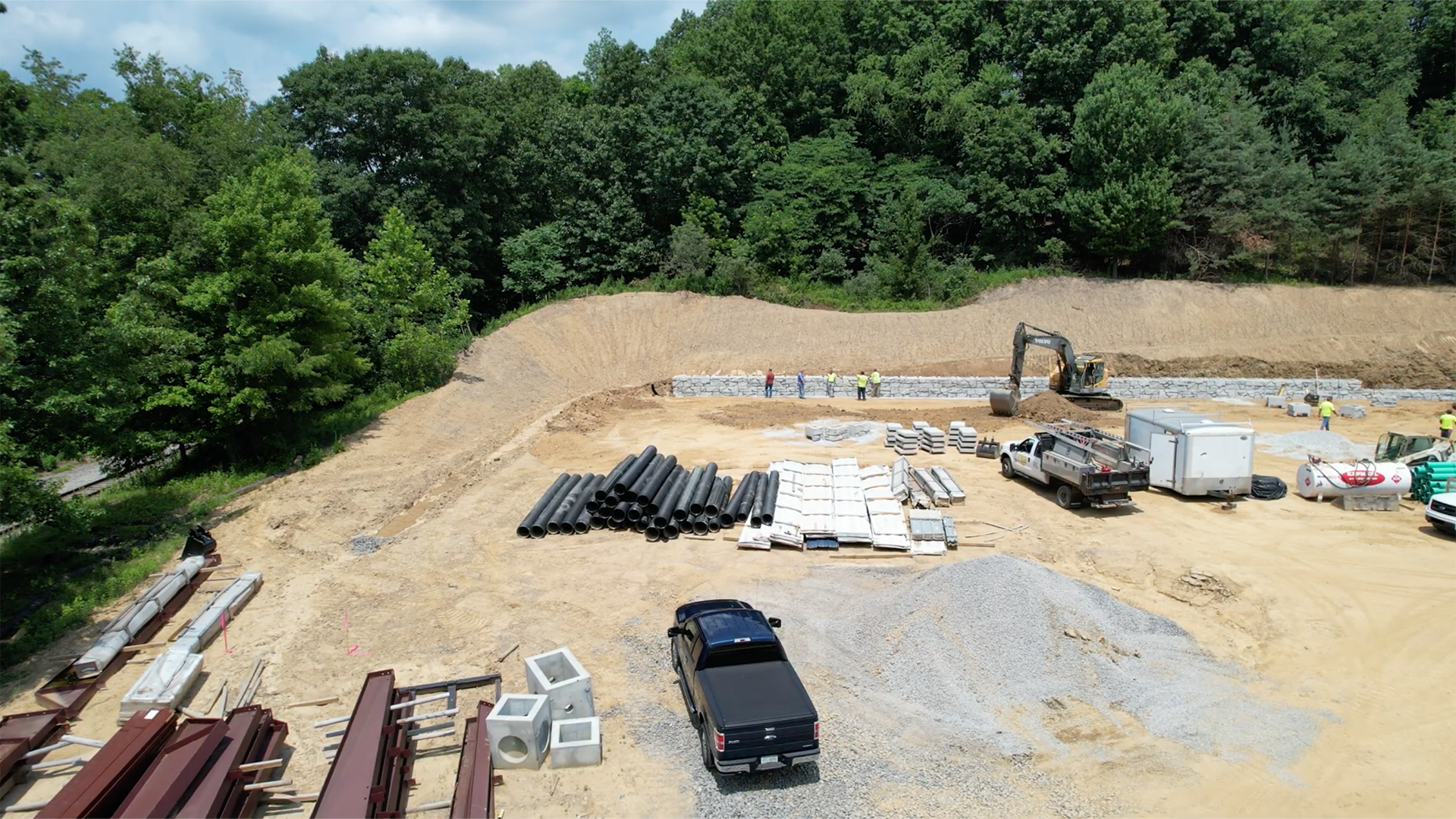
Equipment yards may store pipe, fittings, valves, meters, repair clamps, tools, mobile equipment, replacement components, and other field supplies. Their performance depends on more than fencing and open land. The design should address soil bearing capacity, pavement or aggregate sections, rack and stacking loads, drainage, wind exposure, and the actual forklifts, trucks, and cranes that will use the site.
Important planning elements include:
- Covered or enclosed storage for weather-sensitive equipment
- Pipe racks, chocks, dunnage, tie-downs, and stacking practices suited to stored materials
- Clearly identified inventory, inspection status, and quarantine areas
- Forklift aisles, crane setup zones, turning radii, and overhead clearances
- Dedicated pedestrian routes separated from material-handling traffic
- Maintenance bays, parts rooms, wash areas, and personnel support spaces
- Fire lanes, emergency access, site lighting, fencing, and controlled entry
Early engineering coordination allows the yard surface, foundations, structures, utilities, and handling equipment to be designed as one working system.
Product Staging and Loading Areas
Loading and staging zones should be designed around the selected transfer mode—truck, rail, or pipeline—and the properties of the product being handled. Vehicle queuing, loading racks, safe access, grounding and bonding, overfill protection, emergency shutdowns, lighting, spill control, and vapor management may all be relevant. Exact safeguards depend on the process and applicable codes.
For sites that combine warehousing, vehicle movement, and industrial handling, experience with industrial steel buildings can help align building openings, dock or grade-level access, storage zones, and circulation with the operating plan.
Yard Infrastructure and Utilities
The yard itself is infrastructure. Site grading, access roads, paving, drainage, power, water, communications, sanitary service, security, snow management, and emergency access all affect daily performance. Utility corridors should be coordinated with foundations, equipment pads, future expansion areas, and vehicle routes before construction begins.
Designing the building shell and exterior systems together also makes it easier to plan custom steel-building features such as overhead doors, canopies, mezzanines, equipment platforms, ventilation, insulation, and crane provisions.
Environmental Protection and Compliance
Environmental controls must reflect the products, equipment, drainage patterns, and permits associated with the specific site. For oil facilities subject to the federal Spill Prevention, Control, and Countermeasure rule, secondary containment may be required under 40 CFR Part 112. Other materials and operations may fall under different federal, state, or local programs.
Depending on the project, environmental planning may address:
- Containment or diversion systems for credible spill scenarios
- Clean stormwater separation and controlled drainage from operational areas
- Erosion and sediment controls during construction
- Spill-response equipment, access, training, and documentation
- Waste accumulation, labeling, handling, and disposal areas
- Air permits and emissions controls where the process requires them
A project-specific industrial stormwater management strategy helps prevent runoff systems from becoming an afterthought. Red Direct’s permitting services can also help teams navigate applicable land-development, grading, stormwater, building, and occupancy approvals.
Why Steel Supports Midstream Storage Operations
Steel is widely used for the buildings, canopies, platforms, racks, and enclosures that support midstream yards. Its value comes from the ability to engineer each structure around specific loads, clearances, environmental exposures, and operational requirements.
Structural Strength and Load Support
Steel framing can be designed for heavy roof loads, suspended utilities, equipment platforms, cranes, and large openings. Separate equipment foundations may be required for concentrated or dynamic loads. Coordinated steel fabrication helps translate engineered details into components that fit the intended field installation.
Durability and Corrosion Control
Steel is not inherently immune to corrosion. Long-term performance depends on exposure conditions, material selection, coatings or galvanizing, drainage details, compatible fasteners, inspection, and maintenance. When those elements are specified correctly, steel systems can provide durable service in demanding industrial environments.
Flexible Layouts and Clear Spans
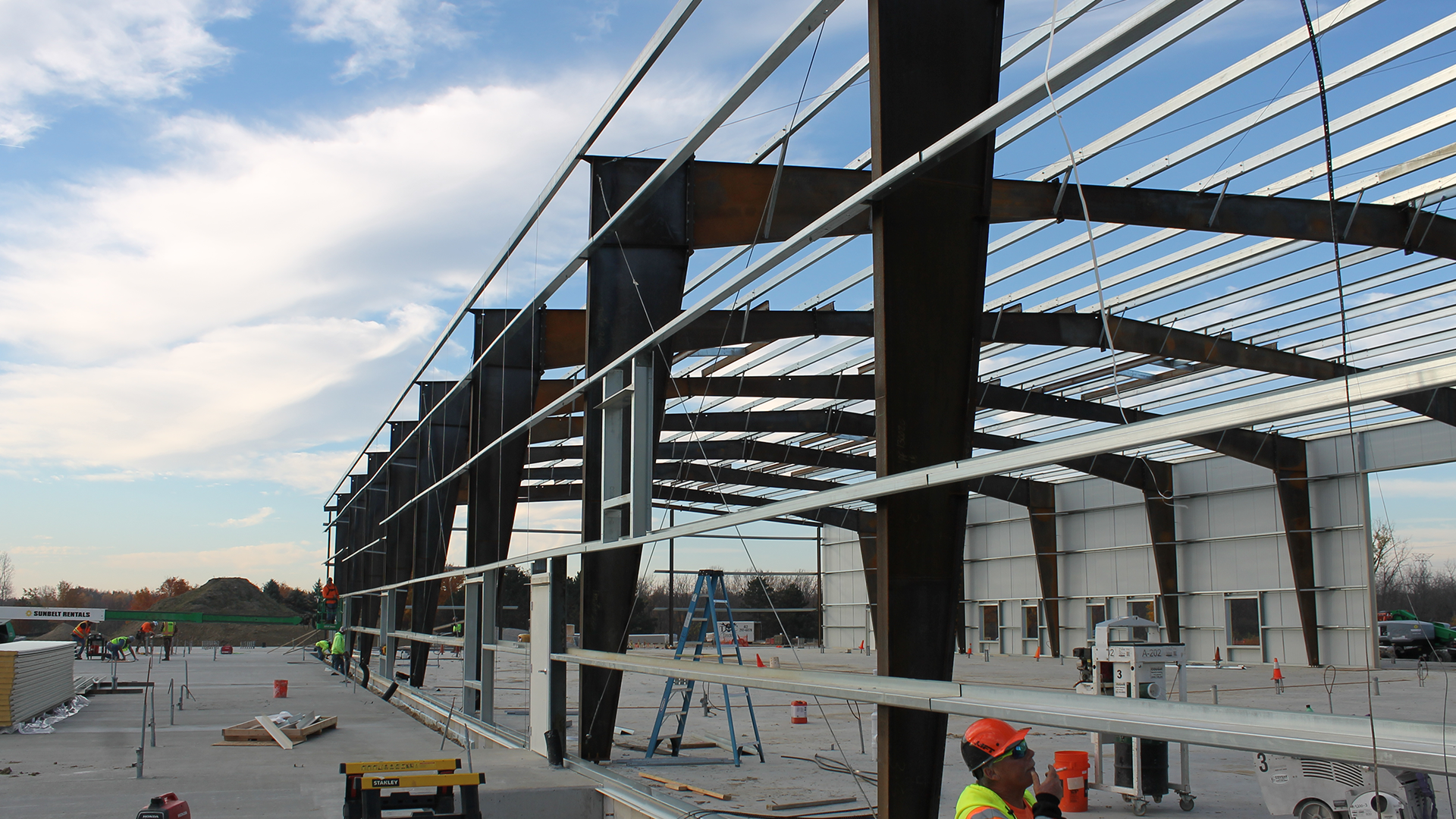
Clear-span framing can reduce interior obstructions and support flexible placement of racks, work bays, equipment, and vehicle routes. Framing can also be planned for future openings or expansion, although future modifications still require engineering review. These are among the practical benefits of steel buildings for changing industrial operations.
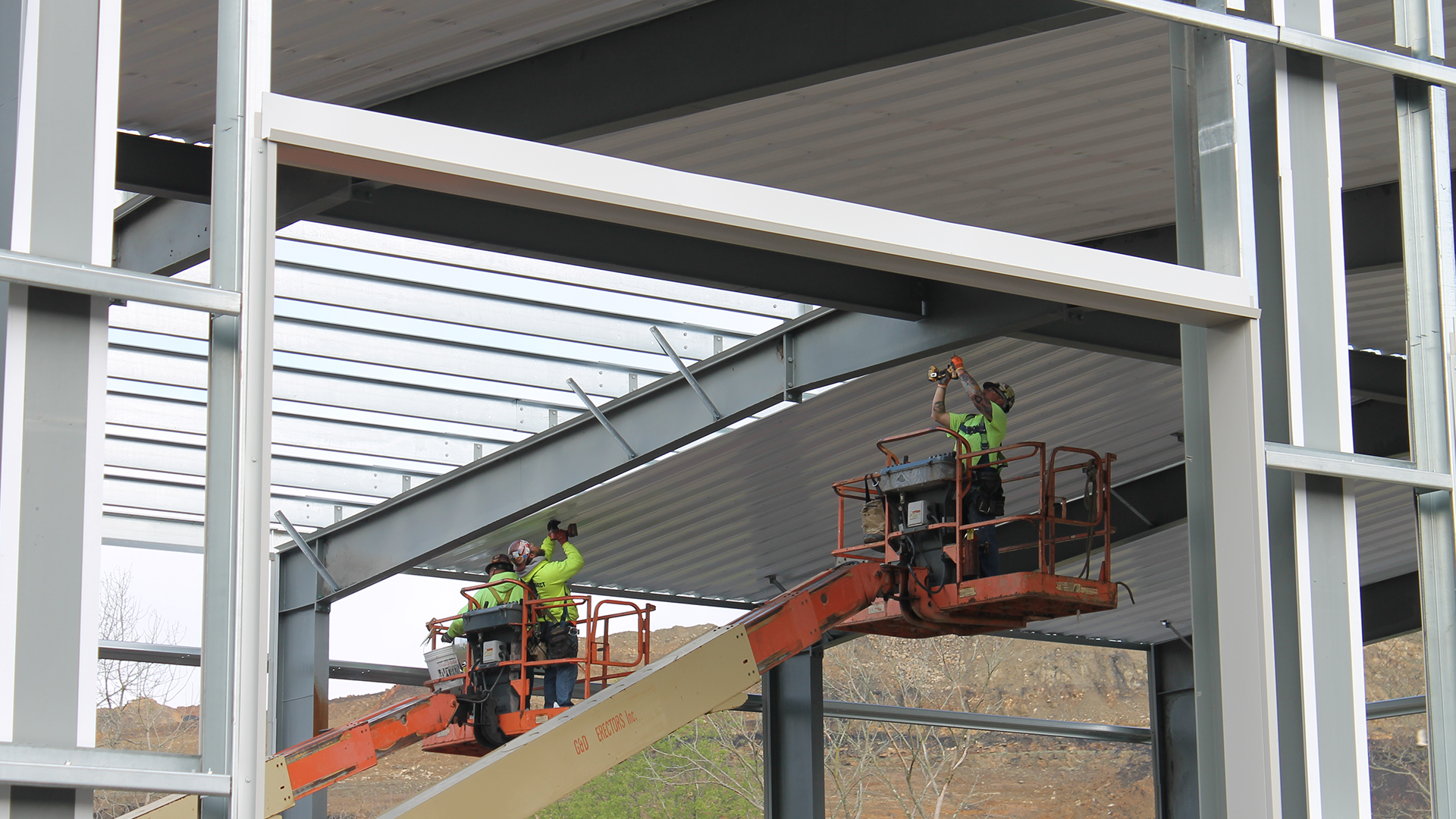
Coordinated Construction
A pre-engineered metal building can streamline structural design, fabrication, and field erection when the project scope and interfaces are defined early. Actual schedules depend on permitting, procurement, site conditions, utilities, equipment coordination, weather, and contractor availability, so faster delivery should be treated as a project objective rather than a guarantee.
Lifecycle Value
Lifecycle value comes from fit-for-purpose design, maintainability, adaptability, and durable detailing—not from the structural material alone. Initial construction cost, inspection needs, coatings, repairs, energy use, operational disruption, and future modifications should all be evaluated when comparing alternatives.
Types of Midstream Storage and Support Facilities
NGL Storage Areas
NGL storage may involve pressurized, refrigerated, or other specialized systems selected for the product and process. The site may also need pump or compressor equipment, loading systems, controls, fire protection, and support buildings. These systems require process and mechanical expertise beyond conventional building design. Broader guidance on steel buildings for midstream operations can help frame the role of the building within the full facility.
Crude Oil Storage Areas
Crude oil is commonly stored in atmospheric or low-pressure tanks engineered for the product and operating conditions. Heating, mixing, vapor management, corrosion control, containment, inspection access, and fire protection may be required. Multiple tanks can provide operating flexibility, but they do not automatically create redundancy; shared piping, utilities, controls, and common hazards must also be evaluated.
Equipment Storage and Maintenance Facilities
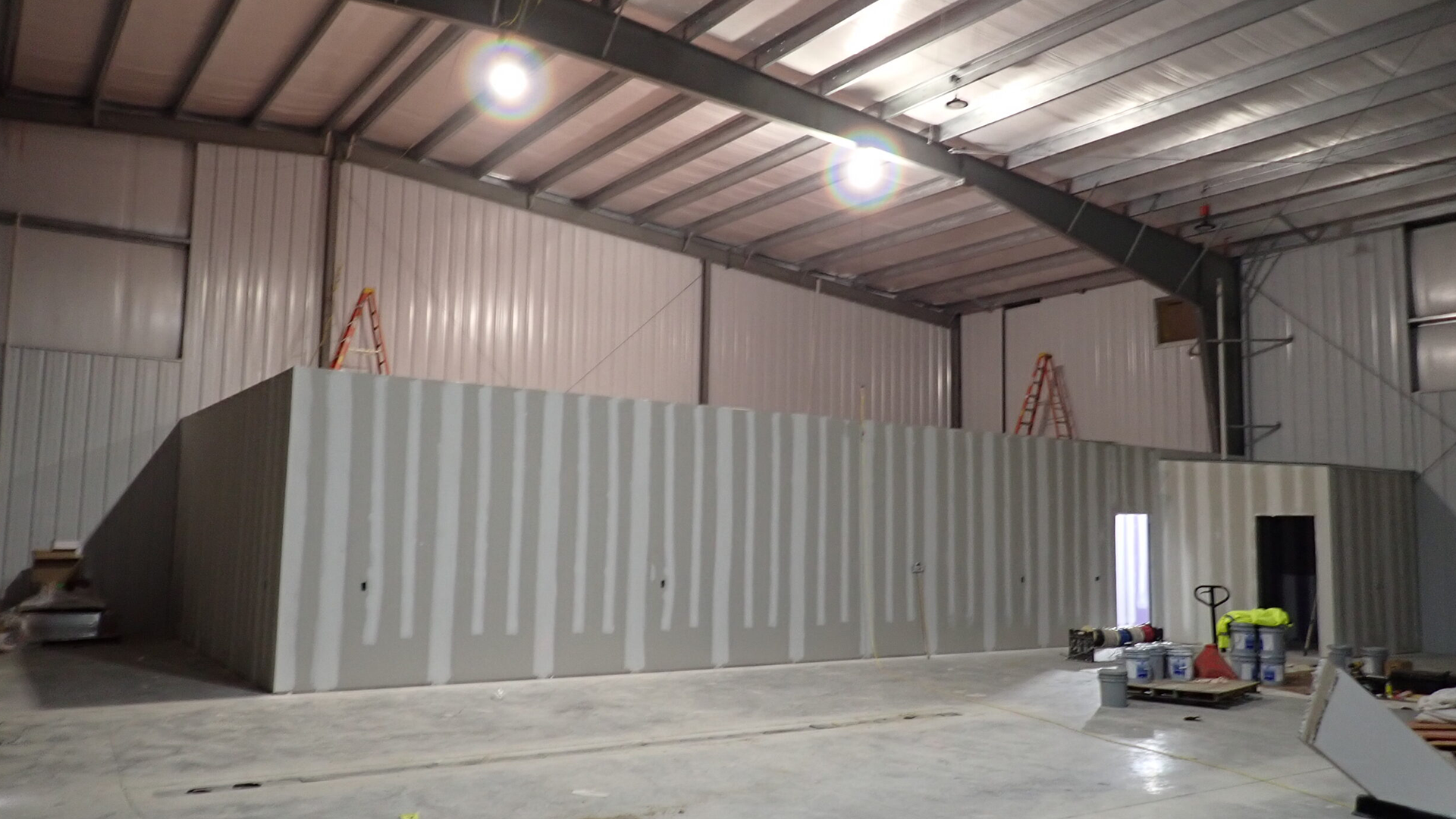
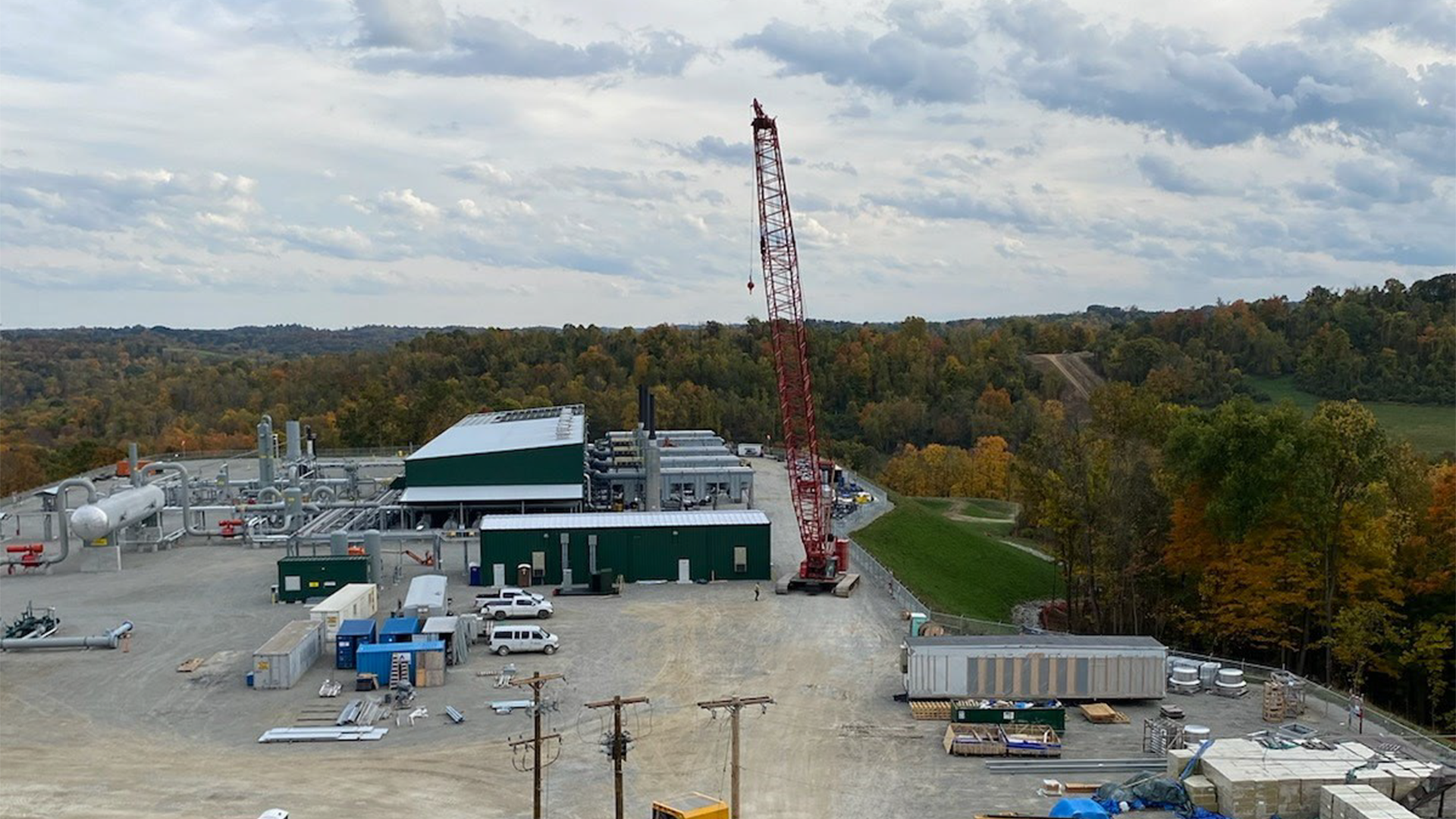
These yards support field operations by keeping critical materials organized, protected, and accessible. Steel warehouses, open-sided canopies, maintenance shops, and secure parts rooms can be combined with outdoor storage zones based on each item’s preservation requirements. Similar workflow and equipment-integration considerations appear in natural gas processing facility buildings.
Product Staging and Loading Facilities
Staging and transfer facilities coordinate incoming and outgoing vehicles, temporary positioning, operator access, sampling, documentation, and product movement. Their layout should prevent queuing and turning conflicts while preserving emergency access. They must also integrate the safeguards required for the actual transfer process.
Related Midstream Support Buildings
Storage yards frequently operate alongside control buildings, metering enclosures, maintenance bases, and compressor-station buildings. Planning these structures as part of one site can improve access, utility coordination, security, and future expansion. Red Direct’s overview of steel solutions for natural gas midstream facilities provides additional examples.
Design Excellence in Midstream Steel Storage Yards
Layout Optimization
Layout should begin with actual operating movements. Designers map deliveries, receiving, inspection, storage, picking, maintenance, loading, waste handling, and emergency response. From there, they can define rack locations, lane widths, turning radii, building access, crane zones, pedestrian paths, and expansion space.
For product-storage areas, tank and piping arrangement should balance safe separation, inspection access, hydraulic performance, constructability, containment, and emergency response. For equipment yards, the priorities may be travel distance, inventory visibility, safe lifting, weather protection, and material traceability.
Safety and Risk Management
Facilities handling hazardous materials require a risk-based approach. Depending on the operation, design may need to address process hazard analysis, separation distances, classified electrical areas, ventilation, gas or fire detection, emergency shutdowns, grounding and bonding, firewater access, evacuation, and spill or overfill protection. Building location and occupancy should also be evaluated in relation to process hazards.
Construction quality and field practices matter as well. Red Direct’s safety commitment reflects the importance of carrying safety expectations from planning through installation.
Environmental Performance
Drainage should direct clean water away from operational areas while routing potentially contaminated water according to the approved site plan. Ventilation protects indoor working conditions where required, but it is not a substitute for process-emissions control. Air permitting, vapor recovery, and other emissions requirements must be evaluated separately.
Operational Efficiency and Maintainability
A well-organized yard can shorten search and travel time, improve access for planned maintenance, and reduce handling conflicts. Monitoring, barcoding or RFID, computerized inventory systems, and clearly defined storage locations can support better material control. Building design should also provide safe access for inspection, coating repair, roof and gutter maintenance, and equipment replacement. A documented steel-building maintenance plan helps protect long-term performance.
Operational and Financial Benefits
Quality storage-yard design does not guarantee higher throughput or lower costs, but it can create the conditions for better performance. Potential operational benefits include:
- More dependable access to tools, components, and replacement equipment
- Fewer conflicts among trucks, forklifts, cranes, personnel, and emergency vehicles
- Better protection for weather-sensitive materials and equipment
- Improved maintainability and clearer inspection routes
- Greater flexibility for changing inventory and future expansion
- More consistent environmental, security, and housekeeping controls
Financial value should be measured across the full service life. Reduced damage, efficient handling, planned maintenance, adaptable space, and fewer operational disruptions may improve lifecycle performance when the facility is appropriately designed and managed.
Regulatory and Safety Standards
No single standard governs every midstream yard. Applicability depends on the commodity, equipment, process, storage volume, pipeline function, location, and authority having jurisdiction. The design team should establish a project-specific code and permitting matrix early.
API Standards
Commonly referenced tank standards include API 650 for welded tanks for oil storage, API 620 for large welded low-pressure storage tanks, and API 653 for the inspection, repair, alteration, and reconstruction of applicable aboveground storage tanks. Other API, ASME, NFPA, or owner standards may apply. The engineer must confirm the correct edition, scope, and applicability for the tank or vessel being designed.
OSHA Requirements
OSHA’s 29 CFR 1910.106 addresses flammable liquids. The Process Safety Management standard in 29 CFR 1910.119 applies only when a covered process and threshold criteria are met, subject to the standard’s scope and exemptions. Additional requirements may govern material handling, powered industrial trucks, walking-working surfaces, electrical systems, hazard communication, and emergency planning.
Pipeline, Environmental, and Local Requirements
Where applicable, PHMSA regulations may include 49 CFR Part 192 for natural and other gas pipelines, Part 193 for covered LNG facilities, or Part 195 for hazardous liquid pipelines. Regulatory boundaries can be nuanced, particularly within processing and terminal facilities, so they should be confirmed for the specific asset.
Environmental obligations may include SPCC, stormwater, air-quality, waste, wetlands, and state-specific programs. Building, fire, zoning, land-development, and occupancy requirements also vary by jurisdiction. Early permitting and code planning can identify these requirements before they disrupt design or construction.
Selecting a Partner for Storage Yard Development
Midstream storage-yard projects cross several disciplines: civil, structural, geotechnical, mechanical, electrical, fire protection, environmental, process safety, security, and construction logistics. The right partner should understand where the steel-building scope begins and ends while coordinating it with tanks, process equipment, utilities, and site systems.
Key qualifications include:
- Experience with energy and industrial facilities
- Ability to translate operating workflows into site and building layouts
- Structural expertise for equipment loads, large openings, cranes, and future expansion
- Knowledge of site development, drainage, utilities, and permitting
- Coordination with process, mechanical, electrical, and fire-protection specialists
- A practical approach to constructability, procurement, access, and phasing
- Relevant references and a demonstrated commitment to safety
Integrated construction management and construction services can help coordinate the many interfaces that shape a working yard. Strong steel-building project management keeps decisions about foundations, openings, equipment, utilities, and field sequencing connected throughout delivery.
Building Storage Infrastructure Around the Operation
The best steel storage yards for midstream infrastructure are designed from the operation outward. Their roads reflect real vehicle movements. Their storage zones reflect inventory and handling needs. Their buildings protect the right assets, provide the right access, and leave room for inspection, maintenance, emergency response, and future change.
Red Direct brings steel-building, site-development, and project-coordination capabilities to energy and industrial work.