Where Customer Expectations Become Warehouse Operations
E-commerce has fundamentally transformed customer expectations. Customers shopping online expect immediate order confirmation, shipment within days, and delivery to their doorstep at their convenience. Expectations that were once unusual are now baseline requirements for many e-commerce businesses. Companies failing to meet those expectations risk losing customers to competitors, while companies delivering reliable service can strengthen loyalty and market share.
Meeting these expectations requires equally capable warehouse infrastructure. Traditional warehouses designed for slower, methodical operations may not be configured to support modern e-commerce order velocity. E-commerce warehouses must process large volumes of orders, pick and pack items accurately, consolidate shipments for multiple carriers, and maintain inventory visibility that supports timely customer updates. Warehouse infrastructure directly influences whether e-commerce operations can deliver on customer expectations or fall short.
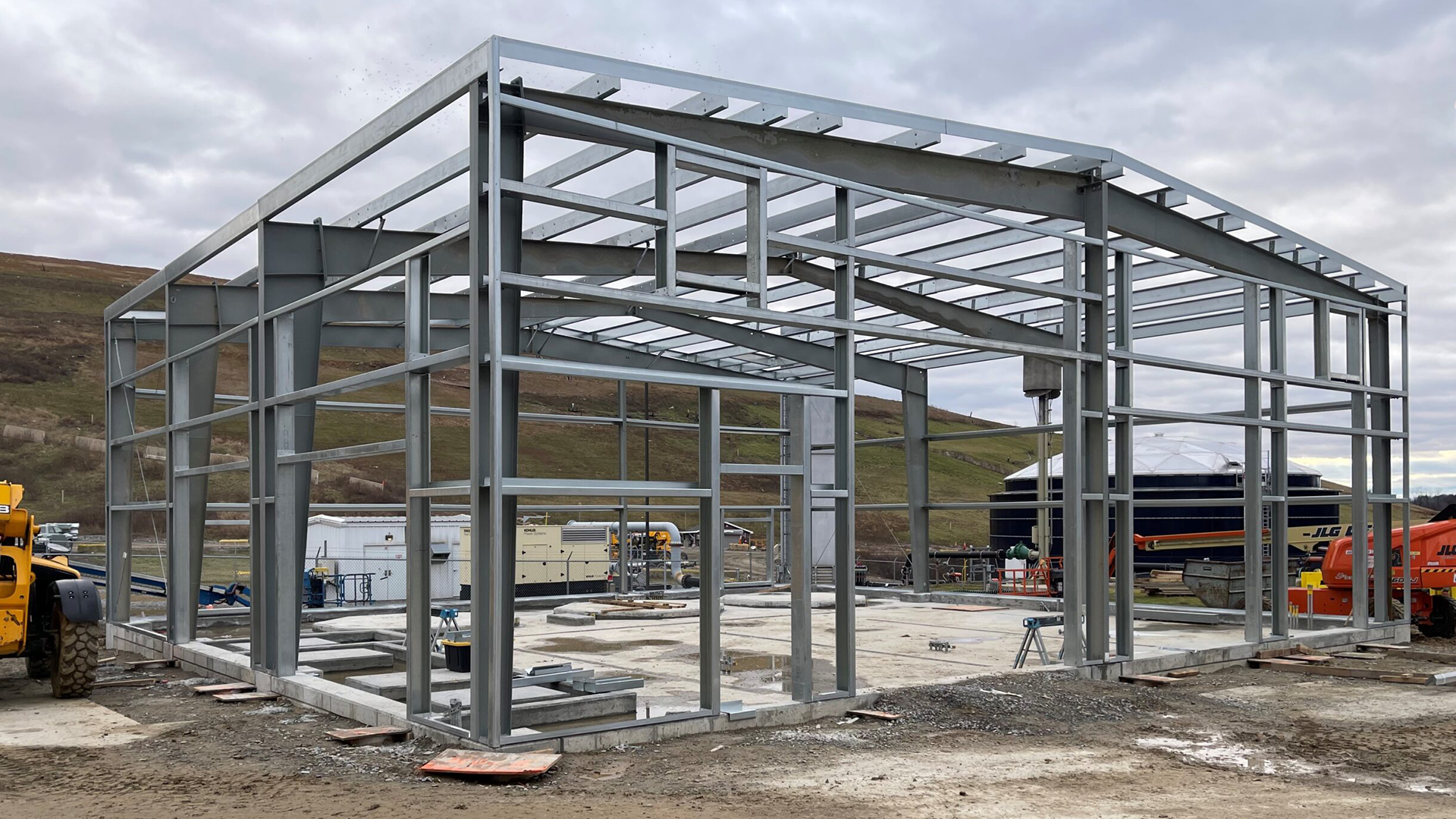
Steel e-commerce warehouses have become essential infrastructure powering online fulfillment. These facilities integrate receiving areas, storage systems, picking and packing operations, consolidation areas, and shipping stations into coordinated systems supporting fulfillment velocity. The flexibility, clear spans, and operational capabilities of steel construction enable warehouse designs optimized around e-commerce demands.
This comprehensive guide explores e-commerce fulfillment requirements, how warehouse infrastructure impacts fulfillment capability, and why leading e-commerce operators invest in modern, efficiently designed warehouse infrastructure.
The E-Commerce Fulfillment Imperative
E-commerce growth is reshaping retail and logistics. Customers increasingly expect online ordering and home delivery as convenient alternatives to in-store shopping. This shift creates extraordinary demand for fulfillment infrastructure. Warehouses that once processed shipments destined for retail stores may now process individual customer orders traveling to homes and businesses.
E-commerce fulfillment demands differ fundamentally from traditional distribution:
- Order velocity and volume. Traditional distribution frequently handled pallet or case quantities destined for a defined network of retail locations. E-commerce warehouses may handle substantial numbers of individual units destined for individual customers. Depending on its size and operating model, a large fulfillment center may process significant order volumes every day.
- Accuracy and complexity. Retail orders often involve pallet or case quantities of products, while e-commerce orders frequently require picking individual items from diverse locations. Order accuracy directly impacts customer satisfaction. One incorrect item can create customer frustration, additional service demands, and return-processing costs.
- Speed expectations. Customers commonly expect delivery within days rather than weeks. This requirement compresses fulfillment timelines. Orders may need to be picked, packed, and transferred to shipping carriers within hours of receipt.
- Inventory visibility. Customers expect timely order tracking from placement through delivery. This visibility requires integrated inventory systems and dependable data accuracy.
- Returns management. E-commerce can generate substantial return volumes, although rates vary significantly by product category. Warehouses must support reverse logistics, product inspections, and appropriate disposition of returned merchandise.
- Peak-season scaling. E-commerce operations can experience dramatic seasonal demand spikes. Holiday and promotional periods may multiply normal order volume. Warehouse capacity must accommodate these peaks without leaving excessive idle capacity during slower periods.
Meeting these demands requires warehouse infrastructure designed around modern fulfillment. E-commerce warehouses are engineered systems where physical infrastructure, material-handling equipment, technology platforms, and operational procedures work together to support order velocity.
Understanding E-Commerce Warehouse Requirements
E-commerce warehouses must address specialized requirements enabling rapid, accurate fulfillment at scale.
High-Speed Receiving and Inbound Processing
E-commerce warehouses receive constant shipments from suppliers and brands while also handling customer returns. Receiving operations must process inbound volume efficiently, verify product condition and quantity, and enter products into inventory systems promptly.
Receiving Design Requirements
- Multiple receiving doors accommodating simultaneous inbound shipments
- Large staging areas holding inbound shipments awaiting processing
- Efficient quality-checking and verification procedures
- Immediate integration with inventory systems
- Flexible layouts accommodating varying supplier packaging
- Cross-dock opportunities for products flowing directly to fulfillment without storage
Efficient receiving is critical because inventory availability directly impacts fulfillment capability. Products delayed during receiving can also delay customer-order fulfillment.
Optimized Storage and Retrieval
E-commerce warehouses may store thousands of stock-keeping units, commonly called SKUs, within the same facility. Storage design must enable accurate item location and efficient retrieval.
Storage Design Considerations
- Vertical-space utilization through multi-level racking
- Clear ceiling heights supporting appropriately engineered racking systems
- Aisle organization enabling efficient item location
- Inventory-management systems tracking exact item locations
- Adequate maneuvering space for picking equipment
- Inventory strategies that reduce single-point availability problems for critical items
- Environmental controls protecting products from damage
Modern e-commerce warehouses can stack products across multiple racking levels, allowing operators to use the building’s vertical capacity. The structure, floor slab, fire-protection systems, equipment clearances, and racking must all be designed as coordinated systems.
Picking and Packing Operations
Picking—selecting items from storage—and packing—placing items into shipping containers—represent the core fulfillment operations. Design must enable accurate picking and efficient packing without compromising worker safety.
Picking and Packing Design
- Organized pick paths guiding operators through efficient routes
- Batch-picking strategies consolidating multiple orders where appropriate
- Technology systems directing operators to correct locations
- Ergonomic design helping reduce fatigue and injury risk
- Packing tables and work areas with adequate space and tools
- Material-handling equipment supporting movement of heavy items
- Lighting supporting fast, accurate picking
- Environmental conditions supporting personnel productivity
The efficiency of picking and packing operations directly influences warehouse throughput and fulfillment speed.
Consolidation and Shipping Operations
Orders that have been picked and packed must be consolidated for shipping carriers. Different carriers and services have different consolidation requirements. Orders destined for the same routes or carriers can be organized to support efficient transportation.
Consolidation and Shipping Design
- Large consolidation areas holding orders awaiting carrier pickup
- Shipping-dock areas sized for multiple simultaneous carrier operations
- Carrier-staging areas for trucks awaiting loading
- Shipping-system integration enabling timely carrier coordination
- Environmental protection during consolidation and loading
- Sort lanes enabling efficient consolidation and carrier assignment
Efficient consolidation can support both delivery speed and more effective use of carrier capacity.
Returns and Reverse Logistics
E-commerce returns are a normal part of fulfillment. Warehouses must handle returns efficiently by inspecting product condition, determining disposition—such as restocking, refurbishment, recycling, or disposal—and processing the merchandise accordingly.
Returns-Processing Design
- Dedicated returns-receiving areas
- Inspection stations assessing product condition
- Separate flows for restockable and non-restockable products
- Environmental protection for returned merchandise
- Integration with forward inventory systems
- Refurbishment facilities where applicable
- Efficient routing helping prevent return backlogs
Effective returns processing maintains inventory visibility and supports customer satisfaction through timely refunds or exchanges.
Environmental Control and Product Protection
Many e-commerce products require environmental protection. Electronics may require humidity control. Apparel requires conditions that help prevent mold and material damage. Temperature-sensitive products require specialized areas and equipment.
Environmental Requirements
- Climate-controlled areas for temperature- or humidity-sensitive products
- Sealed environments helping prevent contamination
- Environmental-monitoring systems tracking conditions
- Proper ventilation supporting indoor air quality
- Backup systems protecting critical products when required by the operation
Steel structures can accommodate extensive environmental and mechanical systems throughout large warehouse spaces. Operations handling temperature-sensitive merchandise may require the more specialized structural, insulation, monitoring, and mechanical systems used in steel cold-chain logistics facilities.
Steel’s Advantages for E-Commerce Warehouse Operations
Steel construction can offer important advantages for e-commerce facilities requiring open space, adaptable layouts, vertical capacity, and room for future expansion.
Clear Spans Enabling Storage Density
Steel’s strength allows engineers to create wide clear spans with fewer intermediate columns. Clear-span steel buildings can accommodate dense racking, conveyor paths, sorting systems, and flexible operating configurations.
Where project requirements and engineering permit, wide clear spans can provide large areas of uninterrupted space. Reducing interior obstructions can improve usable storage, circulation, and equipment-layout flexibility.
Operational Flexibility and Reconfiguration
E-commerce operations evolve continuously. Product categories change. Fulfillment methods advance. New carrier partnerships emerge. Warehouse layouts must be able to adapt without complete reconstruction.
Steel structures with open interiors and flexible utility systems can support reconfiguration. Racking systems can be reorganized, pick paths can be optimized, and new equipment can be integrated as operational requirements change.
Ceiling Height and Vertical Storage
Multi-level racking and storage systems help maximize warehouse density but require appropriate clear heights and carefully coordinated fire-protection, lighting, structural, and material-handling systems. Steel structures can be designed with the clear spans and ceiling heights needed for high-density storage applications.
Rapid Expansion and Scalability
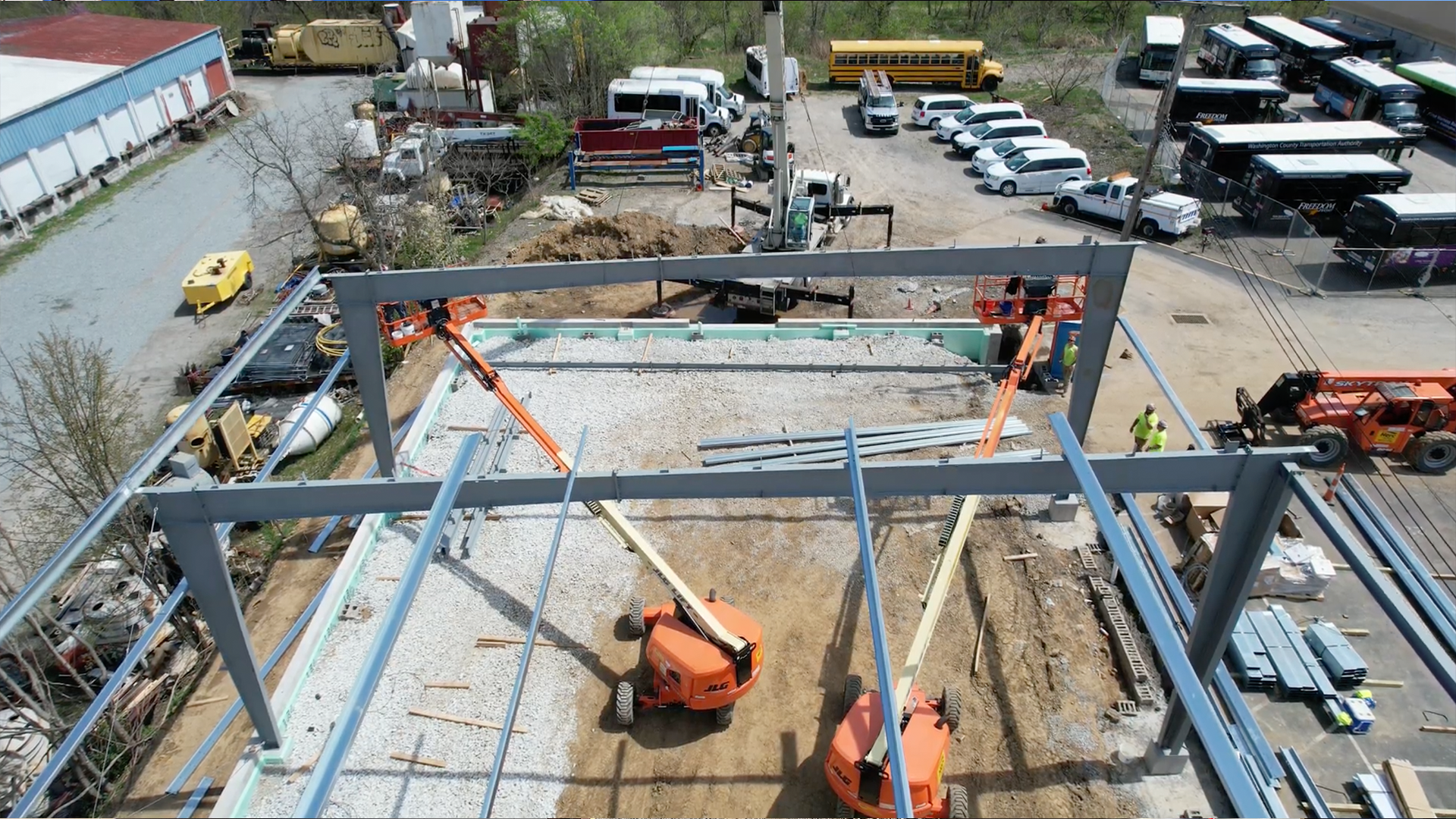
E-commerce growth can require facility expansion. Modular steel building additions can be planned with future growth in mind, allowing new building sections to connect with existing structures when the site, utilities, operations, and original engineering support expansion.
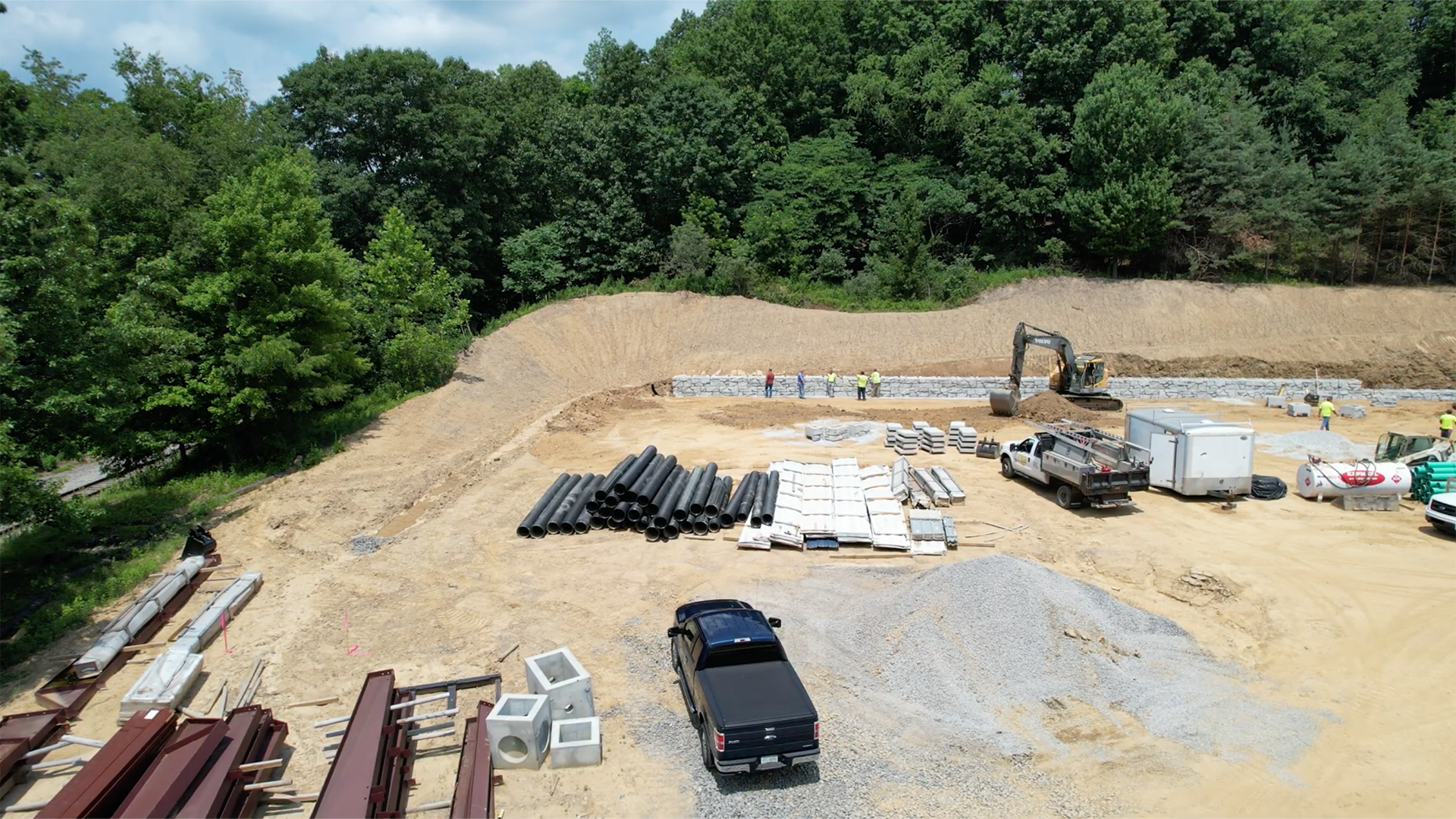
Successful expansion also begins outside the building. Early site-development planning for steel buildings can reserve space for additional building wings, expanded loading areas, utility upgrades, parking, circulation, and increased drainage requirements.
Durability and Maintenance
E-commerce warehouses operate intensively. Forklifts, automated equipment, and constant material movement create demanding operating conditions. Properly engineered and maintained steel structures can provide long-term service within these environments.
E-Commerce Warehouse Facility Types and Configurations
E-commerce fulfillment encompasses diverse facility types serving different operational requirements.
Multi-Purpose Fulfillment Centers
Large warehouses may integrate receiving, storage, picking, packing, consolidation, and shipping. These facilities can handle diverse product categories and serve broad customer regions. Major e-commerce operations may use multiple fulfillment centers to support regional distribution and faster delivery.
Some projects extend this integrated approach by combining warehousing and distribution with light assembly, packaging, offices, or other complementary uses. These mixed-use industrial developments built with steel can place connected operations on one coordinated site.
Multi-Purpose Facility Requirements
- Large footprints that may reach 500,000 square feet or more for certain operations
- High clear heights supporting dense racking
- Multiple receiving and shipping docks
- Extensive conveyor and material-handling systems
- Environmental control for diverse products
- Sophisticated technology systems
- Scalability supporting growth
Specialty Fulfillment Centers
Some warehouses focus on specific product categories requiring specialized handling. Apparel fulfillment may emphasize hanging garments and conveyor systems. Electronics fulfillment may require electrostatic-discharge protections and environmental controls. Food fulfillment may require temperature control and food-safety procedures.
Specialty Facility Requirements
- Product-specific storage and handling systems
- Appropriate environmental controls
- Equipment supporting efficient operations
- Technology enabling specialized tracking and management
- Personnel training supporting specialized operations
Regional Distribution Centers
Regional distribution centers consolidate shipments destined for specific geographic areas. Shipments from fulfillment centers may move through regional centers to support carrier routing and delivery speed.
Regional Center Requirements
- Consolidation and cross-dock operations
- Multiple shipping-dock doors
- Carrier-staging areas
- Real-time routing systems
- Flexible configurations supporting carrier requirements
Returns-Processing Centers
Returns-processing centers specialize in handling merchandise sent back by customers. Returns flow through these facilities for inspection, condition assessment, and disposition.
Returns Center Requirements
- High-volume receiving capacity
- Inspection and assessment areas
- Environmental protection for merchandise
- Restock, refurbishment, recycling, or disposal processing
- Integration with forward inventory systems
Design Excellence in E-Commerce Warehouses
Creating high-performance e-commerce warehouses requires design that supports fulfillment velocity, operational efficiency, worker safety, and scalability.
Layout Optimization for Order Fulfillment
Warehouse layout directly impacts picking efficiency and fulfillment speed. Effective designs create logical pick paths that reduce unnecessary travel while supporting safe movement.
Layout Optimization Considerations
- Product organization based on fulfillment-demand patterns
- High-velocity items positioned for rapid access
- Fast-moving items positioned to reduce travel distance
- Picking organized by zones or departments where appropriate
- Consolidation areas positioned for efficient routing
- Staging organized by carrier or destination
Professional fulfillment planning informs warehouse layouts that support efficient operations.
Technology Integration and Automation
Modern e-commerce warehouses increasingly incorporate automation and technology systems that coordinate fulfillment.
Technology Integration
- Warehouse-management systems orchestrating operations
- Automated sorters directing packages to appropriate carrier lanes
- Conveyor systems automating material movement
- Robotic picking and material-handling systems where appropriate
- Barcode and RFID systems supporting tracking
- Real-time order-management systems
- Predictive analytics supporting operational planning
Steel structures can accommodate automation infrastructure through coordinated structural supports, utility systems, equipment clearances, and flexible layouts. Advances in steel-building design and construction continue to support adaptable interiors, integrated building systems, and energy-efficient warehouse environments.
Peak-Season Scalability
E-commerce operations can experience dramatic seasonal demand spikes. Warehouse design must accommodate peak volume without creating excessive idle capacity during slower periods.
Peak-Season Design
- Flexible staffing models supporting seasonal hiring
- Temporary staging areas for peak-season volume
- Equipment supporting increased throughput during peaks
- Cross-training enabling flexible labor deployment
- Carrier-partnership flexibility supporting variable shipping capacity
Sustainability and Operational Efficiency
Modern e-commerce warehouses increasingly incorporate sustainability features that can reduce environmental impact and improve building performance.
Sustainability Integration
- Energy-efficient lighting and HVAC systems
- Renewable-energy systems where appropriate
- Water-conservation measures
- Waste reduction and recycling
- Sustainable material selection
- Stormwater management
- Workforce-transportation support
These features can improve resource efficiency while supporting broader environmental goals.
Operational Performance and Customer Experience
E-commerce warehouse quality directly impacts operational success and can influence the customer experience.
Performance Impacts
- Fulfillment speed supporting timely delivery
- Order accuracy supporting customer satisfaction
- Scalability supporting business growth
- Operational efficiency improving the use of labor, space, and equipment
- Employee productivity and satisfaction supported by safer, more ergonomic workflows
- Technology capability enabling advanced fulfillment services and greater visibility
E-commerce companies increasingly recognize warehouse investment as an investment in fulfillment capability, customer service, and competitive performance. Red Direct’s steel-construction case studies demonstrate how properly planned warehouse and distribution facilities can support clear-span layouts, automation, future expansion, and efficient operations.
The Business Case for Modern E-Commerce Warehouse Infrastructure
Well-designed e-commerce warehouses can deliver measurable operational and financial benefits.
Operational Benefits
- Faster fulfillment supporting customer satisfaction and loyalty
- Higher order accuracy helping reduce returns and service issues
- Improved labor productivity
- Scalability supporting business growth
- Operational flexibility supporting new services and products
Financial Benefits
- Reduced per-order fulfillment expenses through more efficient operations
- Improved labor utilization
- Reduced product damage and loss
- More efficient returns processing
- Potential revenue benefits from a more reliable customer experience
Strategic Benefits
- Competitive differentiation through dependable customer service
- Customer loyalty supported by accurate, timely fulfillment
- Market-growth opportunities supported by customer satisfaction
- Growth enablement through scalable infrastructure
- Future flexibility supporting business evolution
Selecting a Partner for E-Commerce Warehouse Development
Creating effective e-commerce warehouses requires expertise in fulfillment operations, facility design, material-handling systems, and technology integration. The right partner brings:
Essential Qualifications
- Understanding of e-commerce fulfillment operations and challenges
- Warehouse-layout expertise supporting picking efficiency
- Material-handling and automation knowledge
- Technology-integration capability
- Structural-engineering expertise supporting equipment and high-density storage
- Project management coordinating complex warehouse development
- References demonstrating successful warehouse or fulfillment projects
E-commerce fulfillment speed can provide an important competitive advantage while supporting customer satisfaction and loyalty. Successful development also depends on experienced steel-building project management that coordinates structural requirements, equipment, utilities, permits, site work, fabrication, and construction.
Red Direct designs steel warehouses engineered for fulfillment velocity, operational performance, and scalability.