The Thermal Challenge That Defines Data Center Design
Data centers exist to process information, but their fundamental operational challenge is thermal management. Every watt of electrical power consumed by servers, storage arrays, and networking equipment converts directly to heat that must be removed continuously to prevent equipment failure and maintain performance. Modern high-density computing environments can generate heat loads exceeding 200 watts per square foot—comparable to industrial furnaces—creating thermal management demands that separate data center construction from conventional commercial building projects.
Steel building design for data center applications must address cooling requirements as primary architectural considerations rather than mechanical afterthoughts. The structural systems, spatial configurations, and envelope characteristics all directly impact cooling efficiency and operational costs that will dwarf initial construction investment over facility lifespans. For organizations planning data center facilities, understanding how building design enables or constrains cooling system performance is essential for creating infrastructure that delivers reliable operations at sustainable cost levels.
Cooling Load Fundamentals: Understanding What Buildings Must Handle
IT Equipment Heat Generation
Server racks represent the primary heat sources in data center environments, with power densities varying dramatically based on equipment type and computational workload. Traditional enterprise servers might consume 5 to 8 kilowatts per rack, while high-performance computing and artificial intelligence systems can exceed 40 kilowatts per rack. These concentrated heat loads create localized hot spots that challenge cooling systems designed for uniform load distribution.
The relationship between electrical power and cooling requirements follows direct conversion: one kilowatt of IT equipment power generates 3,412 BTUs per hour of heat that cooling systems must remove. A data center operating 1,000 kilowatts of IT load therefore requires cooling capacity to remove 3.4 million BTUs per hour continuously. This heat removal must occur with precision—allowing temperatures to rise above equipment specifications causes performance throttling, increased failure rates, or immediate shutdowns.
Supporting Infrastructure Heat Contributions
Beyond IT equipment, multiple building systems contribute additional heat loads that cooling systems must address. Uninterruptible power supply (UPS) systems operate at 94% to 98% efficiency, with the remaining 2% to 6% converting to heat within conditioned spaces. Power distribution units, lighting systems, and personnel all add thermal loads. In efficiently designed facilities, these auxiliary loads might represent 10% to 20% of total heat generation, though poorly designed systems can see auxiliary loads approach or exceed IT equipment loads.
Building envelope heat gain represents another thermal challenge, particularly for facilities in hot climates or with extensive glazing. Solar radiation through windows, heat conduction through walls and roofs, and air infiltration all add to cooling loads. Steel buildings with high-performance insulated metal panels minimize these gains, but they remain factors in total cooling capacity calculations and system design.
Steel Building Characteristics That Impact Cooling Performance
Clear-Span Interior Volumes
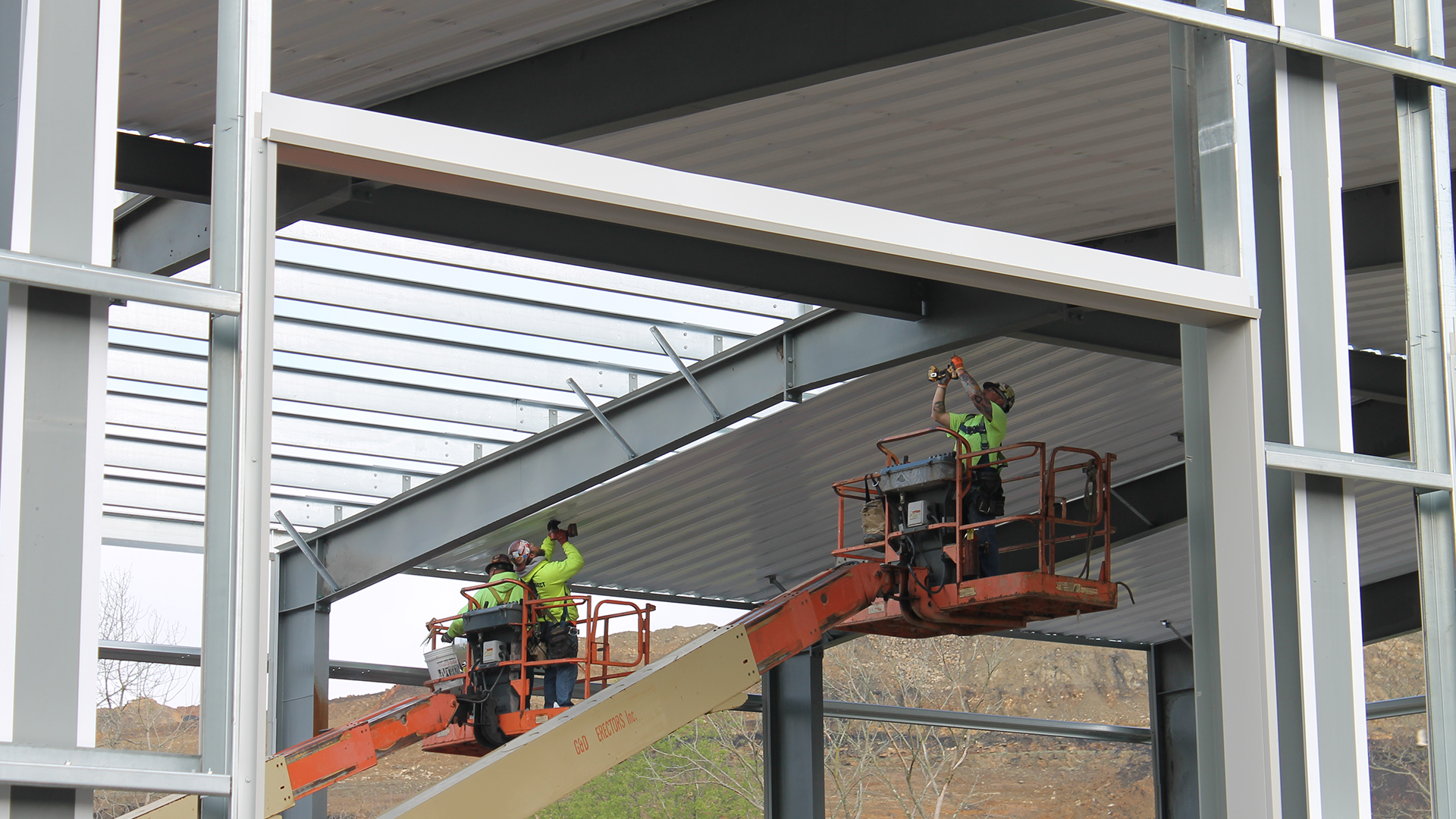
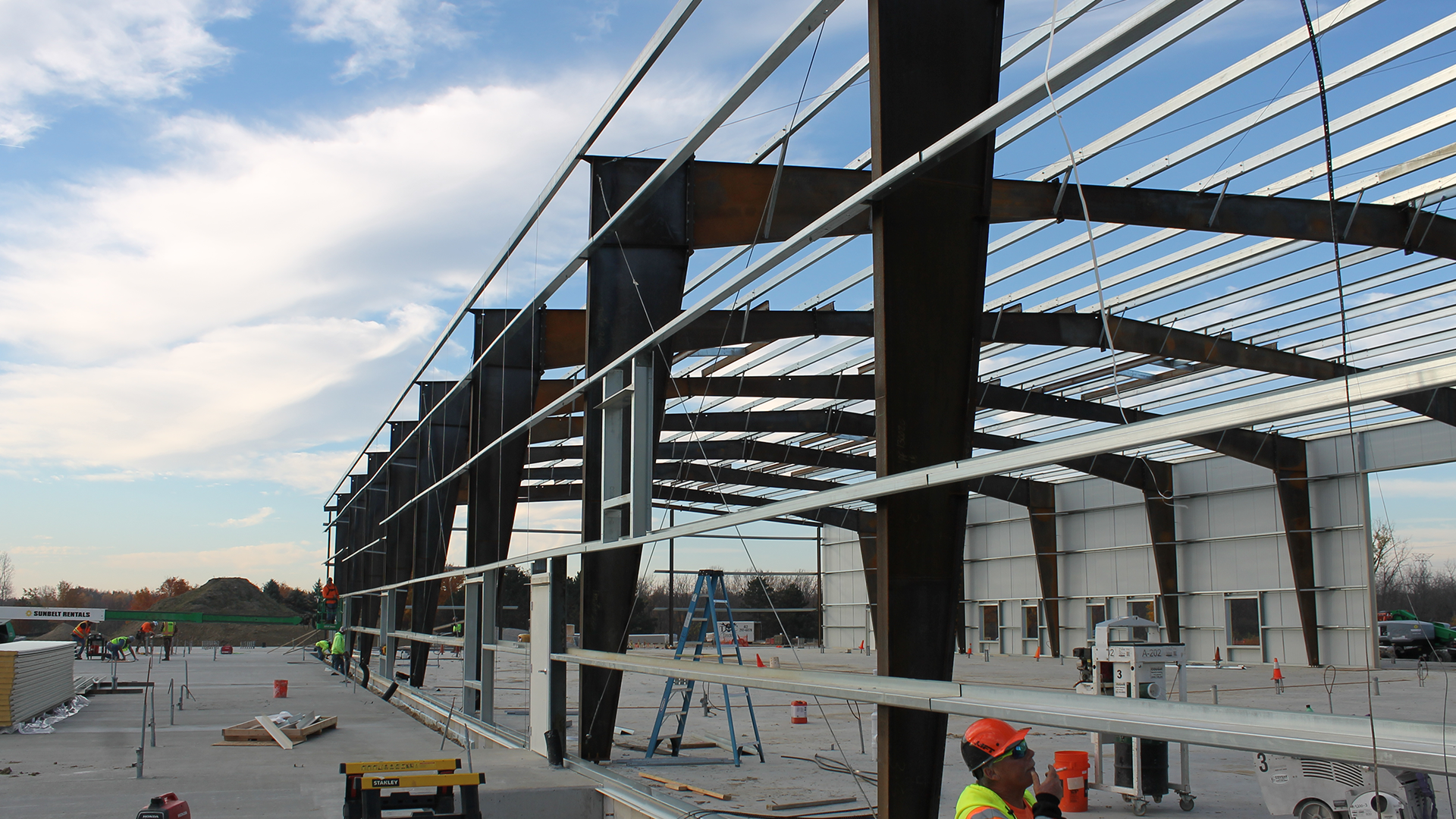
Pre-engineered steel buildings provide clear-span construction without interior support columns, creating unobstructed floor space that dramatically improves cooling efficiency. Air handling equipment can be positioned optimally without structural interference. Cold aisle and hot aisle configurations maintain integrity without columns disrupting airflow patterns. Under-floor plenum systems distribute conditioned air uniformly without navigating around structural obstacles.
The column-free environments enabled by steel building design also facilitate future modifications as cooling requirements evolve. Organizations can reconfigure server row orientations, install different cooling technologies, or increase equipment density without structural constraints limiting options. This flexibility preserves long-term value as data center operators adapt to changing technology and market demands.
Ceiling Height and Vertical Space Utilization
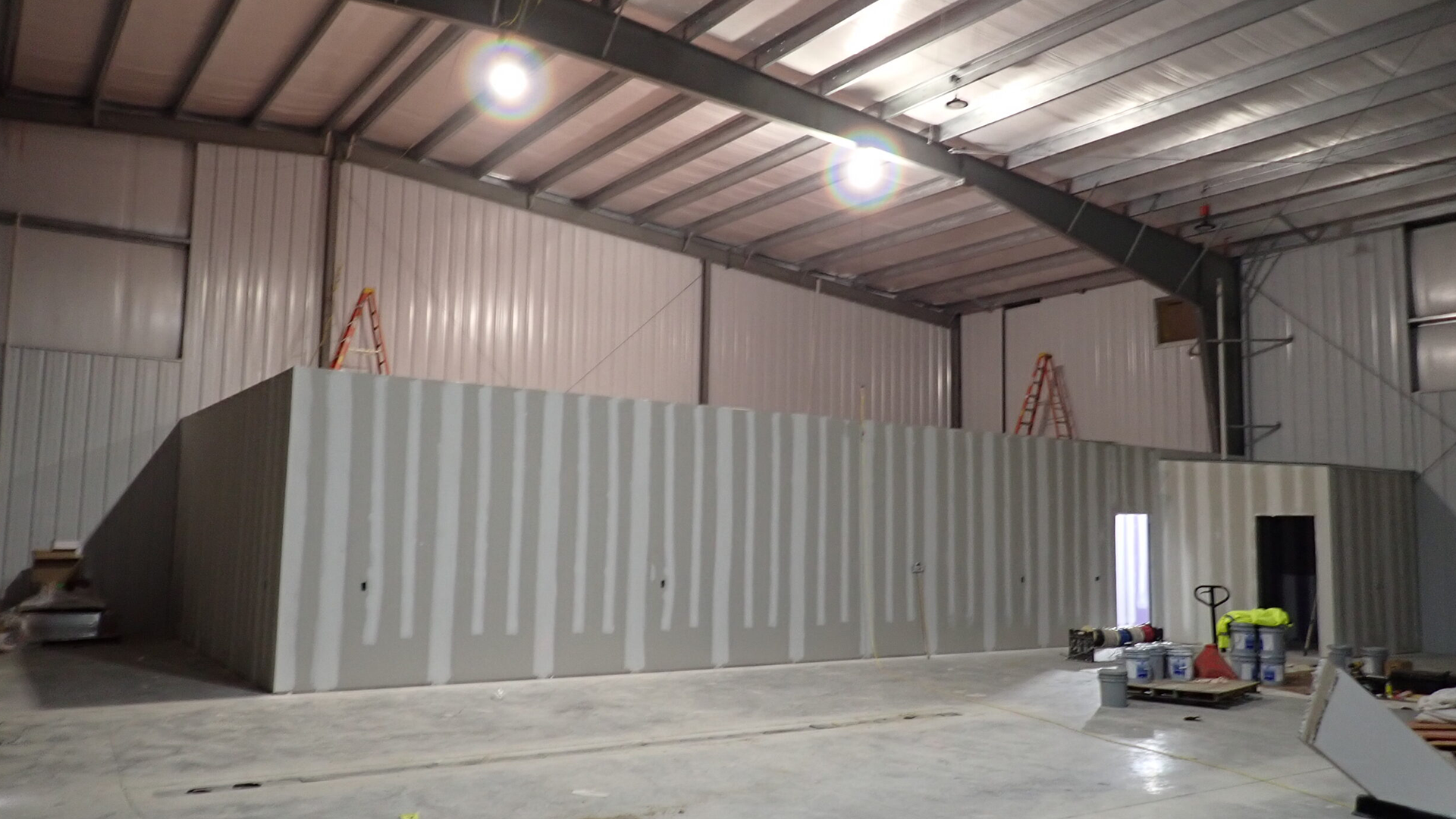
Data center cooling efficiency improves with adequate ceiling height that provides volume for air mixing, accommodates overhead distribution systems, and allows proper equipment placement. Steel buildings readily accommodate clear heights from 16 to 30 feet or more, with costs scaling gradually rather than requiring entirely different structural approaches as heights increase.
Taller buildings support overhead cable tray systems, bus duct installations, and HVAC ductwork without creating congested ceiling spaces that impede airflow. The additional vertical volume provides thermal buffering during equipment failures or maintenance activities. Return air plenums above suspended ceilings can be sized generously, reducing pressure drops and fan energy consumption.
Roof-Mounted Equipment Capabilities
Many data center cooling approaches utilize roof-mounted equipment including air-cooled chillers, cooling towers, air handling units, or direct expansion condensers. Steel building roof systems can be engineered during initial design to support substantial concentrated loads at specific locations, eliminating the need for supplemental structural support or limiting equipment selection based on weight constraints.
Roof access and maintenance platforms can be integrated into building design, providing safe working surfaces around mechanical equipment. Electrical and piping penetrations are coordinated with structural members, weather sealing, and interior systems. This integration during the design phase prevents the field coordination problems and compromises that occur when attempting to add roof equipment to buildings not originally configured for these loads.
Thermal Envelope Performance
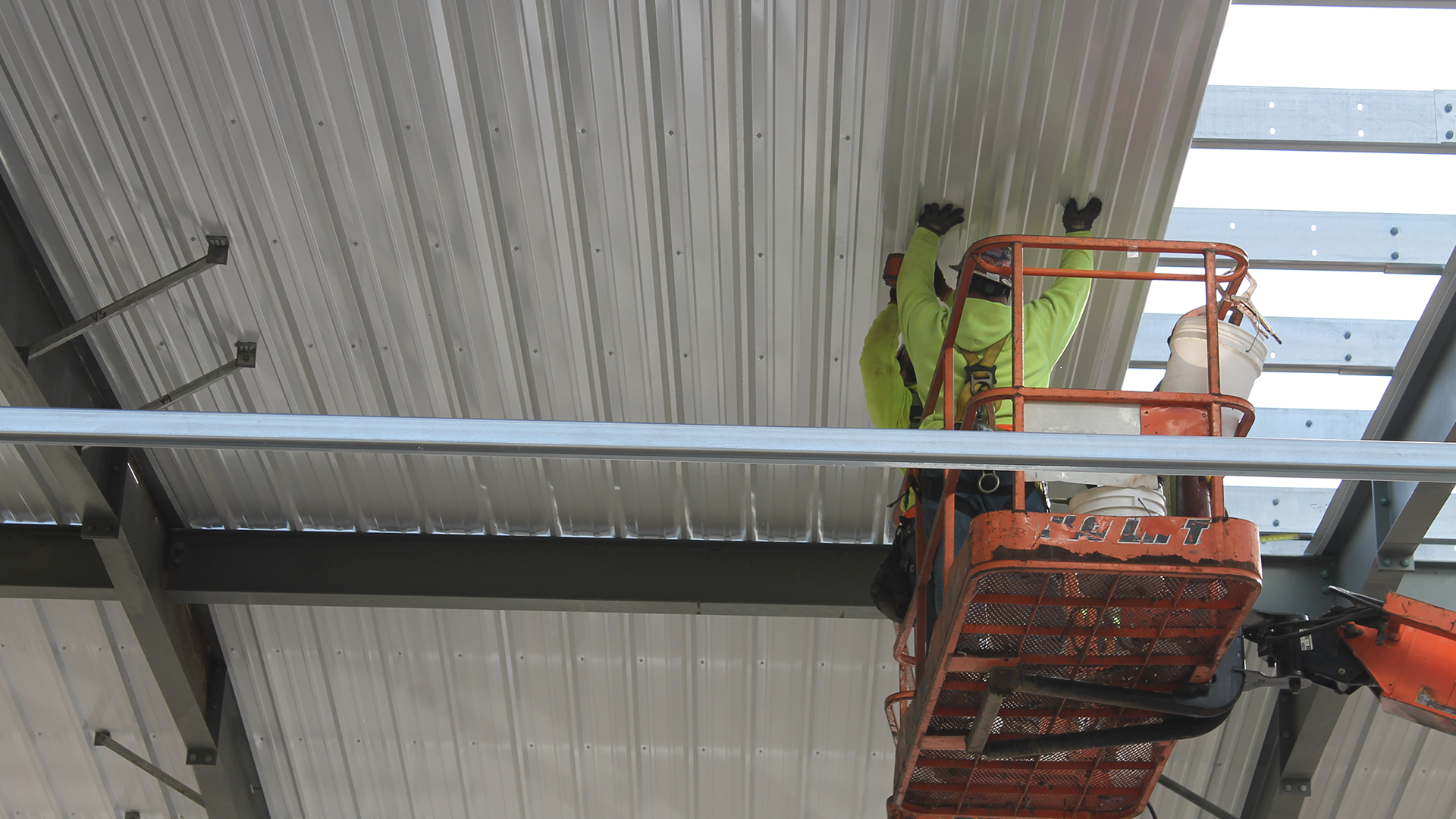
High-performance insulated metal panels used in modern steel building construction deliver R-values from R-19 to R-38 or higher, significantly reducing heat gain through building envelopes. Tight construction and proper sealing minimize air infiltration that would introduce hot, humid outside air requiring additional cooling capacity. Reflective roof coatings further reduce solar heat gain, particularly important in warm climates where roof surfaces can reach 160°F or more during summer months.
These envelope characteristics directly reduce cooling loads and associated operating costs. For a 50,000-square-foot data center in a hot climate, improving envelope insulation from R-13 to R-30 might reduce cooling energy consumption by 100,000 kWh annually, representing $10,000 in operating cost savings year after year. Over a 20-year facility lifespan, the envelope investment delivers substantial returns through reduced cooling costs.
Primary Cooling System Technologies and Building Integration
Computer Room Air Conditioning (CRAC) Units
Traditional CRAC units have served data center cooling for decades, using mechanical refrigeration to cool air that is then distributed through raised floor plenums or overhead delivery systems. These units typically position around data hall perimeters, drawing return air from above server racks and delivering conditioned air into under-floor plenums.
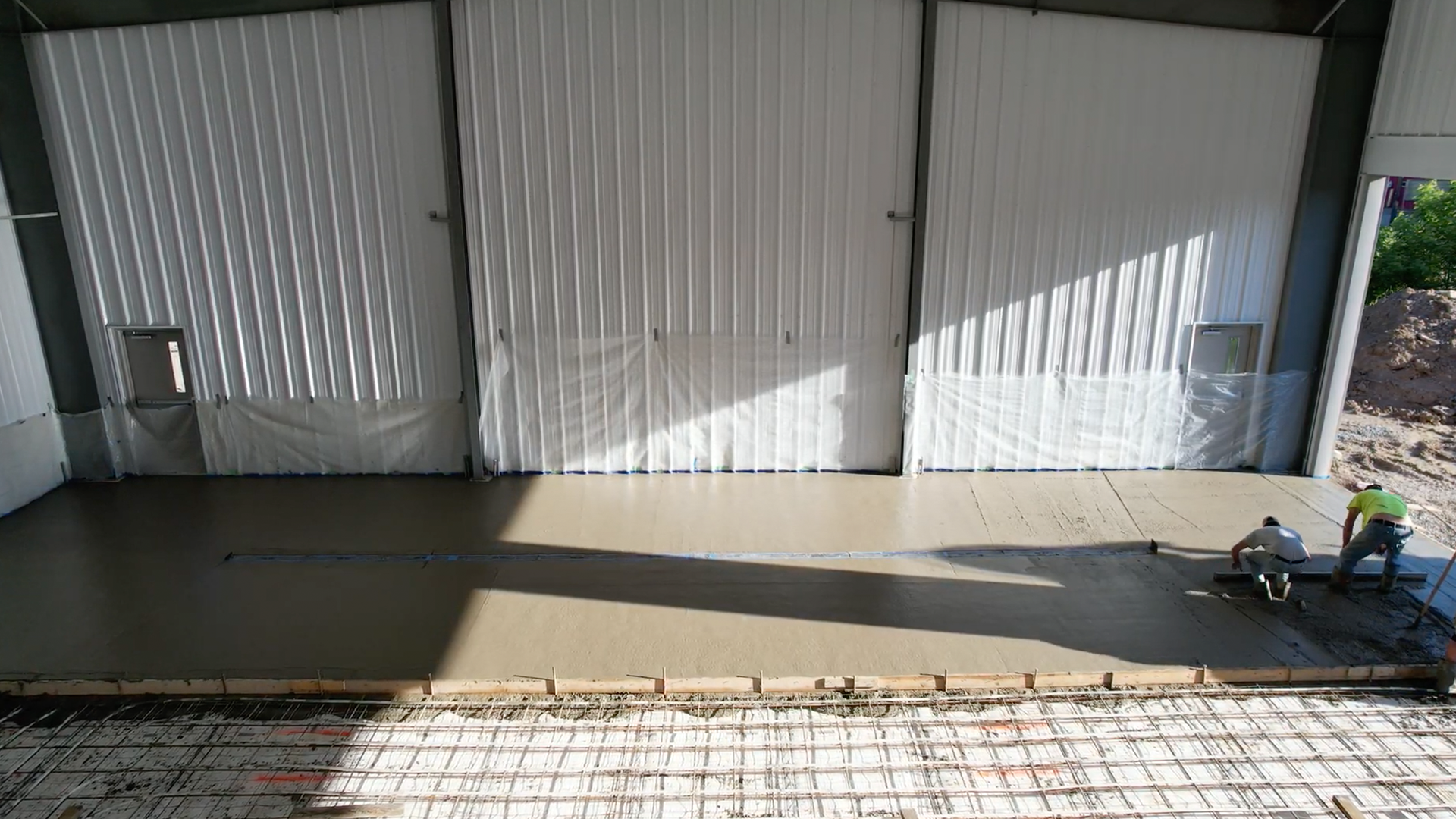
Steel building design accommodates CRAC placement through adequate perimeter space, structural support for equipment weighing several thousand pounds, and electrical infrastructure delivering power to multiple refrigeration compressors. Under-floor plenum depths must be coordinated during foundation design—typical installations use 18 to 36 inches of raised floor height to provide adequate air distribution with acceptable pressure drops.
The clear-span design of steel buildings allows flexible CRAC positioning and quantity adjustment as cooling needs change. Additional units can be added without structural modifications, and entire cooling architectures can be reconfigured during facility refreshes without building-level constraints.
Computer Room Air Handler (CRAH) Units
CRAH technology uses chilled water from central plants rather than integral refrigeration, separating heat rejection from air handling. These units offer higher efficiency than CRAC systems, particularly when combined with waterside economization that uses outside air to cool water during favorable weather conditions. CRAH units typically install in configurations similar to CRAC placement but require chilled water piping infrastructure throughout facilities.
Steel building design must accommodate chilled water distribution, including pipe routing, structural support for water-filled piping systems, and provisions for thermal expansion. Buildings with basements or ground-level mechanical spaces can route piping below data halls, while buildings on slab foundations might use overhead distribution or perimeter chases. The flexibility of steel construction allows any of these approaches based on specific project requirements and site conditions.
Central chiller plants supporting CRAH systems can be located in separate mechanical buildings, on data center roofs, or in dedicated mechanical rooms within main structures. Steel building designs accommodate all configurations, with structural systems sized appropriately and architectural features coordinated with mechanical equipment requirements.
In-Row Cooling Systems
In-row cooling units position directly within server rows, bringing cooling closer to heat sources and improving thermal management precision. These systems typically install between racks in hot aisle or cold aisle configurations, drawing hot air from the rear of servers and delivering cold air to front intake zones. In-row systems support higher power densities than perimeter cooling approaches by reducing air travel distances and maintaining tighter temperature control.
Building integration for in-row cooling requires overhead chilled water distribution or refrigerant piping, adequate floor space within row configurations, and electrical infrastructure distributed throughout data halls rather than concentrated at perimeters. Steel buildings with clear spans and sufficient height accommodate overhead distribution systems without interference, and flexible electrical design allows circuits throughout floor areas.
The modular nature of in-row cooling aligns well with phased data center build-outs where organizations install cooling capacity incrementally as IT load grows. Steel building clear spans allow any row configuration and easy modification as cooling strategies evolve or equipment densities change.
Rear-Door Heat Exchangers
Rear-door heat exchangers mount directly on server rack backs, using chilled water to remove heat before it enters room airspace. These passive devices require no fans, consuming minimal energy while supporting extremely high rack densities—often 30 kilowatts or more per rack. Heat exchangers completely change data center thermal dynamics by preventing hot exhaust air from mixing with room air.
Building requirements for rear-door systems include chilled water distribution to every rack location, condensate drainage systems handling water vapor condensing from humid air, and provisions for water leak detection and containment. Steel building design readily incorporates these requirements through adequate ceiling height for overhead distribution, sloped floor sections directing any leaks to drains, and flexible structural design accommodating future rack reconfigurations.
Direct-to-Chip Liquid Cooling
Emerging high-density computing applications increasingly require direct liquid cooling where coolant circulates through cold plates mounted directly on processors and other heat-generating components. This approach handles thermal loads exceeding 100 kilowatts per rack—densities impossible with air cooling approaches. Liquid cooling dramatically reduces or eliminates air conditioning requirements for IT equipment while introducing new infrastructure needs.
Buildings supporting liquid cooling must accommodate coolant distribution units (CDUs), primary and secondary coolant piping, heat rejection systems, and leak detection throughout facilities. Steel building flexibility allows installation of these systems during initial construction or retrofit into existing facilities. The clear spans eliminate concerns about piping routing around structural columns, and adequate ceiling heights provide space for overhead distribution networks.
Air Management and Containment Strategies
Hot Aisle/Cold Aisle Configurations
Proper airflow management begins with organizing server racks in alternating rows where cold aisles face equipment intake sides and hot aisles capture exhaust heat. This basic configuration prevents mixing of supply and return air streams, improving cooling efficiency and temperature uniformity. Steel building clear spans enable optimal row orientations aligned with cooling equipment placement and facility geometries.
Row spacing affects cooling performance—cold aisles typically measure 4 to 6 feet wide, providing adequate space for technician access while minimizing supply air volume. Hot aisles often run slightly wider at 5 to 8 feet to accommodate cabling, equipment rear access, and return air pathways. Building designs should consider these dimensional requirements during space planning, ensuring adequate overall floor area for desired server density while maintaining proper aisle dimensions.
Aisle Containment Systems
Physical containment of cold or hot aisles prevents air mixing that degrades cooling efficiency. Cold aisle containment encloses supply air pathways with doors, roof panels, and end-of-row partitions, ensuring all supply air enters equipment intakes. Hot aisle containment captures exhaust heat, returning it directly to cooling equipment without mixing into general room space.
Steel building ceiling heights influence containment effectiveness—taller ceilings provide larger return air plenums above containment, reducing pressure differentials and improving airflow uniformity. Buildings with 24-foot or greater clear heights can easily accommodate 10 to 12-foot containment structures while maintaining generous return air volumes. Lower buildings require more careful design to avoid excessive pressure drops that increase fan energy and create hot spots.
Containment systems must integrate with building features including lighting, fire suppression, leak detection, and cable routing. Steel building designs can incorporate these integrations during initial planning, positioning lights within containment, routing fire suppression piping appropriately, and providing cable access that maintains containment integrity.
Raised Floor vs. Overhead Air Distribution
Under-floor air distribution through raised floor plenums has dominated data center cooling for decades, using floor tile perforation patterns to direct conditioned air to equipment intakes. This approach works well for moderate power densities but faces challenges with high-density installations where adequate airflow becomes difficult to achieve without excessive pressure drops.
Overhead air distribution delivers supply air from ceiling-mounted ducts or diffusers, either into cold aisle containment or directly to equipment. This approach suits facilities with high power densities, buildings without raised floors, or retrofit installations. Steel building clear spans and ceiling heights readily accommodate overhead distribution systems, with ductwork sized and routed to minimize pressure drops while maintaining aesthetic appearance.
Many modern facilities combine approaches, using raised floors for electrical and data cabling distribution while implementing overhead cooling. Steel building flexibility accommodates any configuration, with foundation systems designed for raised floors if specified and structural systems supporting overhead mechanical equipment and distribution.
Heat Rejection Systems and Outside Air Integration
Cooling Tower Systems
Cooling towers reject heat through evaporative processes, providing chilled water to CRAH units or central chillers at temperatures determined by ambient wet-bulb conditions. Towers mount on building roofs, adjacent grade-level pads, or separate structures, with piping connecting to mechanical systems within data halls. Steel building roof structures can be engineered for tower weights and wind loads, with piping penetrations coordinated during design.
Tower placement affects efficiency—locating towers where they receive unrestricted airflow and avoid recirculation of exhaust air optimizes performance. Steel building designs can orient facilities to support optimal tower placement while maintaining security perimeters and aesthetic considerations. Noise from tower fans may require acoustic screening or setbacks from property lines, easily accommodated during site planning.
Air-Side Economization
Air-side economizers use filtered outside air for cooling when ambient temperatures and humidity allow, dramatically reducing mechanical refrigeration energy. Implementation requires substantial outside air intakes, filtration systems preventing particulate contamination, and mechanical systems mixing outside air with return air to maintain appropriate supply conditions.
Steel buildings accommodate economizer air intakes through architectural features including louvers, air handler enclosures, or ducted systems connecting outside air to mechanical equipment. The design must balance security requirements, weather protection, and acoustic considerations while providing the large openings necessary for economizer airflow. Building envelope design becomes critical—improperly located intakes can allow outside air stratification or create pressure imbalances affecting data hall conditions.
Water-Side Economization
Water-side economizers use cooling towers or dry coolers to produce chilled water without operating refrigeration compressors during favorable weather. This approach avoids introducing outside air into data halls while achieving efficiency gains comparable to air-side systems. Implementation requires “free cooling” heat exchangers, automated control systems, and properly sized heat rejection equipment.
Building integration focuses on mechanical system placement and piping routing. Steel building designs provide mechanical room space, roof areas for heat rejection equipment, and structural support for water-filled systems. The flexibility of steel construction allows mechanical systems to locate optimally based on operational efficiency rather than being constrained by building structural limitations.
Electrical Infrastructure Supporting Cooling Systems
Power Distribution to Cooling Equipment
Cooling systems consume 30% to 50% of total data center power in efficiently designed facilities, requiring substantial electrical infrastructure. CRAC and CRAH units typically require 480V three-phase power at 30 to 100 amps per unit. Chilled water pumps, cooling tower fans, and air handling systems all require dedicated circuits. Steel building designs must accommodate electrical rooms, switchgear, and distribution systems scaled for comprehensive facility power requirements.
The electrical infrastructure should provide redundancy matching IT system requirements—facilities with N+1 IT redundancy should maintain equivalent cooling redundancy. This might require dual power feeds to mechanical equipment, automatic transfer switches, or generator backup for cooling systems. Building electrical rooms must size for current needs plus future expansion, with panel space, conduit pathways, and transformer capacity planned accordingly.
Energy Monitoring and Management
Modern data centers implement sophisticated energy monitoring tracking real-time power consumption by cooling systems, IT equipment, and auxiliary loads. This monitoring enables optimization of cooling system operation, identifies inefficiencies, and demonstrates power usage effectiveness (PUE) metrics. Steel buildings should incorporate infrastructure supporting monitoring systems including sensor locations, data network connectivity, and building management system integration.
Proper monitoring requires measurement points throughout electrical distribution, from utility service entrance through individual rack power feeds. Cooling system monitoring should capture compressor power, fan energy, pump consumption, and control system operation. Steel building electrical designs should include current transformers, power meters, and communication wiring serving monitoring systems at all relevant locations.
Maintenance Access and Operational Considerations
Equipment Service Clearances
Cooling equipment requires regular maintenance including filter changes, compressor service, heat exchanger cleaning, and component replacement. Building designs must provide adequate clearances around equipment for these activities—manufacturers typically specify minimum clearances for service access. Steel buildings with generous ceiling heights and clear spans readily accommodate these requirements without the spatial compromises common in buildings with limited headroom or structural interferences.
Maintenance pathways should provide equipment access without requiring service personnel to travel through active IT spaces unnecessarily. Separate mechanical corridors, perimeter access paths, or dedicated doors improve operational efficiency and security. Steel building design flexibility allows optimal access configuration without structural constraints limiting options.
Equipment Replacement and Lifecycle Planning
Cooling systems have service lives typically ranging from 12 to 20 years, requiring periodic replacement throughout data center operational lifetimes. Building designs should consider how major equipment will be removed and replaced—adequate door sizes, ceiling height for rigging equipment, and floor load capacity for temporary staging. Steel building clear spans eliminate interior barriers that would complicate equipment movement, and large overhead doors can be incorporated at appropriate locations during initial construction.
Planning for equipment replacement during building design avoids expensive modifications later when aging cooling systems require renewal. The flexibility inherent in steel construction allows facilities to adapt to entirely different cooling technologies as industry practices evolve, protecting long-term asset value.
Efficiency Metrics and Performance Optimization
Power Usage Effectiveness (PUE)
PUE measures data center efficiency by comparing total facility power to IT equipment power—a PUE of 1.5 means that for every watt consumed by IT equipment, an additional 0.5 watts supports cooling, power distribution, and other overhead. Modern efficient facilities achieve PUE values from 1.2 to 1.3, while older or poorly designed facilities might exceed 2.0.
Building design directly impacts achievable PUE through envelope thermal performance, ceiling heights enabling efficient air distribution, structural systems supporting optimal cooling equipment placement, and integration of economization systems. Steel buildings engineered specifically for data center applications typically enable lower PUE values than buildings repurposed from other uses or designed without data center expertise.
Cooling System Efficiency Optimization
Beyond basic PUE, several operational strategies maximize cooling efficiency within facilities. Raising supply air temperatures from traditional 55-60°F to 65-70°F reduces compressor lift and energy consumption while remaining within equipment specifications. Variable speed drives on fans and pumps match output to actual cooling demand rather than operating at fixed capacity. Staging cooling equipment brings units online sequentially, ensuring those operating run near optimal efficiency points.
Steel building systems support these optimization strategies through adequate ceiling heights reducing fan static pressure, clear spans allowing airflow path optimization, and thermal envelopes minimizing external heat gains. Buildings designed holistically for cooling efficiency enable operational PUE improvements of 0.1 to 0.3 compared to facilities where cooling systems must overcome building design limitations.
Future-Proofing Cooling Infrastructure
Scalability for Increasing Densities
IT equipment power densities continue climbing as processor performance increases and artificial intelligence workloads proliferate. Data centers designed today should anticipate equipment generating 15 to 25 kilowatts per rack becoming commonplace within five years, with leading-edge applications exceeding 50 kilowatts. Cooling infrastructure must either support these densities initially or provide clear pathways for capability upgrades.
Steel building design supports scalability through adequate ceiling height for future distribution systems, structural capacity for additional mechanical equipment, and space reservations for expanded cooling plants. Electrical infrastructure should include spare capacity and empty conduit pathways supporting future cooling system additions. The clear-span flexibility of steel construction enables wholesale cooling architecture changes if future requirements demand entirely different approaches.
Liquid Cooling Preparation
While air cooling dominates current data center construction, direct liquid cooling will likely become standard for high-performance computing within the next decade. Facilities designed today should consider how liquid cooling might be integrated later—coolant distribution pathways, heat rejection system expansion space, and leak detection infrastructure. Steel buildings readily accommodate these provisions without significant cost penalties, protecting investments against obsolescence as cooling technologies evolve.
Engineering Buildings That Enable Thermal Excellence
Data center cooling represents the critical operational challenge that defines facility performance, efficiency, and operational costs throughout building lifespans. Steel building design offers distinct advantages for data center cooling integration through clear-span construction, ceiling height flexibility, roof equipment capability, thermal envelope performance, and inherent adaptability supporting future modifications. Organizations planning data center facilities achieve optimal outcomes when cooling requirements drive building design from project inception rather than being accommodated within architectural constraints established without thermal management expertise.
The relationship between building structure and cooling system performance cannot be overstated. Facilities engineered holistically—with structural systems, spatial configurations, and mechanical infrastructure designed as integrated solutions—deliver superior efficiency, lower operational costs, and flexibility adapting to evolving technology. The incremental investment in purpose-built steel structures optimized for cooling system integration returns value month after month through reduced energy consumption, improved reliability, and preserved relevance as industry practices advance.
Design Data Center Infrastructure That Performs Efficiently for Decades
Red Direct specializes in steel building design and construction engineered specifically for data center cooling requirements. Our integrated approach coordinates structural systems, thermal envelopes, and mechanical infrastructure to deliver facilities supporting efficient operations and future adaptability. Contact Red Direct to discuss how purpose-built steel structures optimize cooling system performance and long-term operational efficiency for your data center projects.
Ready to Build Smarter Data Center Infrastructure? From thermal planning to structural coordination, Red Direct helps you design steel data center facilities that support efficient cooling, long-term scalability, and nonstop performance ⚡🏗️ Let’s talk about how the right building strategy can reduce operating costs and future-proof your infrastructure — contact Red Direct to start planning your next data center project.