
The Speed Imperative in Modern Data Center Development
Time to market defines competitive advantage in today’s data center industry. Hyperscalers, colocation providers, and enterprise operators face relentless pressure to bring capacity online faster than ever before. Traditional construction methods struggle to meet these aggressive timelines, with conventional stick-built or tilt-up concrete facilities requiring 18 to 24 months from groundbreaking to operational status. Pre-engineered metal buildings (PEMBs) have emerged as the solution for organizations that cannot afford extended construction schedules.
Fast-track data center construction using PEMB technology can reduce project timelines by 30% to 50% compared to conventional approaches. This acceleration stems from fundamental differences in how these buildings are designed, manufactured, and erected. For data center operators racing to capture market opportunities or meet contractual commitments, understanding how PEMBs compress construction schedules without compromising structural integrity or operational performance has become essential knowledge.
Why Traditional Construction Methods Create Bottlenecks
Conventional construction follows a strictly sequential process where each phase must complete before the next begins. Architectural design leads to structural engineering, which then informs detailed construction drawings. Site work proceeds while materials are sourced and delivered in stages. Concrete curing periods impose mandatory waiting times. Field labor assembles components piece by piece, with weather delays and coordination challenges extending schedules unpredictably.
The cumulative effect of these sequential dependencies creates construction timelines that stretch well beyond what modern business requirements can tolerate. A typical tilt-up concrete data center might spend four months on foundation and floor slab work alone, followed by several more months for wall panel fabrication and erection. Steel skeleton frameworks require extensive field welding and connection work. Each delay in one phase cascades through subsequent phases, pushing completion dates further into the future.
Material procurement for conventional construction introduces additional uncertainty. Structural steel, specialized concrete forms, and custom building components all require lead times that vary with market conditions. Supply chain disruptions can add weeks or months to project schedules, with little ability to accelerate delivery once delays occur. These factors make accurate schedule prediction difficult and leave project stakeholders uncertain about actual completion dates.
The PEMB Advantage: Parallel Processing and Prefabrication
Pre-engineered metal buildings transform data center construction through parallel processing of design, engineering, and manufacturing activities. While site preparation proceeds, building components are simultaneously engineered and fabricated in controlled factory environments. This overlap eliminates the sequential bottlenecks that plague traditional construction, compressing overall project duration substantially.
Design Integration and Engineering Efficiency
PEMB manufacturers utilize advanced building information modeling (BIM) software that integrates architectural, structural, and MEP (mechanical, electrical, plumbing) systems into coordinated 3D models. This integration occurs during the design phase, identifying and resolving conflicts before manufacturing begins. The digital coordination eliminates the change orders and field modifications that typically consume weeks of construction time in conventional projects.
Standardized engineering practices allow PEMB manufacturers to complete structural calculations and produce construction documents in a fraction of the time required for custom-designed buildings. Pre-approved connection details, tested load-bearing configurations, and established building system parameters mean engineers are refining proven designs rather than creating new solutions from scratch. What might take three months for a conventional building can often be accomplished in three to six weeks for a PEMB.
Factory Fabrication Creates Schedule Certainty
Once engineering is complete, PEMB components move into climate-controlled manufacturing facilities where precision fabrication occurs independent of weather conditions. Computerized cutting equipment, automated welding systems, and quality-controlled assembly processes produce building components with tolerances measured in fractions of inches. This precision manufacturing ensures proper fit during field erection, eliminating the time-consuming adjustments that often plague site-built construction.
Factory fabrication also provides schedule certainty that field construction cannot match. Manufacturing facilities operate on predictable production schedules with known capacity and lead times. Material procurement for multiple projects can be optimized, and components are fabricated in optimal sequence for delivery and erection. Unlike field construction where weather, labor availability, and coordination issues create constant schedule variability, factory production delivers components on time with remarkable consistency.
Site Work Overlap: The Critical Path Advantage
Fast-track construction achieves maximum schedule compression when site work and building fabrication proceed simultaneously. While the PEMB manufacturer engineers and fabricates building components, site contractors can complete earthwork, utility installation, and foundation construction. This parallel processing eliminates months from the critical path.
Foundation systems for PEMBs offer their own time advantages. The clear-span designs typical of metal buildings require fewer interior columns than conventional construction, reducing the number of foundation elements and associated excavation work. Anchor bolt templates provided by PEMB manufacturers ensure accurate placement, eliminating the survey and adjustment cycles that often delay conventional foundation work.
Concrete slab requirements for PEMB data centers can often be simplified compared to traditional buildings. The structural loads are concentrated at column locations rather than distributed across load-bearing walls, potentially allowing for thinner slabs or reduced reinforcement in areas between columns. Some designs allow for phased slab placement, where perimeter slabs support building erection while interior slabs are completed afterward, further compressing the schedule.
Accelerated Erection: From Delivery to Weather-Tight Envelope
PEMB erection represents one of the most dramatic time advantages over conventional construction. Pre-fabricated components arrive on site ready for assembly with minimal field modification. Experienced erection crews can close in a 100,000-square-foot data center shell in as little as six to eight weeks—work that might require four to six months using conventional methods.
Sequenced Delivery and Just-In-Time Logistics
PEMB manufacturers coordinate component delivery with erection schedules, sending materials to site in the sequence they’ll be installed. This just-in-time approach minimizes on-site storage requirements and ensures crews always have the materials needed for current work without site congestion. Detailed erection drawings show exact placement and connection details for every component, eliminating the dimensional decisions and field engineering that slow conventional construction.
Primary framing—the main columns and roof beams that define building structure—typically erects first, establishing the building envelope quickly. Secondary framing, purlins, and girts follow in rapid succession. The bolted connections used throughout PEMB construction allow crews to work in multiple areas simultaneously without the delays associated with concrete curing or weld cooling times.
Weather Protection Enables Interior Work
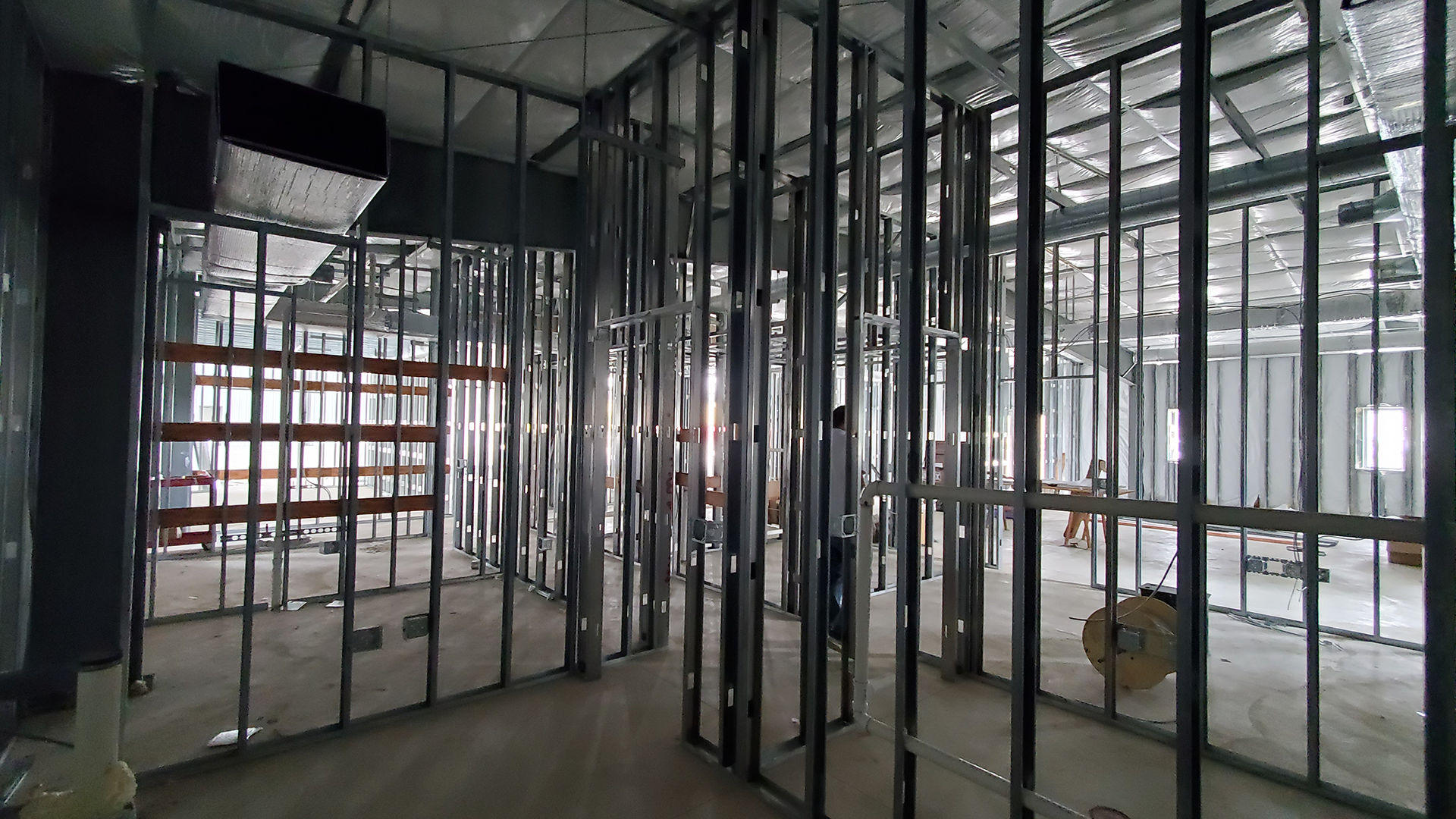
Once the roof system is installed and the building envelope is closed, interior work can proceed regardless of weather conditions. This weather protection allows MEP contractors, data center infrastructure installers, and finishing trades to work year-round without seasonal interruptions. For projects in regions with harsh winters or extended rainy seasons, this capability alone can save months of schedule time.
The clear-span interiors provided by PEMB construction also accelerate interior work. Without interior columns interrupting floor space, electrical conduit, cable trays, and cooling distribution systems can follow optimal paths. Equipment placement isn’t constrained by structural elements, and modifications during the construction or operational phases require less coordination with building structure.
MEP Integration and Data Center Infrastructure
Modern data center construction requires extensive mechanical, electrical, and plumbing infrastructure that often represents the majority of project cost and schedule. PEMB designs facilitate MEP installation through deliberate accommodation of infrastructure requirements during the engineering phase.
Electrical Distribution and Cable Management
PEMB roof systems readily accommodate the overhead cable tray systems common in data center construction. Secondary structural members provide natural attachment points for tray supports, and the clear-span design allows logical routing from electrical rooms to server rows. Many PEMB designs incorporate specific provisions for bus duct systems or overhead power distribution, with structural reinforcement designed into areas where heavy electrical equipment will be mounted.
The height flexibility of pre-engineered buildings allows data center operators to specify ceiling heights that optimize cooling efficiency while providing adequate space for electrical distribution. Unlike conventional buildings where structural systems might limit height options or require expensive modifications, PEMBs can be configured for optimal data center performance during the initial design phase.
Cooling System Integration
Data center cooling represents one of the most critical infrastructure elements, and PEMB construction accommodates various cooling approaches efficiently. Roof-mounted cooling units can be specified during building design, with structural reinforcement incorporated into the roof system at appropriate locations. The wide column spacing typical of PEMBs allows flexible placement of in-row cooling units, hot aisle/cold aisle configurations, or rear-door heat exchangers without structural conflicts.
For facilities utilizing outside air economization, PEMB designs can incorporate large ventilation openings with minimal impact on structural integrity or construction schedule. Louver systems, air handling unit pads, and ductwork penetrations are all coordinated during the design phase, ensuring proper structural support and weather sealing without field engineering delays.
Scalability and Phased Deployment
Fast-track construction becomes even more valuable when combined with phased deployment strategies. Many data center operators build initial capacity to meet immediate demand while preserving the ability to expand rapidly as requirements grow. PEMB construction naturally supports this approach through modular design principles and standardized expansion methodologies.
Shell Space for Future Growth
Initial PEMB construction can include shell space—fully enclosed building area without interior fit-out—that can be activated quickly when additional capacity is needed. The structural systems supporting this shell space are complete, and utilities can be stubbed to expansion areas during initial construction. When market conditions justify additional capacity, interior build-out can proceed immediately without waiting for building expansion or structural modifications.
This approach reduces capital investment risk by deferring interior infrastructure costs until demand materializes while maintaining schedule flexibility for rapid expansion. Operators avoid paying for capacity before it generates revenue but preserve the ability to bring new capacity online in months rather than years.
Standardized Expansion Modules
PEMB manufacturers can design expansion modules that replicate initial building systems exactly, ensuring consistent performance characteristics across facility phases. Structural connections are detailed to accept future expansion, roof systems can extend seamlessly, and utility systems are sized for ultimate capacity from day one. This standardization eliminates the engineering and permit review cycles that typically accompany facility expansions, allowing subsequent phases to proceed even faster than initial construction.
Cost Implications of Accelerated Schedules
The direct construction cost advantages of PEMB technology—typically 10% to 30% lower than comparable conventional construction—represent only part of the financial benefit. Schedule compression delivers substantial indirect savings that often exceed the direct cost differentials.
Reduced Financing Costs
Every month of schedule reduction represents one month of avoided construction financing costs. For a $50 million data center project with construction financing at 7% interest, accelerating completion by six months saves approximately $1.75 million in interest charges. These savings flow directly to project returns without compromising building quality or operational performance.
Earlier Revenue Generation
More significantly, fast-track construction allows data center operators to begin generating revenue months earlier than conventional approaches would permit. For colocation providers, this might mean signing lease agreements and collecting revenue six months sooner. For hyperscalers, it could enable serving customer workloads or capturing market share ahead of competitors. For enterprise operators, faster completion might mean retiring expensive leased capacity or enabling business initiatives that were waiting for infrastructure.
The revenue acceleration impact varies by business model but can easily exceed tens of millions of dollars for large facilities. A hyperscale data center generating $30 million in annual revenue produces $2.5 million monthly. Accelerating project completion by four months generates $10 million in additional first-year revenue—a return that dwarfs any construction cost considerations.
Market Timing and Competitive Advantage
Data center markets evolve rapidly, with supply and demand dynamics shifting in response to technology trends, economic conditions, and competitive activity. The ability to bring capacity online quickly allows operators to capture favorable market conditions that might not persist through extended construction cycles. Fast-track construction provides strategic agility that has value beyond simple financial calculations.
Risk Management in Accelerated Construction
Schedule compression must be balanced against quality, safety, and long-term performance requirements. PEMB construction achieves faster timelines without increased risk through systematic approaches that actually enhance project predictability compared to conventional methods.
Quality Control in Factory Environments
Factory fabrication provides quality advantages over field construction that become more pronounced in fast-track schedules. Climate-controlled environments eliminate weather-related quality issues. Specialized equipment and skilled fabricators produce consistent results. Inspection and testing occur before shipping, ensuring that components arriving on site meet specifications without field corrections.
This front-loaded quality control means faster erection doesn’t compromise building performance. Crews are assembling pre-qualified components rather than trying to meet quality standards while racing against schedule pressure in field conditions. The result is simultaneously faster construction and higher quality outcomes.
Reduced Change Order Exposure
The detailed engineering and BIM coordination that precedes PEMB fabrication dramatically reduces mid-project changes that derail schedules. Systems are coordinated digitally before manufacturing begins, identifying conflicts and resolving design issues early when modifications are least disruptive. This upfront investment in coordination pays dividends during construction when changes would be most costly and time-consuming.
Conventional construction approaches often discover coordination issues during installation, requiring field redesign, material reordering, and schedule adjustments. Each change order consumes days or weeks while solutions are engineered, priced, approved, and implemented. PEMB construction largely eliminates this cycle through comprehensive front-end coordination.
Permitting and Regulatory Considerations
Even with construction advantages, regulatory approvals can extend project timelines significantly. PEMB construction offers specific advantages in navigating permitting processes, though these benefits depend heavily on local jurisdiction practices and project team experience.
Many building departments have experience with PEMB systems and maintain established review procedures for these standardized building types. Structural calculations follow familiar patterns, connection details use recognized engineering principles, and building code compliance is straightforward. This familiarity can accelerate permit review compared to custom-designed buildings requiring detailed evaluation of novel structural approaches.
Some PEMB manufacturers maintain libraries of pre-approved building configurations or standardized engineering details that have been accepted by numerous jurisdictions. While specific approval is still required for each project, this precedent can smooth the review process and reduce questions that might otherwise extend permit timelines.
The Implementation Reality: What Fast-Track Really Means
Fast-track data center construction using PEMB technology realistically compresses schedules from 18-24 months for conventional construction to 10-14 months from project initiation to operational status. This acceleration requires careful planning, experienced contractors, and realistic expectations about what fast-track means in practice.
The time savings come from parallel processing, not from rushing individual activities. Site work still requires proper soil compaction and concrete curing. Quality welding and bolting cannot be compromised for speed. Testing and commissioning must verify that all systems function properly. Fast-track construction achieves schedule compression by eliminating waiting periods between activities and reducing the rework that extends conventional projects, not by cutting corners on essential work.
Success requires project teams experienced in fast-track methodologies who understand how to coordinate parallel activities effectively. The general contractor must orchestrate multiple trades working simultaneously without interference. The PEMB manufacturer must deliver components precisely when needed. MEP contractors must mobilize quickly once the building envelope is complete. Any weak link in this coordination chain can compromise schedule advantages.
Strategic Value Beyond Speed
While schedule acceleration justifies PEMB selection for many data center projects, these building systems deliver additional strategic advantages that enhance long-term value. The same design flexibility that enables fast construction also supports future modifications as technology evolves. Clear-span interiors accommodate changing equipment layouts without structural modifications. Roof systems can accept additional cooling capacity or increased electrical distribution as power densities grow.
The energy efficiency of modern PEMB designs contributes to operational cost savings throughout facility lifecycles. Insulated metal panels achieve high R-values with minimal wall thickness. Reflective roof coatings reduce cooling loads. Tight construction minimizes air infiltration. These performance characteristics reduce the ongoing operational costs that typically dwarf initial construction investment over a data center’s lifespan.
Meeting the Market Moment
Data center demand continues accelerating, driven by artificial intelligence workloads, edge computing requirements, and digital transformation across industries. Supply constraints in many markets create opportunities for operators who can bring capacity online quickly. Fast-track construction using pre-engineered metal buildings provides the speed and flexibility required to capture these opportunities while maintaining the structural integrity and operational performance that data center applications demand.
The fundamental question isn’t whether PEMB technology can accelerate construction schedules—proven results across hundreds of data center projects confirm these capabilities. The relevant question is whether project stakeholders recognize how schedule compression translates into competitive advantage, improved financial returns, and strategic positioning in rapidly evolving markets.
Build Faster Without Compromising Performance
Red Direct specializes in fast-track data center construction using pre-engineered metal building systems engineered for the unique requirements of mission-critical facilities. Our integrated approach coordinates design, fabrication, and construction to deliver operational data centers in timeframes conventional construction cannot match